Hello. I am Park Jae-hyung, director of Wonjin Dental Clinic, where I have been practicing in Gangnam since 2012.
My laminate veneers are old and cracked.
I can just get new ones, right?
Can't you just reattach the one that fell off?

These are questions I often hear from people inquiring about retreatment.
But to be honest, retreatment requires even more caution than the initial procedure.
There are two reasons.
First, the process of removing the existing veneers can further wear down the teeth.
Second, if the cause of the problem is not identified, the same failure may happen again.
Today, I will summarize these two points that you should know before undergoing retreatment.
Table of Contents
-
Why does laminate veneer retreatment require more caution than the initial procedure?
-
Why is the method used to remove the existing veneers important?
-
What should be checked first before attaching new laminate veneers?
-
How does treatment proceed when laminate veneers have come off or fractured?
-
What happens if old laminate veneers are simply left as they are?
-
What should you ask during a retreatment consultation?
-
Frequently Asked Questions
Why does laminate veneer retreatment require more caution than the initial procedure?
Laminate veneers are firmly bonded to the teeth.
Therefore, the tooth surface, or enamel, can easily be damaged during removal.
This is where the problem arises.
If a tooth was already extensively reduced during the initial procedure, the remaining enamel may be further reduced during retreatment, making it difficult to bond another laminate veneer. In some cases, treatment may ultimately have to proceed to a crown, which covers more of the tooth.
In other words, retreatment is not simply a matter of “doing it one more time.” It is about how much of the remaining tooth can be preserved while restoring it.
That is why, during a retreatment consultation, I first look at “how much more of the tooth will be lost if the veneer is removed,” rather than “how many new veneers should be placed.”
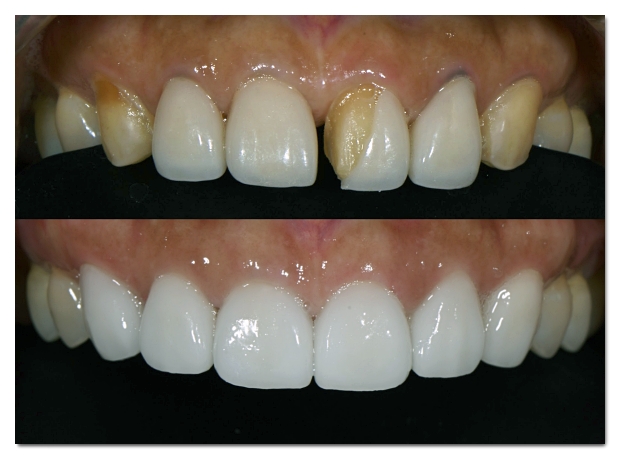
A case involving laminate veneers placed at another dental clinic that had fractured and come off; the patient visited for retreatment (May 6, 2026–June 10, 2026)
Why is the method used to remove the existing veneers important?
Even in retreatment, the amount of tooth that remains can vary depending on how the existing laminate veneers are removed.
Generally, a bur, a dental cutting instrument, is used to grind away and remove the ceramic.
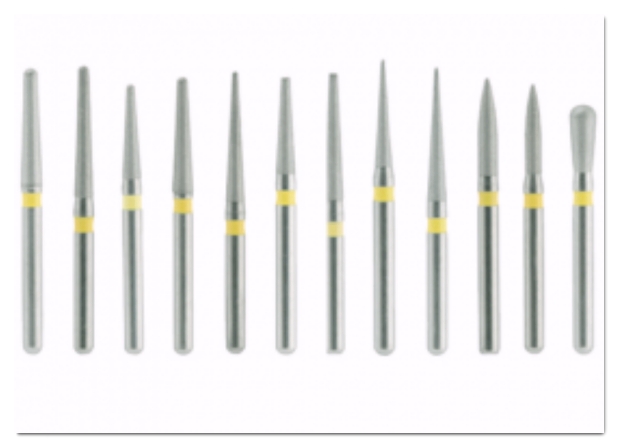
The instrument shown in the photo above is a “bur” used to remove laminate veneers.
However, because the boundary between the ceramic and the tooth is not clearly visible to the naked eye, the enamel may also be ground away during this process.
This means the tooth may suffer further damage even before retreatment begins.
That is why I use a water-droplet laser during the removal stage.
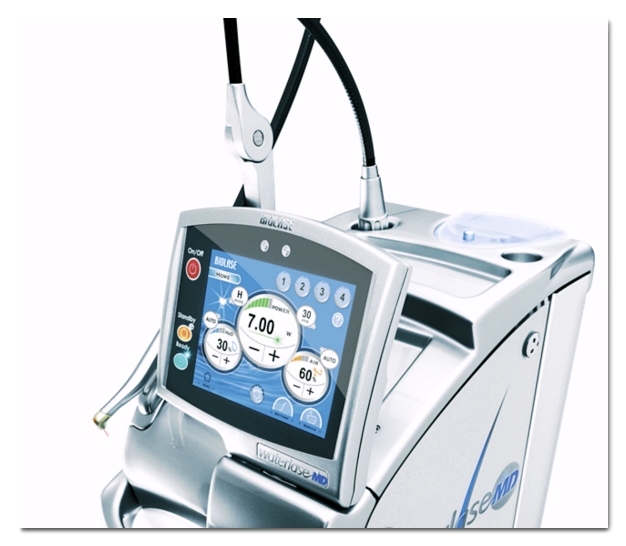
A water-droplet laser that can minimize damage when removing laminate veneers
Because the laser passes through the ceramic and reacts with the adhesive layer underneath, it makes it easier to separate the laminate veneer without grinding down the tooth surface.
(Of course, whether it can be used varies somewhat depending on the type of ceramic and the circumstances.)
The more carefully the tooth is preserved during “removal,” the first step in retreatment, the more options remain available in the next stage.
Whether the veneer can be replaced with no reduction or minimal reduction, or whether treatment must proceed to a crown, is largely determined at this stage.
What should be checked first before attaching new laminate veneers?
The cause is even more important.
There is a reason the current laminate veneer has developed a problem.
If the cause is left unchanged and the veneer is simply replaced with a new one, the same problem may return before long.
| Situation | Likely cause |
|---|
| If the margin has turned yellow | This is often related to the bonding condition or the material. |
| If it keeps lifting or coming off | This is often related to inadequate bonding or a bite, or occlusion, problem. |
| If it has chipped or fractured | The bite may be concentrating force on a particular area. |
In particular, if fractures occur repeatedly, simply bonding new ceramic will not solve the problem.
If the way the upper and lower teeth fit together, as well as the left-to-right bite, is not adjusted, the new laminate veneer may fracture in the same place again.
Therefore, retreatment is less about “attaching a new restoration” and more about “identifying and correcting the cause.”
How does treatment proceed when laminate veneers have come off or fractured?
The two cases below also involved patients who visited for retreatment after laminate veneers placed at other dental clinics fractured and came off.
In such cases, if the procedure is performed without properly adjusting the bite, the same problem is likely to recur a few months later.
Therefore, the bite should be checked first, areas where force is concentrated should be adjusted, and only then should it be decided whether re-bonding is appropriate.
In retreatment, changing the order of the steps changes the result.
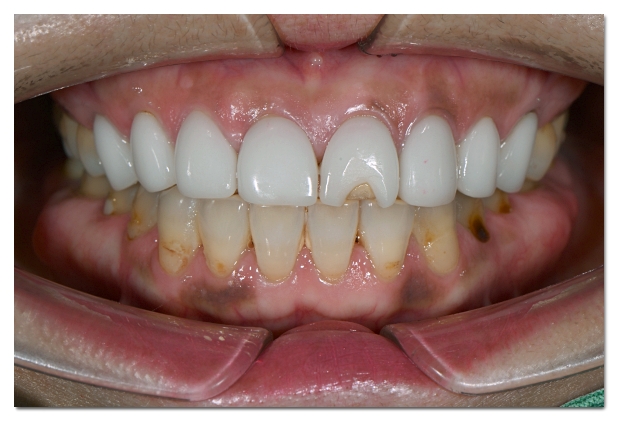
Actual case 1: laminate veneers placed at another dental clinic had come off and fractured, and the patient visited for treatment
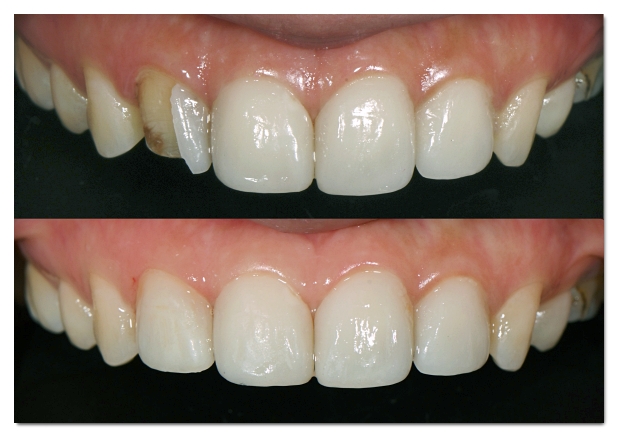
Actual case 2: laminate veneers placed at another dental clinic had come off and fractured, and the patient visited for treatment (June 1, 2026–June 8, 2026)
What happens if old laminate veneers are simply left as they are?
That does not mean it is a good idea to delay treatment.
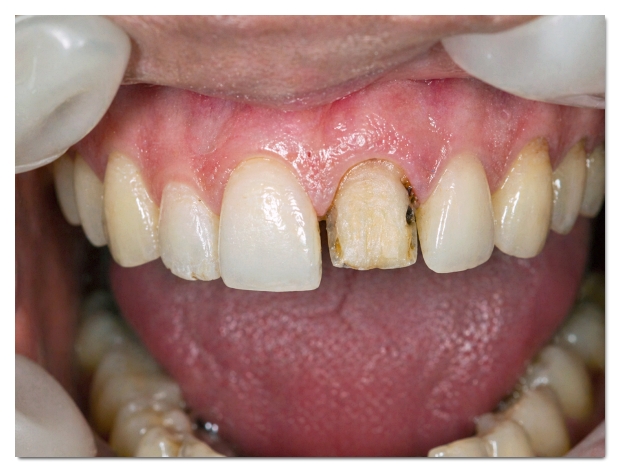
If bacteria enter through a gap beneath a lifted veneer or an open margin, decay may quietly progress underneath it.
If this happens, the tooth may be weaker by the time the laminate veneer is removed, which can actually reduce the available treatment options.
If the color becomes dull or the veneer feels slightly lifted, the wisest first step is to have the current condition checked rather than replacing it without assessment.
What should you ask during a retreatment consultation?
To avoid regrets after retreatment, check these four points during your consultation.
-
Why is it in this condition now? : Do they identify the cause, such as bonding, occlusion, or material?
-
How will the existing laminate veneer be removed? : Do they explain the potential damage to the tooth during removal?
-
How much more of my tooth will be reduced if it is removed? : Do they answer based on the condition of the remaining tooth?
-
Is there a way to preserve more of the tooth instead of getting a crown? : Do they consider alternatives involving less reduction?
If a clinic can answer these questions with clear supporting reasons, the likelihood of repeating the same failure is greatly reduced.
Frequently Asked Questions
Q. After how many years do laminate veneers need to be replaced?
A. This varies depending on care and the condition of the teeth, but they are generally used for many years.
Provided they were properly placed, some laminate veneers remain in use for around 10 years, and in some cases as long as 20 years.
Rather than focusing on a set number of years, it is more accurate to have them checked promptly if you notice signs such as discoloration, lifting, fracture, or sensitivity.
Q. I do not have any discomfort right now. Can I just leave them as they are?
A. Yes. However, decay may progress through a gap at the margin even if the veneers appear fine on the outside.
Even without discomfort, it is safer to have them checked regularly.
The important thing in retreatment is not “replacing it with something new,” but “finding out why the problem occurred and protecting the remaining tooth.”
Please make your decision at a clinic that explains the cause and discusses both the removal method and alternatives involving less reduction.
Thank you. This was Park Jae-hyung.