Hello. I am Park Jae-hyung, the director of Wonjin Dental Clinic and a dentist who has been practicing in Gangnam since 2012.
Can crowded teeth receive veneers right away?
Orthodontic treatment takes a long time, so it feels burdensome.
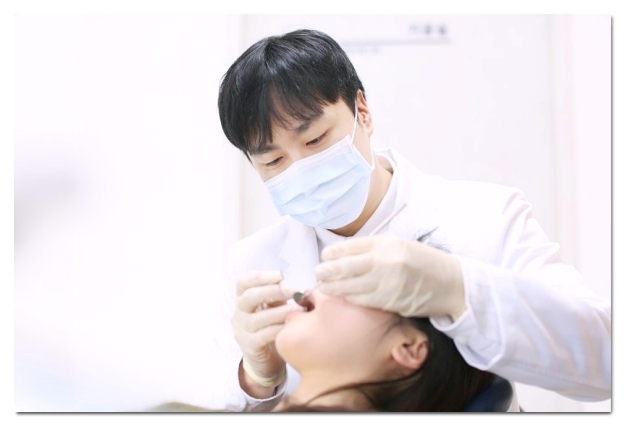
Crowded teeth consultations often involve comparing veneers and orthodontic treatment.
Some people, hoping to finish quickly, begin by saying, “Please just cover them with veneers.”
Crowded teeth are a problem with alignment, not color. If you try to cover them without changing their position, more of the teeth may need to be shaved down than expected.
Today, I will summarize how to decide between orthodontic treatment and veneers for crowded teeth, and why you should look at the “position” of the teeth before deciding to shave them down.
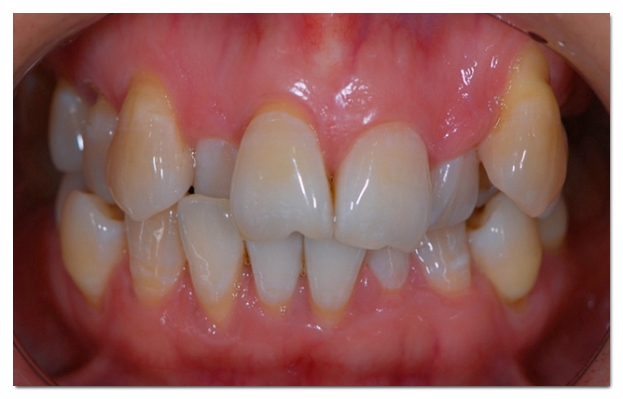
Table of Contents
-
What problems can occur if crowded teeth are covered with veneers alone?
-
For crowded teeth, which is right: orthodontic treatment or veneers?
-
How can you minimize tooth reduction when getting veneers?
-
Is it true that “all crowded teeth can be treated with veneers”?
-
What should you check during a consultation?
-
Frequently Asked Questions
What problems can occur if crowded teeth are covered with veneers alone?
Crowded teeth refers to teeth that have erupted crookedly or protrude forward.
To attach ceramic to the front surface and make the teeth appear straight without changing this alignment, the teeth need to be shaved down by the amount they protrude.
The more severe the crowding, the greater the amount of tooth reduction, and the greater the risk of sensitivity or stress on the dental nerve.
Covering them too aggressively can also cause problems with their appearance.
If a protruding tooth is forcibly made thin enough to fit, its thickness can look unnatural. Conversely, filling out a tooth that sits farther inward with a thick veneer can make it appear bulky.
Ultimately, the key to veneers for crowded teeth is not the technique used to attach them, but how the alignment is managed before shaving the teeth.
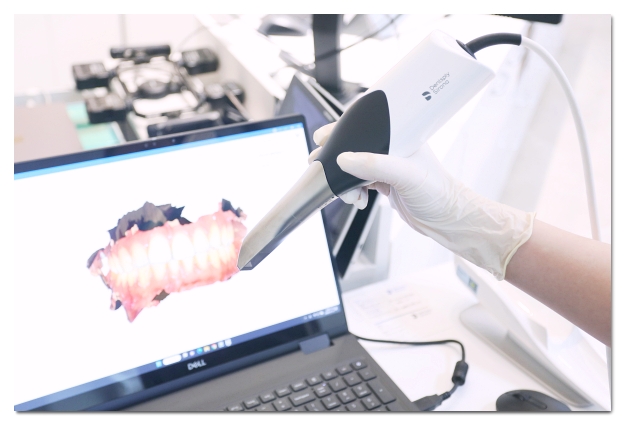
For crowded teeth, which is right: orthodontic treatment or veneers?
Treatment for crowded teeth can generally be divided into three approaches.
First, partial orthodontic treatment.
This applies when only the front teeth are slightly crooked or overlapped.
It actually corrects the alignment without shaving the teeth, but it requires several months.
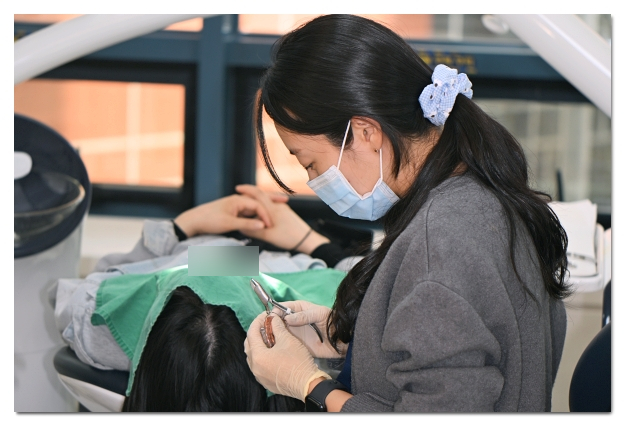 An orthodontist oversees the orthodontic treatment.
Second, veneers.
They are suitable when the crowding is not severe and you also want to change the color and shape of the teeth.
The procedure is quick enough to usually be completed in two visits, but because it does not change the alignment itself, more tooth reduction may be needed if the crowding is severe.
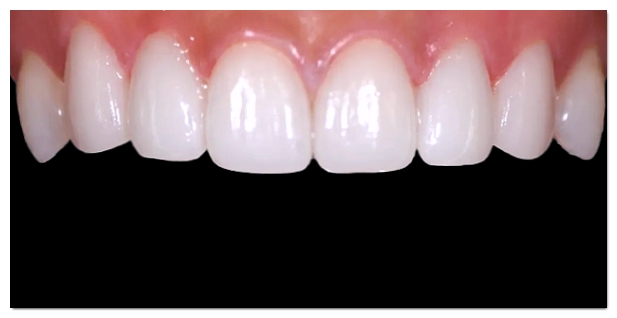
Third, combining orthodontic treatment with veneers afterward.
This is an option when the alignment problem is significant and you also want to improve the color and shape.
If space is created through orthodontic treatment before placing the veneers, the treatment can be completed with minimal or no tooth reduction.
It takes longer, but far less of the teeth needs to be shaved down.
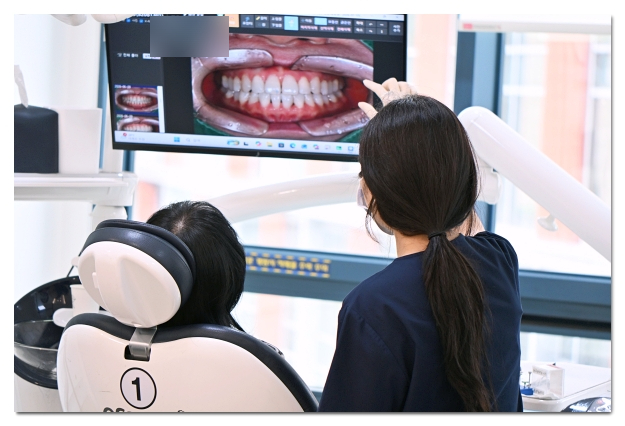
The key points are as follows.
Orthodontic treatment changes the alignment itself, while veneers quickly change the color and shape.
If the crowding is severe but you skip orthodontic treatment and try to solve everything with veneers alone, you will ultimately need to have a substantial amount of tooth structure removed.
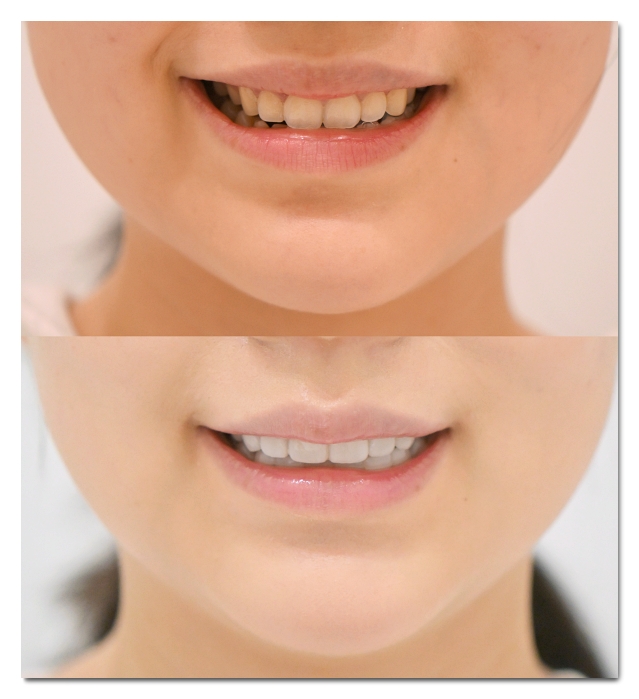
260527~260617
I always emphasize this: it is important to minimize tooth reduction from the very beginning.
Because teeth are used throughout life and restorations are replaced over time, a small amount of tooth structure may be removed each time.
That is why minimizing tooth reduction during the initial treatment is important.
(Please read the article below for more details.)
How can you minimize tooth reduction when getting veneers?
When diagnosing crowded teeth, the first question should not be, “How many veneers should I get?” but rather, “What sequence of treatment will minimize tooth reduction?”
If the teeth overlap or protrude and there is not enough space, it is preferable to create space first by gently aligning them with partial orthodontic treatment instead of shaving them down and covering them in their existing position.
Once space has been created, veneers can be placed with no or minimal tooth reduction, allowing much more healthy tooth structure to be preserved.
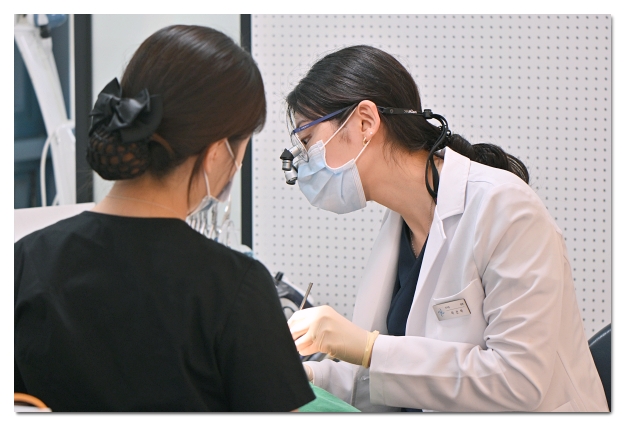
The goal is not to create space by shaving the teeth, but to create space so that less tooth structure needs to be removed.
Even if it takes a little longer, this sequence is better for the teeth.
In mild cases, improvement can often be achieved with just two to three months of partial orthodontic treatment.
Of course, if the crowding is very mild, minimal-preparation veneers alone may be sufficient without orthodontic treatment.
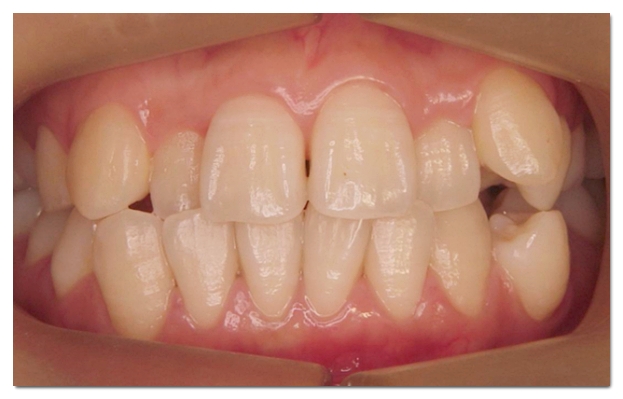
In the case below, the canine is slightly rotated and protruding, while the second incisor is slightly positioned inward.
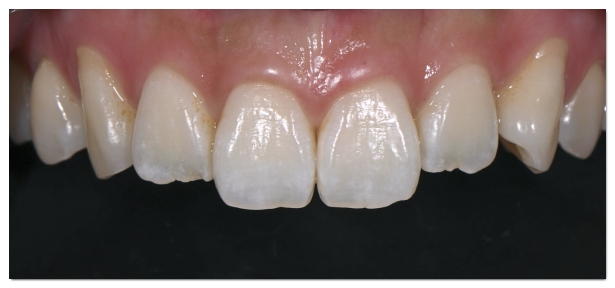
26.06.22
However, if the second incisor is aligned with the slightly protruding canine line when placing the veneers,
it is possible to achieve a straight-looking alignment without separate orthodontic treatment.
In such cases, veneers alone can be used while minimizing the amount of tooth reduction.
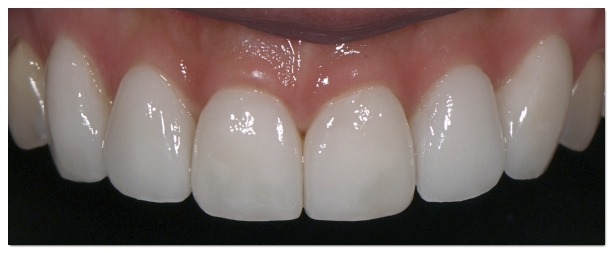
26.07.04
As you can see, the treatment method and duration for crowded teeth vary depending on the current condition.
It is best to receive an accurate diagnosis at a clinic that will create a treatment plan suited to your circumstances while preserving as much natural tooth structure as possible.
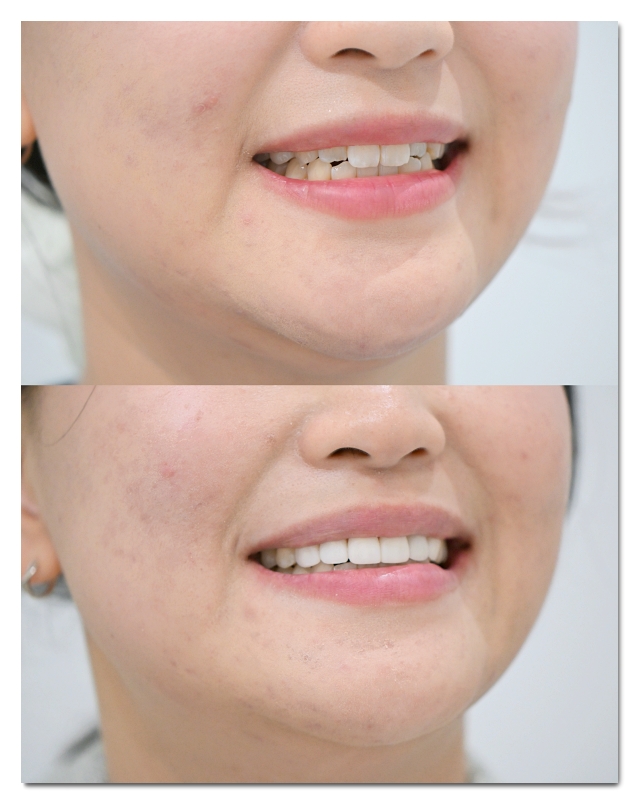 A case in which mild crowding was improved with veneers. (260622~260704)
“Can all crowded teeth be treated with veneers”? Is that true?
Veneers are a fast and effective treatment, but they are not the right answer for every case of crowded teeth.
If severely protruding or overlapping teeth are covered with veneers alone, excessive tooth reduction may cause sensitivity or dental nerve problems, and the result may look unnatural.
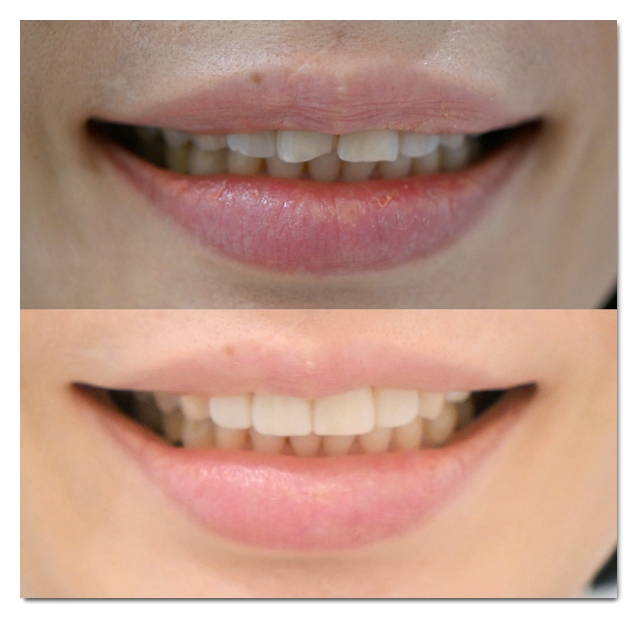
26.06.02 - 26.06.16
In such cases, it is appropriate to consider orthodontic treatment first.
Therefore, during a consultation, rather than accepting a definitive statement such as “All crowded teeth can be treated with veneers,” I recommend checking whether the condition is actually suitable for veneers,
and, if it is difficult, whether the provider explains with supporting reasons why orthodontic treatment would be better.
A diagnosis that clearly says when something is not appropriate ultimately benefits the patient.
What should you check during a consultation?
If you are considering veneers for crowded teeth, be sure to ask these two questions during your consultation:
“How much of my teeth would need to be shaved down to cover my crowded teeth with veneers?”
“Is there any way to reduce the amount of tooth reduction further?”
If the provider answers these two questions with supporting reasons, the likelihood of regretting excessive tooth reduction is greatly reduced.
(It would be even better if they explained this first and suggested alternatives without waiting for you to ask.)
Frequently Asked Questions
Q. I was told that my gums are weak and my tooth roots are short. Do I still need orthodontic treatment?
A. Whether orthodontic treatment is possible and how quickly the teeth can be moved depends on the condition of the gums and the length of the roots. These should be checked first with X-rays before making a decision.
If the roots are short or the gums are weak, minimal-preparation veneers or other alternatives may be considered instead of orthodontic treatment, so there is no need to proceed with orthodontic treatment unnecessarily.
Q. How long does it take if orthodontic treatment and veneers are combined?
A. Partial orthodontic treatment usually takes 2–6 months when the malocclusion is mild, while comprehensive orthodontic treatment is generally planned for around two years or longer.
Because the veneers are placed after the teeth have been aligned through orthodontic treatment, the overall period is longer than with veneers alone, but much less of the teeth can be shaved down.
With crowded teeth, the important question is not “What should cover them?” but “What sequence will minimize tooth reduction?”
Please make your decision at a clinic that explains whether veneers are suitable, whether orthodontic treatment should come first, and the reasons behind that decision.
Thank you. This was Park Jae-hyung.