Hello. I am Jae-hyung Park, the representative director of Wonjin Dental Clinic, where I have been practicing at the same location near Gangnam Station for 14 years.
Do perfectly healthy teeth really have to be extracted?
Non-extraction orthodontic treatment is a method of aligning the teeth without removing permanent teeth, such as premolars, to create orthodontic space. Instead, methods such as interproximal reduction, dental arch expansion, and distal movement are used. Depending on the case, wisdom tooth removal may also be considered to secure space at the back.
Non-extraction orthodontic treatment is considered when the following three conditions are met.
-
The amount of crowding is not substantial
-
The front teeth and lips are not significantly protruded
-
There is room to move the dental arch backward
Today, under the topic “Can I Have Non-Extraction Orthodontic Treatment Too?”,
I will explain in simple terms whether non-extraction orthodontic treatment is possible for you and what criteria are used to make that determination.
When is non-extraction orthodontic treatment possible?
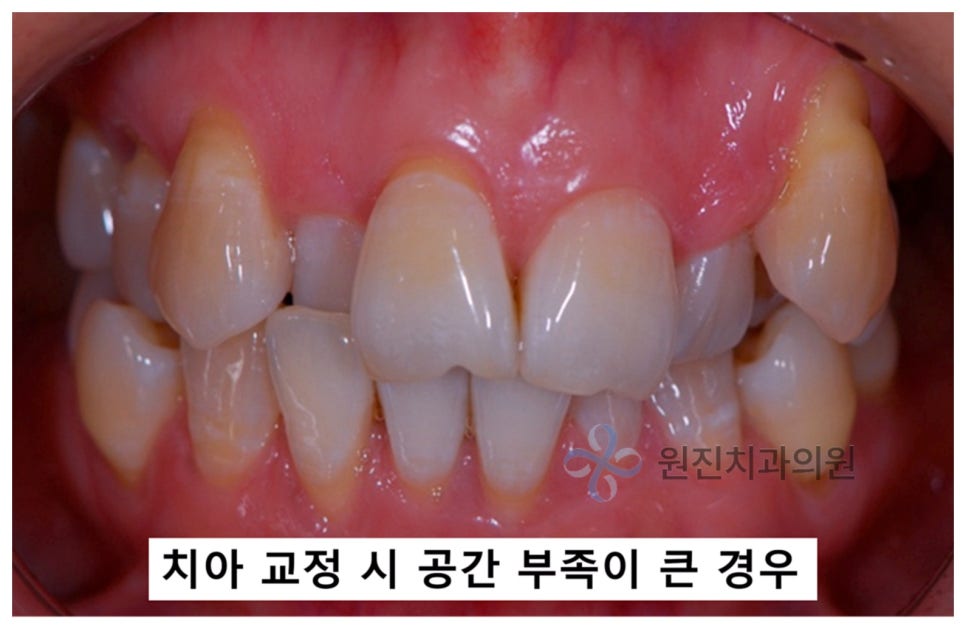
If there is not a major lack of space for the teeth and the necessary space can be created through other methods, non-extraction orthodontic treatment may be considered.
[Conditions for considering non-extraction treatment first]
-
When the amount of insufficient space is not substantial
-
When lip protrusion is not pronounced
-
When the front teeth are not already tilted forward
-
When the dental arch is narrow and there is room for expansion
-
When the teeth can be moved backward by using the space occupied by the wisdom teeth
-
When the gums and alveolar bone can withstand tooth movement
How can orthodontic treatment be performed without removing teeth?
Non-extraction orthodontic treatment mainly creates space through interproximal reduction, dental arch expansion, and distal movement of the teeth.
| Type | Method of creating space | Conditions for application |
|---|
| Interproximal reduction (IPR) | Gently reducing a thin layer of enamel between the teeth | When there is sufficient enamel thickness, the teeth are relatively wide, or triangular gaps are present between the teeth |
| Dental arch expansion | Adjusting the width and shape in which the teeth are arranged | When the dental arch is narrow and there is sufficient bone on the outer side of the gums. Limited if gum recession is present |
| Distal movement of the teeth | Moving the entire dental arch backward | When space at the back has been secured, such as through wisdom tooth extraction, and the molars have shifted forward |
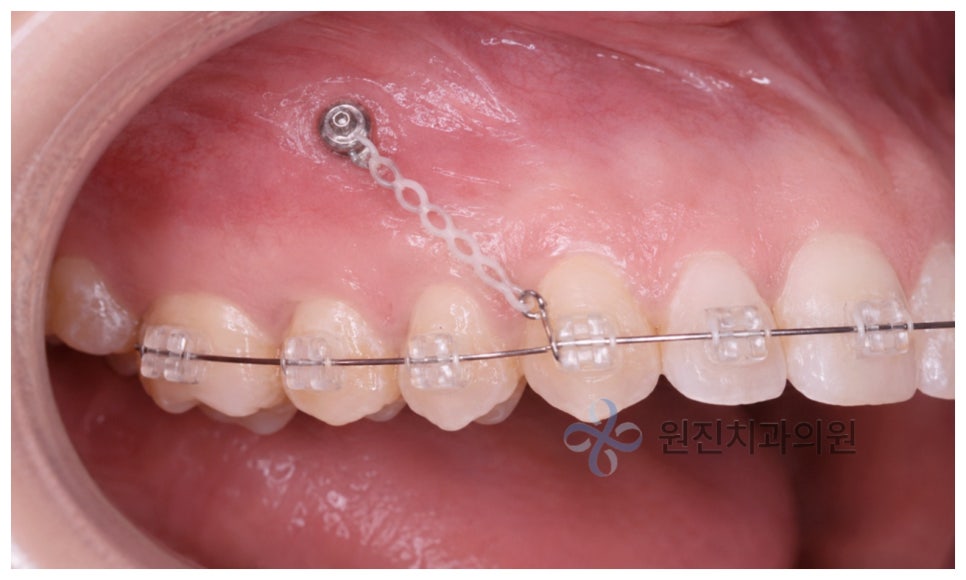
The photo above shows the use of miniscrews, which are screws fixed in the gums to help move the teeth backward.
When is extraction orthodontic treatment necessary?
Extraction orthodontic treatment may be considered in the following cases.
-
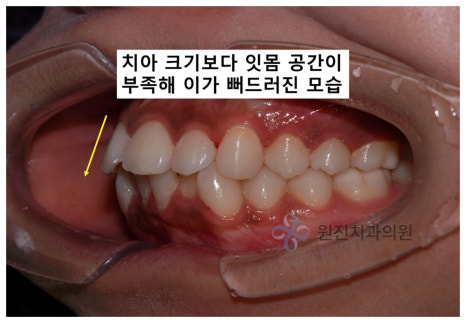
When the amount of insufficient space is substantial
-
When the lips extend forward beyond the line connecting the tip of the nose and the tip of the chin
-
When the front teeth are already significantly tilted forward
-
When the relationship between the upper and lower front teeth needs to be adjusted substantially
-
When the gums are thin or the alveolar bone is narrow, making it difficult to move the teeth outward
The following case also involved improving lip protrusion after extracting the upper premolars.
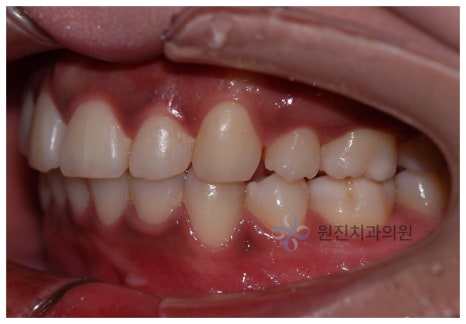
撮影일자: 20.12.29 - 25.02.21
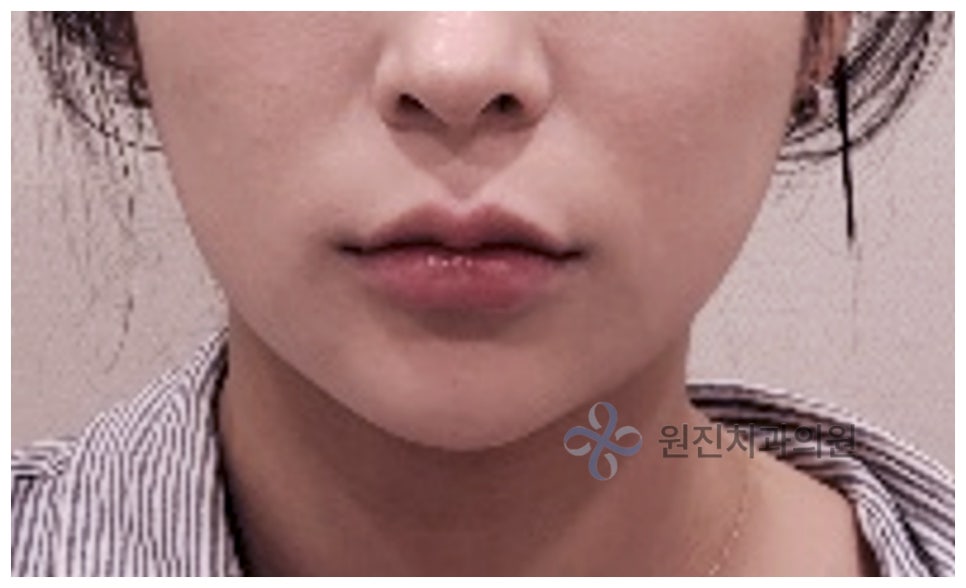
촬영일자: 25.02.21
What should you be aware of with non-extraction orthodontic treatment?
- Possibility of front-tooth protrusion
If the dental arch is simply widened when there is not enough room to align the teeth, the front teeth may tilt forward, causing the appearance of the lips and mouth to change differently than expected.
- Concern about gum and bone damage
If the amount of expansion or tooth movement is substantial, the thickness of the alveolar bone surrounding the teeth must also be checked. The possible range of movement varies depending on the condition of the gums and bone.
- Retention is important after extensive dental arch expansion
After orthodontic treatment, the teeth tend to move back toward their original positions, making it important to wear retainers. In particular, if the dental arch was expanded significantly, it is advisable to confirm the retention plan after treatment as well.
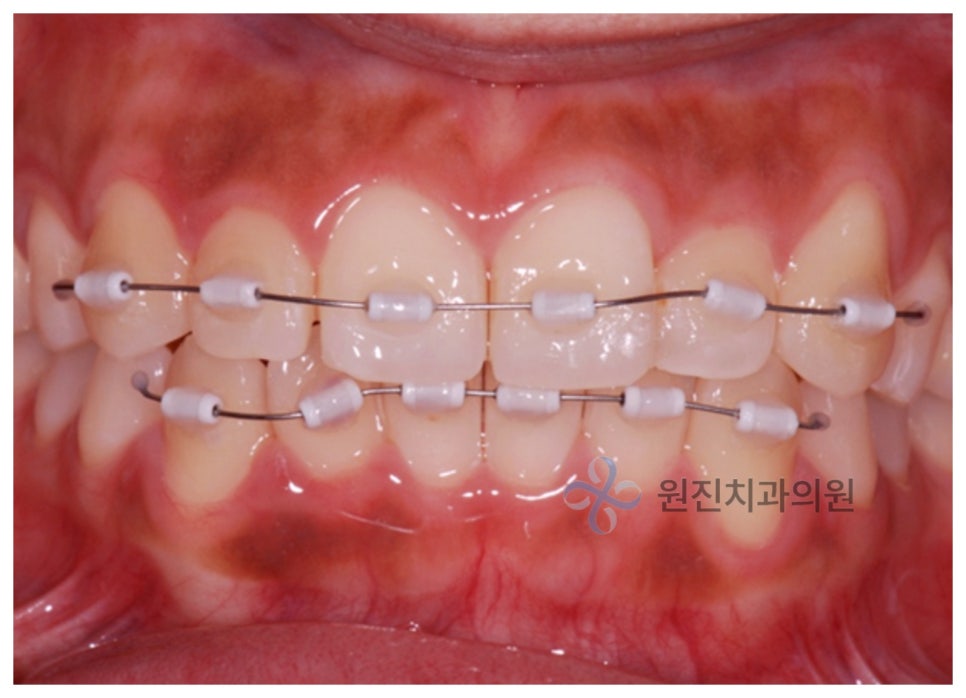
What does the dentist check for diagnosis?
Before orthodontic treatment, the following areas are generally examined together.
-
The actual amount of space deficiency in the dental arch
-
The position and angulation of the front teeth
-
The way the upper and lower teeth meet (occlusion)
-
The lips and facial profile
-
The gums and alveolar bone surrounding the teeth
-
The positions of the wisdom teeth and tooth roots
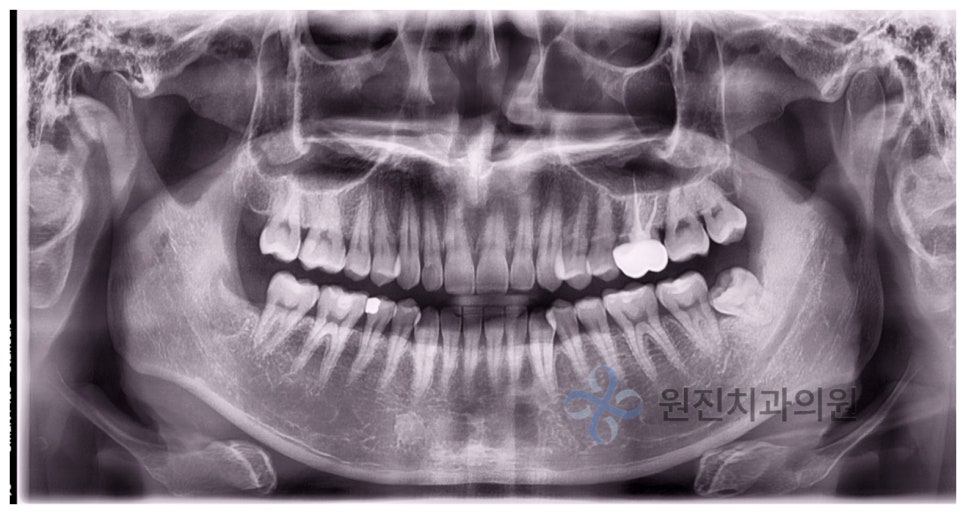
The dental arch and available space are examined using 3D intraoral scans and intraoral photographs, while panoramic images and any necessary radiographic records are used to check areas that cannot be seen directly.
Ultimately, the purpose of a detailed diagnosis is not simply to determine “whether non-extraction treatment is possible,”
but also to predict and plan in advance how the tooth alignment and appearance of the mouth will change with non-extraction orthodontic treatment.
Frequently Asked Questions
Q. If I have severe crooked teeth, do I necessarily need to have teeth extracted?
No. The decision is not based solely on how severe the condition appears externally. The actual amount of space deficiency, tooth positions, occlusion, and facial appearance must all be assessed together.
Q. Is non-extraction orthodontic treatment possible for protruding teeth and lips?
It may be possible. However, if the front teeth need to be moved significantly backward, it is first necessary to determine how the required space can be created.
Q. Can interproximal reduction help me avoid extraction?
Interproximal reduction is one method of creating space. If a large amount of space is needed, it may be difficult to resolve the issue through interproximal reduction alone.
Q. Does non-extraction orthodontic treatment take less time?
Not necessarily. You may expect it to be shorter because there is no need to close extraction spaces, but interproximal reduction and distal movement are often performed in stages rather than completed all at once.
Comprehensive orthodontic treatment generally takes about 18–30 months, and it may actually take longer when substantial distal movement is involved.
Here is what to ask about during your consultation
How much space is lacking in my dental arch?
What methods can be used to create that space?
What are the advantages and disadvantages of each method?
We recommend receiving treatment at a clinic that provides a sufficient explanation of these three points after a detailed diagnosis.
Thank you. This has been Jae-hyung Park.
[Please read this before choosing a dental clinic]