First surgery second surgery implant
Hello! This is Yonsei Jeongwon Dental Clinic in Daechi-dong.
Nowadays, because same-day implants are widely performed, the number of hospital visits needed to place an implant has decreased, and the time required for surgery has also been greatly reduced. A same-day implant is a method in which the tooth is extracted and the implant is placed on the same day the patient visits the clinic, and it can be completed up to the stage of placing a temporary restoration (not the final prosthesis).
Can anyone get a same-day implant?
However, it is not possible in every case. To place an implant, there must be a sufficient amount of jawbone, and it is not possible if there is inflammation in the gums or if the condition of the jawbone is not good. If there is inflammation or pus around the tooth to be extracted, the implant cannot be placed immediately, and it is also not possible when there is not enough bone for the implant artificial root (fixture) to be secured. In addition, if there is significant bone loss during extraction, the implant cannot be placed on the day of extraction.
Therefore, same-day implants are only possible when the condition of the jawbone is favorable, such as when there is no infection around the extracted tooth, alveolar bone damage is minimal, and there is enough bone for the artificial root to be fixed. Also, even with a same-day implant, sufficient osseointegration time is needed until the final prosthesis is placed.
Many people know that when a tooth is lost due to gum disease, cavities, trauma, or other causes, an implant can be placed to replace the missing tooth. However, if you look at the implant procedure itself, you will encounter complex procedures you may be hearing for the first time, such as first surgery, second surgery, sinus lift, and bone grafting. You may think that once an implant is placed, all treatment is finished, but in fact implant surgery is carried out through several stages.
Bone grafting for implants and sinus lift procedures were explained in a previous post. In today's post, we will look at the differences between implant first surgery and second surgery.
As you probably already know, an implant is generally a metal screw placed into the jawbone to replace a natural tooth. However, when people hear terms such as implant first surgery or second surgery, they sometimes misunderstand and think the surgery must be done in two separate sessions. So what exactly do implant first surgery and second surgery refer to?
What is implant first surgery?
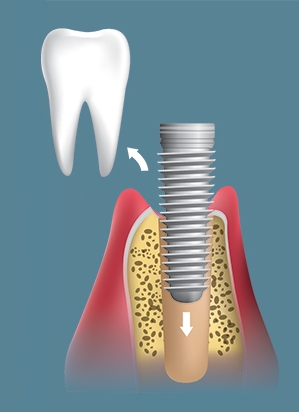
Implant fixture placement
Implant first surgery refers to the stage in which the artificial root (fixture) is placed into the jawbone, and it is the most important procedure in the entire implant treatment process. The implant surgery most people commonly know refers to this first surgery stage. First surgery is usually performed under local anesthesia, and after making an incision in the gums and exposing the jawbone, a hole is drilled in the bone and the fixture is placed. If there is insufficient jawbone, bone grafting may be performed, and in the case of the upper jaw, a sinus lift may also be done. Nowadays, the fixture is sometimes placed directly without making a gum incision. All of these steps are called implant first surgery.
The artificial root placed in this way undergoes osseointegration over time, bonding with the jawbone to provide stable support, and this process takes at least 3 to 6 months. During this period, it is important to take special care to prevent bleeding or infection.
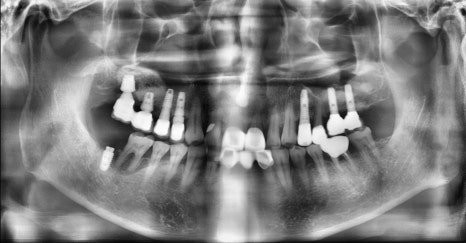
Daechi-dong implant
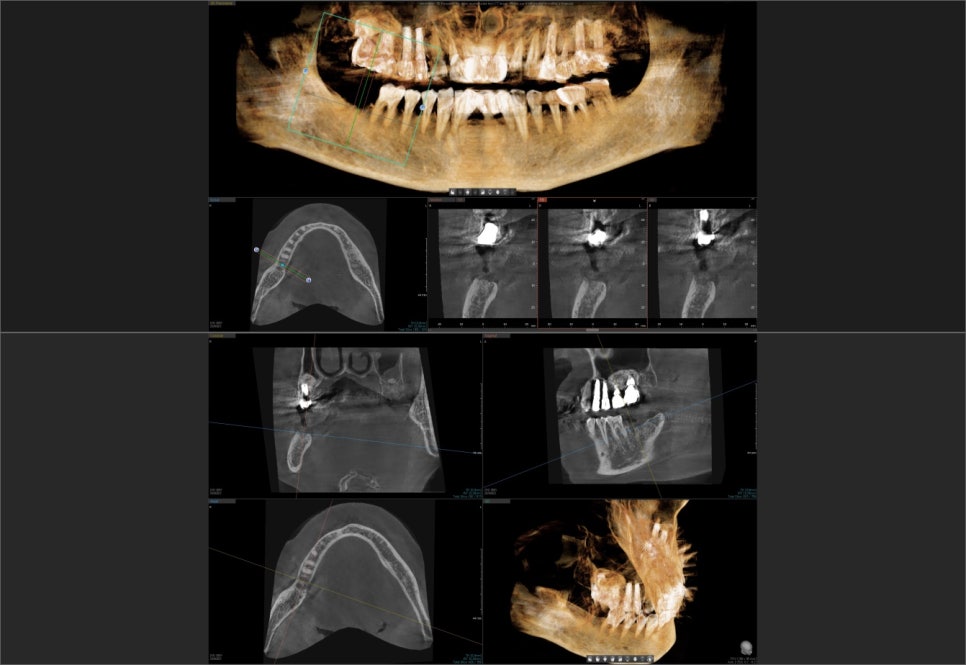
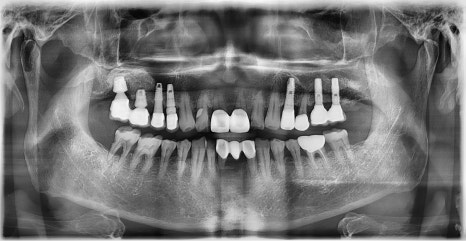
As shown in the X-ray photos above, the process of placing the artificial root after extracting the lower right molar is called first surgery. Unlike implants placed in other areas, you can see that only the fixture, which corresponds to the root of the tooth, has been placed. This artificial root is left buried under the gums until it has sufficiently bonded with the jawbone, promoting stable osseointegration.
At this stage, the condition of the patient's jawbone and the initial stability of the implant fixture are taken into account. If the condition of the patient's jawbone is poor, there is concern about infection, or the initial stability of the fixture is weak, a small screw cap called a cover screw is placed to prevent any external stimulation, and the fixture is left buried in the gums until sufficient osseointegration occurs. Later, in order to connect the prosthesis, the process of exposing the implant fixture buried in the gums is necessary, and this process corresponds to second surgery.
On the other hand, if the initial stability is good, a large cap called a healing abutment is attached to help shape the gums and promote healing, and after the healing period, the prosthesis is placed directly without a second surgery.
Implant second surgery
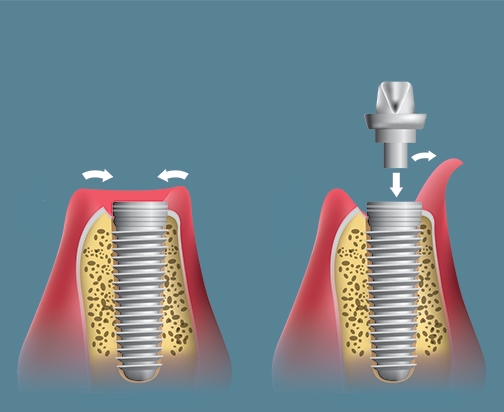
Implant second surgery
Implant second surgery is performed after the 3 to 6 months of osseointegration following first surgery, and you can think of it as a process to check whether the jawbone and the artificial root (fixture) have bonded well and to shape the gums before the prosthesis is placed. After a small incision in the gums, the implant covered by the gums is exposed, and a healing abutment is attached to help the gums recover and maintain a good gum shape during the healing period. If the jawbone condition is good at the time of first surgery and the initial stability of the implant fixture is strong, the healing abutment may be attached immediately and second surgery may be omitted.
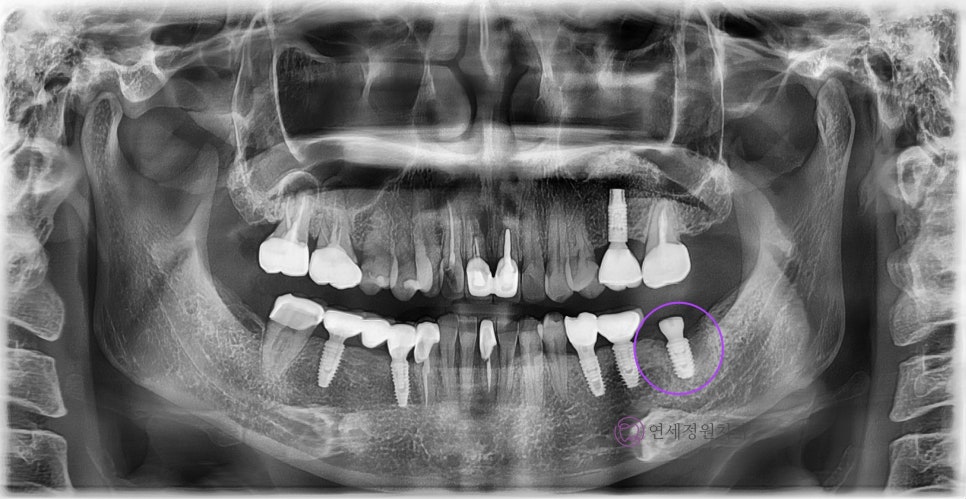
Healing abutment
Although the word surgery may feel burdensome to patients, second surgery is a relatively simple procedure involving a gum incision and replacement of the implant component, so the treatment time is short and recovery is possible without a separate prescription in some cases.
Even though it is a simple procedure, there is still a risk of infection because the gums are incised, so if you are prescribed medication, it is best to take all of it. It is also recommended to avoid smoking and drinking alcohol for about two weeks after surgery. Second surgery is a very important step for placing the implant prosthesis, so proper care is needed to help the gums heal.
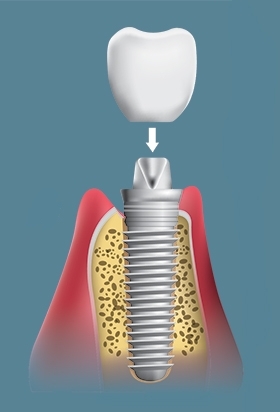
Prosthesis placement
Sedation (conscious sedation) implant
If you need to get an implant but have dental anxiety, even coming to the clinic can be difficult because of worries about pain and bleeding during surgery. In such cases, sedation treatment is used. Sedation treatment is applied not only to implant surgery, but also to various dental procedures such as impacted wisdom tooth extraction, cavity treatment, and root canal treatment.
When conscious sedation implants are needed
-
People with severe trauma related to dental treatment
-
People who have avoided treatment because they are afraid of the dentist
-
People who have difficulty undergoing dental treatment due to panic disorder
Sedation treatment is used for people who hesitate to visit the clinic because of fear, tension, and anxiety about pain during dental treatment. This is not general anesthesia, but a form of "conscious sedation" used for endoscopy and similar procedures. By taking medication before treatment to induce a drowsy state, treatment is carried out while the patient remains relaxed as if asleep. Therefore, pain and anxiety during treatment can be minimized, allowing for efficient treatment.
When the patient enters a drowsy state, they remain in a comfortable condition as if dreaming and feel almost no pain. Also, because it is not general anesthesia, the patient remains in a light state of consciousness, can breathe spontaneously, and can communicate briefly with the medical staff, which makes it safer. In addition, due to the short-term amnesia effect, pain, sounds, and smells that may occur during treatment are rarely remembered after the treatment ends, helping reduce fear and burden regarding dental treatment.
| Conscious sedation (sedation treatment) | | General anesthesia |
|---|
| Medication injection or oral medication | Anesthesia method | Anesthetic gas |
| Spontaneous breathing | Breathing status | Artificial breathing |
| Fast | Recovery | Slow |
| Relatively low | Physical burden | High |
Yonsei Jeongwon Dental Clinic continuously monitors the patient's overall condition during sedation treatment,
and prioritizes safety by checking the patient's heart rate, oxygen saturation, and other vital signs.
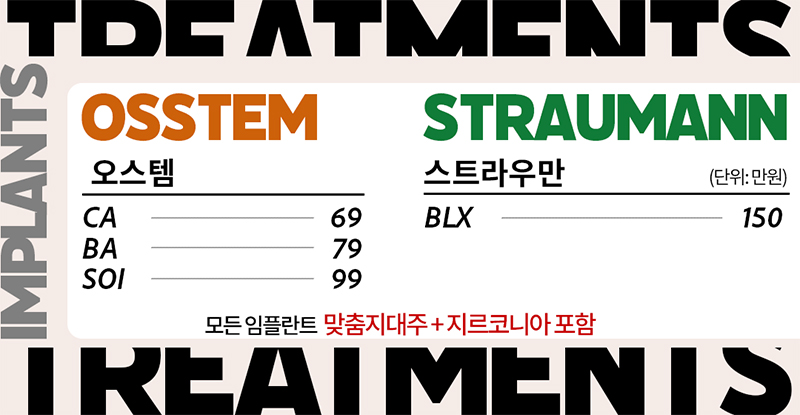
Implant prices at Yonsei Jeongwon Dental Clinic in Gangnam
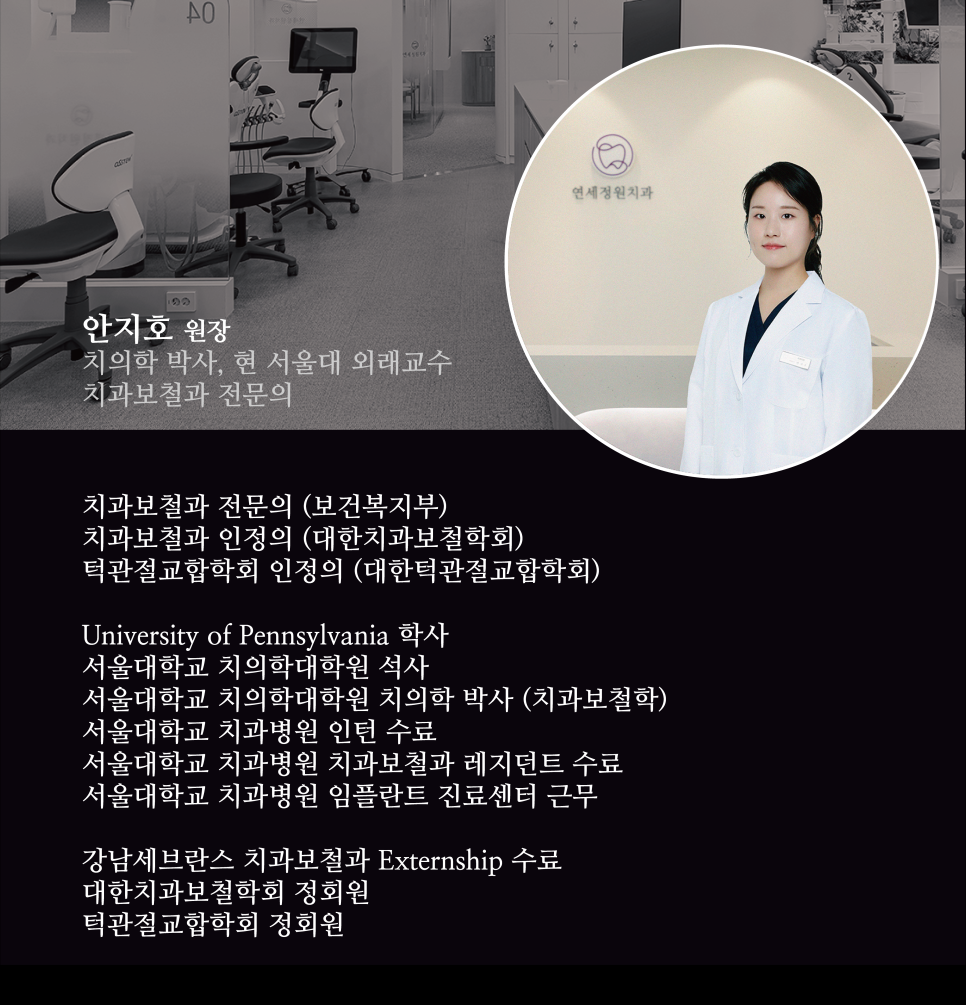
At Yonsei Jeongwon Dental Clinic in Gangnam, implant treatment is handled by Director Ahn Ji-ho, a prosthodontics specialist from Seoul National University (currently an adjunct professor at Seoul National University), who has extensive clinical experience and numerous high-difficulty cases. Therefore, we provide highly refined implant results and only perform evidence-based treatment, such as not recommending a sinus lift when it is not necessary.
During consultations, we explain in detail the types of implants, such as single implants, bridges, and full-arch implants, as well as the appropriate brand and grade, and we create a systematic treatment plan through digital examinations. Unlike many Gangnam dental clinics, you will not be rushed through a consultation with the doctor in just a few minutes and then have to discuss treatment with a manager, so please feel free to visit with peace of mind.
If you are considering implants, you may already have gathered a lot of information through searches for nearby Gangnam implant dental clinics. Even so, hearing a detailed explanation from a specialist in person will likely be very helpful when making your decision.