Treatment for microdontia, Yonsei Jeongwon Dental Clinic
Hello. I am Yoon Jeong-won, CEO and head dentist of Yonsei Jeongwon Dental Clinic in Daechi-dong.
When consulting patients at the clinic, we sometimes hear questions like, "Why are my front teeth so small?" This is due to microdontia. Today, I’d like to talk about what microdontia is and what treatment options are available.
What is microdontia?
Microdontia refers to teeth that develop smaller than normal teeth. It is especially common in the lateral incisors, which are located right next to the upper central incisors. They are often shaped like a cone with a pointed form, so they are sometimes called a "peg lateral." At first glance, it may simply look like the tooth is small, but in most cases it is related to genetic factors and often occurs due to differences during the developmental process. It is also common to see similar tooth shapes among family members.
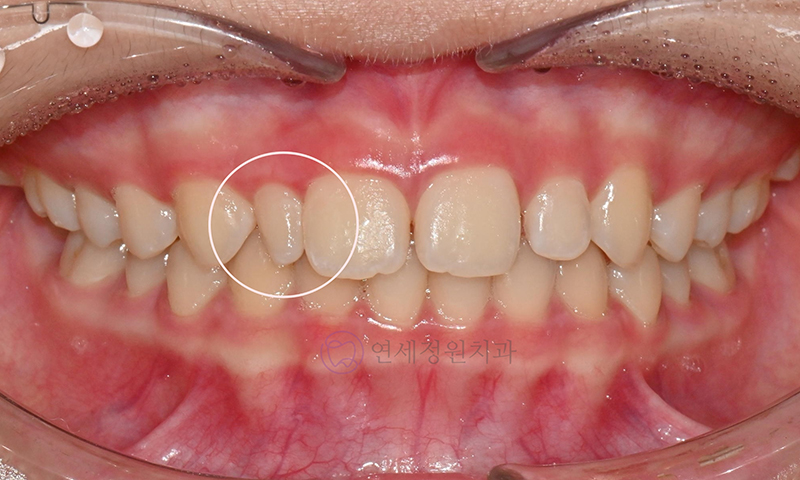
Microdontia (peg lateral)
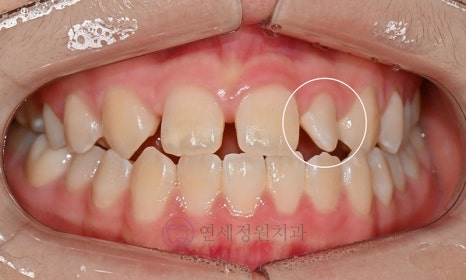
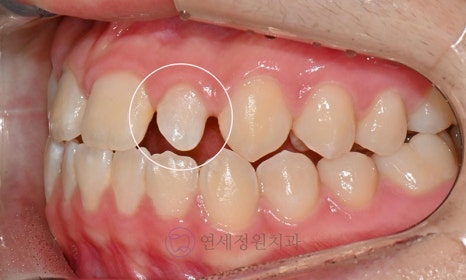
Microdontia (peg lateral)
What problems can microdontia cause?
-
Aesthetic issues
-
When there is a small tooth next to the front teeth, the entire smile line can look unbalanced. Patients often say, "My teeth are small, so I’m self-conscious in photos or when I smile." Because the tooth is small, the empty space it creates becomes more noticeable.
- Oral hygiene issues
- There is usually extra space around a microdontic tooth, and food can easily get trapped in that gap. If it is not properly managed with flossing or brushing, the risk of cavities or gum disease can increase.
- Difficulties during orthodontic treatment
-
If a patient with microdontia undergoes orthodontic treatment, there needs to be consideration of how to handle the remaining space when arranging the teeth. Some patients may not care about microdontia at all, so the treatment plan should be decided through 충분한 상담 with the patient. If treatment for microdontia is not desired, the remaining space can be closed and eliminated, but in that case the occlusal relationship that may arise because of the small tooth size should also be considered.
-
If treatment for microdontia is also desired, space should be left, or asymmetric spaces on the left and right should be redistributed through orthodontic tooth movement so that a somewhat symmetrical space can be created for microdontia treatment. If there is no space at all around the microdontic tooth, space can be created by moving the teeth apart.
Treatment options for microdontia
Treatment for microdontia is selected by comprehensively considering the patient’s age, tooth alignment, and overall bite.
- Resin restoration (resin veneer)
Resin treatment for microdontia is a method of attaching resin, an aesthetic restorative material, to a small tooth with almost no tooth reduction, naturally restoring the tooth’s shape and size. Because resin is a tooth-colored material, it can blend naturally with the surrounding teeth. Compared with laminate or crown treatment, it has the advantage of being relatively economical, fast, and simple, making same-day treatment possible.
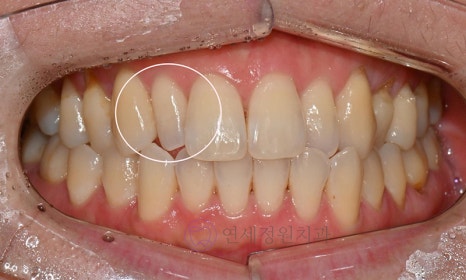
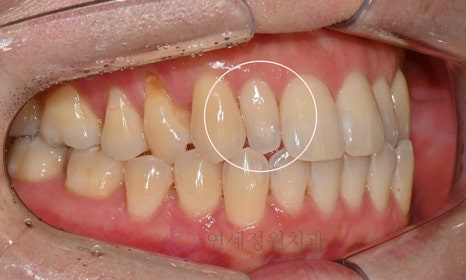
Resin veneer treatment for microdontia
This patient visited the clinic with the complaint that the right front tooth was small and set inward, making the space look empty. The left front tooth was also turned inward, but it was not microdontic, so the patient wanted treatment only for the right front tooth. Because the teeth were in a reverse bite relationship, the tooth position was not suitable for laminate treatment, and the patient wanted the procedure with as little tooth reduction as possible. Therefore, instead of crown treatment, we decided to improve the size and shape of the microdontic tooth with a resin veneer.
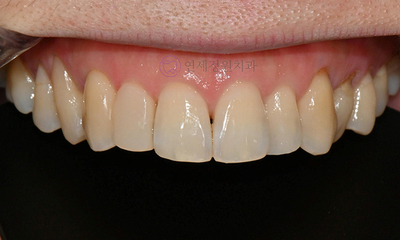
Resin veneer treatment result for microdontia
These are comparison photos after the resin veneer treatment. The treatment was performed without tooth reduction, and restoration was done with a resin shade similar to the tooth color. You can see that it blends naturally with the surrounding teeth.
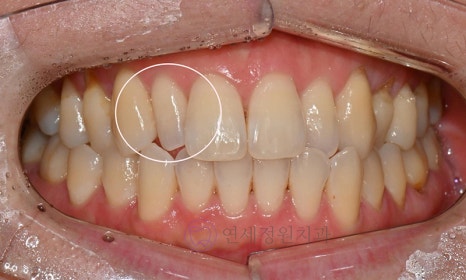
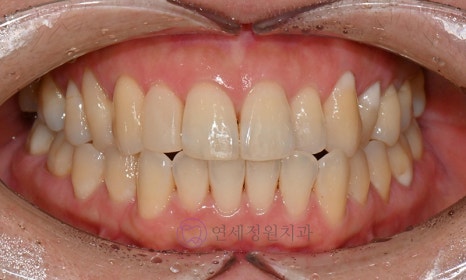
Before-and-after comparison of resin veneer treatment for microdontia
- Laminate/Crown
The second treatment option for microdontia is laminate or crown treatment.
In the case of laminate, because little or no tooth reduction is needed compared with a crown, it has the advantage of allowing treatment while preserving the natural tooth. However, laminate is difficult to apply when the tooth axis is misaligned or the tooth is protruded, and in areas that receive a lot of biting force there is a risk of fracture, so tooth reduction may be necessary in such cases to secure minimal thickness.
Crown treatment for microdontia can be applied when the microdontic tooth is too small, when the shape or tooth axis is severely mismatched, or when there is insufficient remaining tooth structure due to cavities or fracture. It can improve the tooth’s shape, size, color, and even tooth axis, offering a broad range of aesthetic and functional improvement, and because it is highly durable, it can withstand biting forces well. However, the drawback is that more tooth reduction is required.
In general, if aesthetics are the top priority and you want to minimize tooth reduction, laminate can be used. If you want a small tooth to be used strongly and for a long time, or if there is already decay or a fracture, crown treatment is more appropriate.
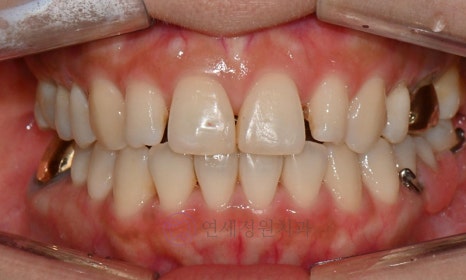
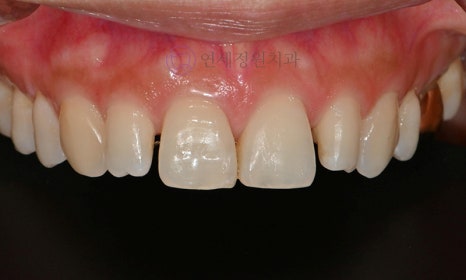
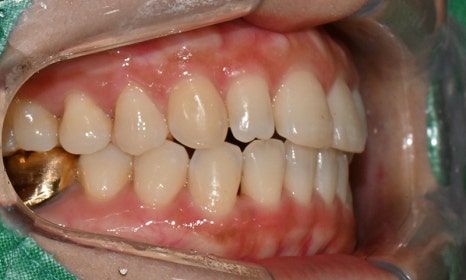
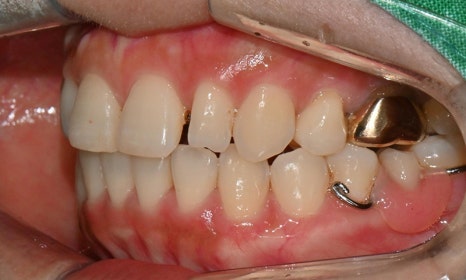
Laminate treatment for microdontia
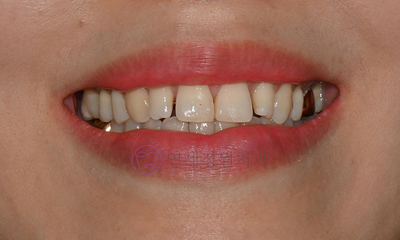
Smile photo
This patient had recently completed orthodontic treatment elsewhere, but came to the clinic because the lateral incisor was small and protruding, making the smile less attractive. Since the front tooth was slightly protruded, if we did not reduce the tooth, the front tooth would end up too prominent, so after minimal reduction, we decided to proceed with laminate.
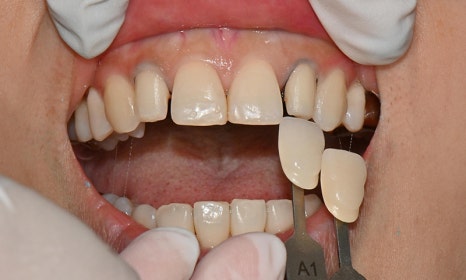
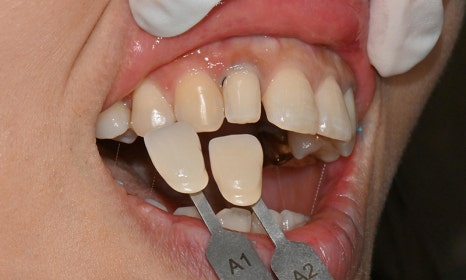
Selecting the laminate shade
Here are the laminate treatment results.
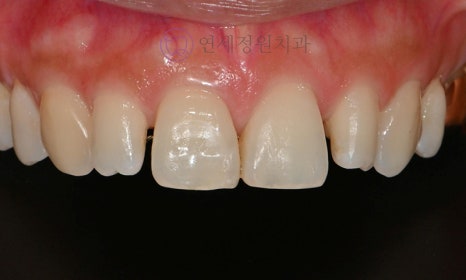
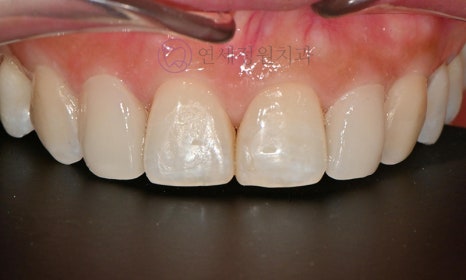
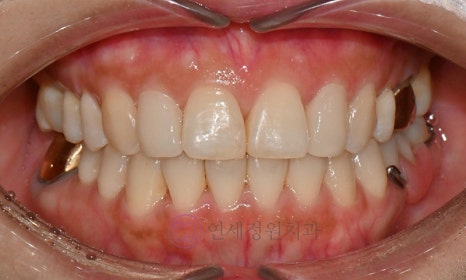
Laminate treatment result for microdontia
- Combined with orthodontic treatment
When treating microdontia, if the space is too narrow or too wide, the space needs to be redistributed to match the original tooth size. Therefore, treatment for microdontia and orthodontic treatment are often performed together.
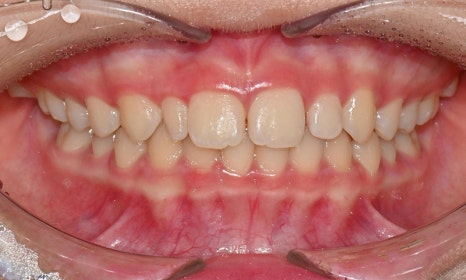
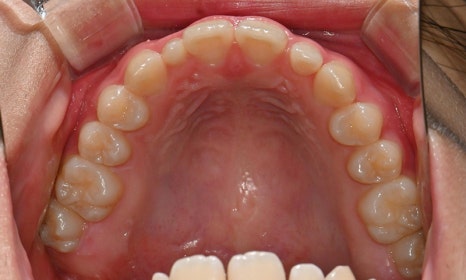
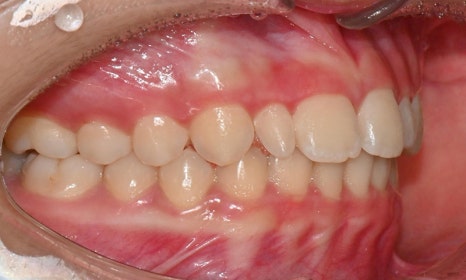
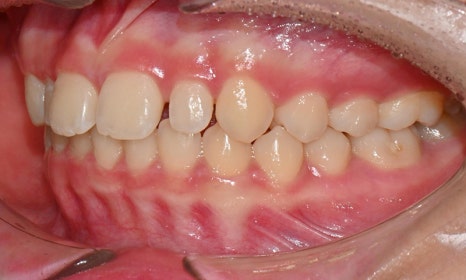
Microdontia and orthodontics combined
In this patient’s case, there was insufficient space on one side and excess space on the other for treating the left and right microdontic teeth, and the upper and lower dental midlines also did not match. So, if the patient wanted treatment for microdontia, the space around the microdontic teeth would need to be redistributed through simple orthodontic treatment.
Microdontia is a more common tooth-form anomaly than many people think, but with the right treatment plan, satisfactory results can be achieved both aesthetically and functionally. Rather than simply making the tooth larger, treatment that considers both orthodontics and prosthodontics should also take overall facial harmony and the bite into account in order to produce a natural and satisfying result. If you have ever wondered, “Why are my teeth so small?”, I recommend getting a professional consultation.
Yonsei Jeongwon Dental Clinic is conveniently located close to Samseong Station, Hanti Station, Daechi Station, and Hagyyeoul Station, making it very easy to visit from Samseong-dong, Daechi-dong, Gaepo-dong, Dogok-dong, Irwon-dong, Yeoksam-dong, and Jamsil.
Next to BMW at the Wusung Apartment intersection in Daechi-dong
(Across from Starbucks/Samsung Store)
Yonsei Jeongwon Dental Clinic in Daechi-dong
Parking is convenient and free.
Consultation and inquiries: 02-501-2879