Dental Care in Midlife: Orthodontic Treatment and Cervical Resin
Hello. I am Yoon Jeong-won, the chief director of Yonsei Jeongwon Dental Clinic, an orthodontic clinic in Daechi-dong.
Orthodontic treatment for middle-aged and older adults has been steadily increasing in demand in recent years. Unlike in the past, the perception that orthodontics is difficult just because of age is gradually disappearing. In a survey conducted by the Korean Association of Orthodontists among 598 people in their 20s to 70s, the percentage who answered, “I have thought about orthodontic treatment,” was 46.2% in their 40s, 45.1% in their 50s, 35.2% in their 60s, and 24% in their 70s. In the past, many people thought, “I’m already older, and if I get orthodontic treatment later in life, my teeth won’t move well.” However, what really matters is not whether someone is middle-aged or older, but whether the condition of the teeth and gums can withstand treatment, and whether there are benefits that can be gained from orthodontics.
Why middle-aged orthodontics is needed
The biggest reason adult patients consider orthodontic treatment is not only aesthetic satisfaction but also functional improvement. If malocclusion persists for a long time, chewing force tends to be concentrated on specific teeth or areas, which can lead to tooth wear, gum bone loss, or root resorption and shortening. Restoring balance in the bite through orthodontic treatment helps distribute chewing force more evenly, which in the long term allows teeth to be used more healthily for a longer period.
In addition, irregular tooth alignment makes oral hygiene more difficult, and plaque and tartar management becomes harder, which can worsen periodontal disease (gum disease). After orthodontic treatment, when the teeth are aligned, brushing and flossing become easier, which is advantageous for suppressing the progression of gum disease.
Also, orthodontic treatment can provide a natural-looking alignment and a harmonious smile line, increasing social and psychological satisfaction.
Evaluation of whether orthodontic treatment is possible
When establishing an orthodontic treatment plan for middle-aged and older patients, the most essential factors are as follows.
-
Evaluation of periodontal status
-
It is necessary to first check whether there is periodontitis and what the height of the gum bone is.
-
If needed, preliminary treatment such as scaling or gum treatment may be required.
- Prosthetics and prior treatment history
-
If crowns, bridges, or implants already exist, the treatment plan may become more complex, but in most cases treatment is still possible by considering the direction in which the teeth can move and the occlusion.
-
If necessary, re-prosthetic treatment after orthodontics may be needed, so both function and aesthetics should be comprehensively considered from the planning stage.
- Temporomandibular joint condition
- If there is teeth grinding, limited mouth opening, pain, or similar symptoms, the effect of the orthodontic plan and changes in occlusion on the temporomandibular joint must be considered.
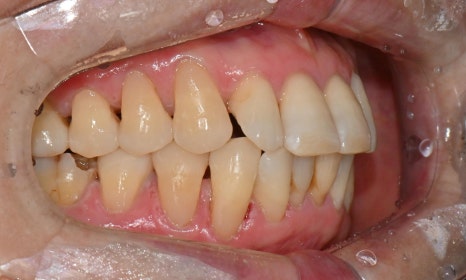
This patient was a 70-year-old woman who came to the clinic with the chief complaint that, even when keeping her mouth closed, she looked angry, and she wanted to slightly retract her protruding front teeth. After examining the overall condition of the teeth and gums, we found worn and fractured teeth, as well as many areas where the cervical area (the boundary between the tooth and gum) had worn down and become hollowed out.
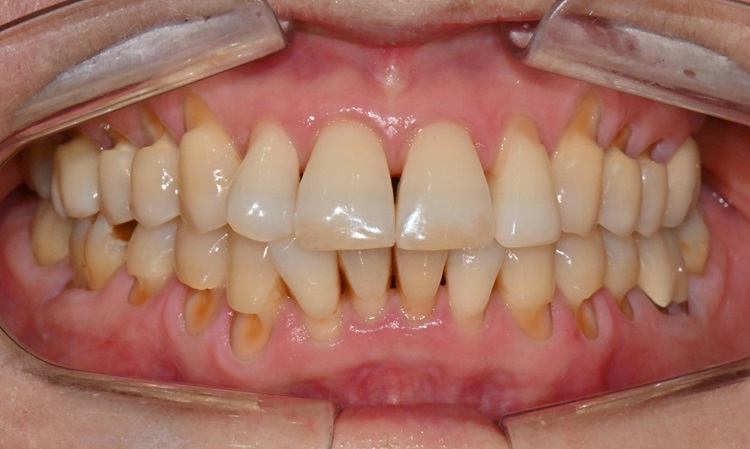
Initial visit, 2025.2.3.
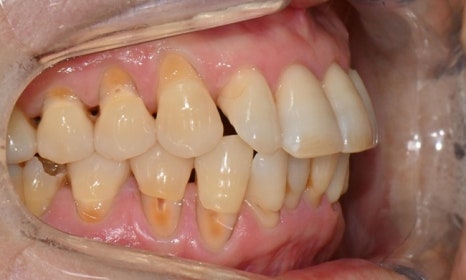
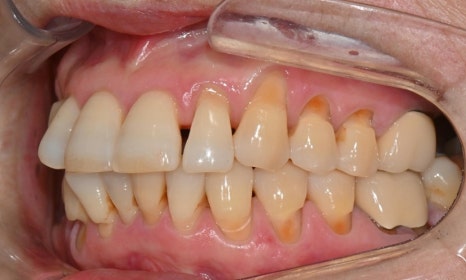
Initial visit, 2025.2.3.
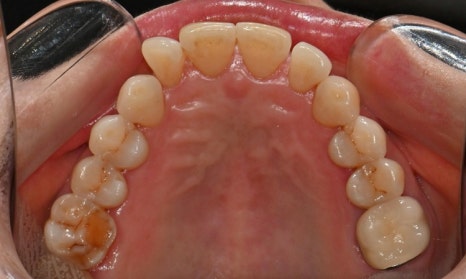
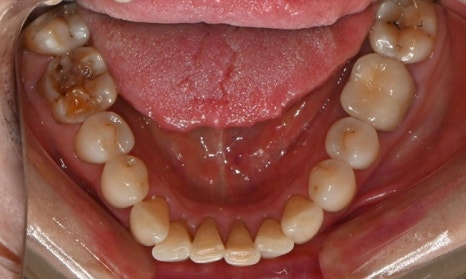
Initial visit, 2025.2.3.
Before starting orthodontic treatment, prosthetic treatment was performed on the fractured upper and lower molars, and resin treatment was performed on the cervical areas. Teeth that had worn down almost to the vicinity of the root canal were naturally restored through cervical resin treatment.
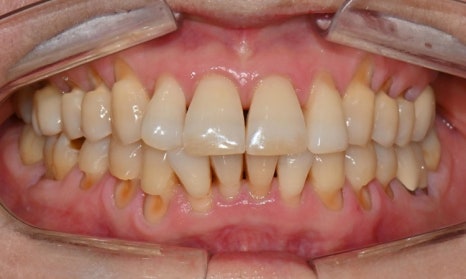
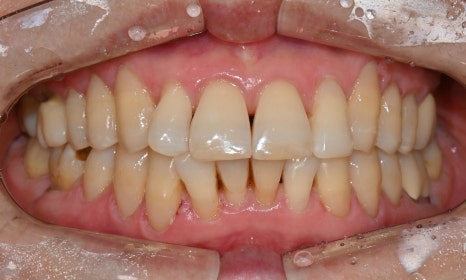
Before and after cervical resin treatment
Before and after cervical resin treatment
In middle-aged and older patients, systemic aging changes, weakening of the jawbone, and the presence of many missing teeth and prosthetics due to cavities and periodontal disease can make it difficult to change the bite relationship through comprehensive orthodontic treatment. In addition, the longer the orthodontic treatment period, the more strain is placed on the teeth and jawbone. For this patient as well, rather than forcing protrusion correction at the cost of changing the bite relationship, we decided to proceed with aesthetic treatment limited to the front teeth, which are the most important for appearance, while keeping the existing molar occlusion as much as possible.
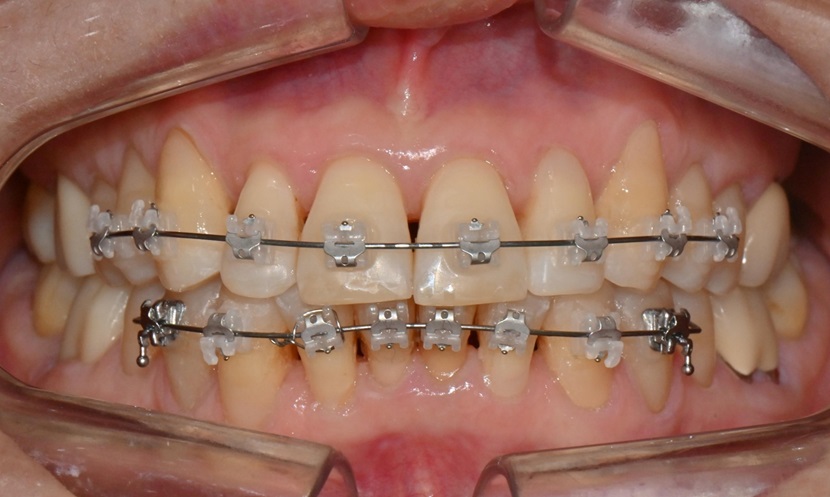
2 months after treatment
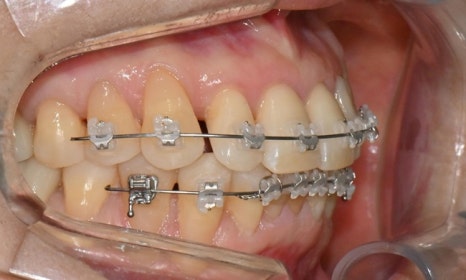
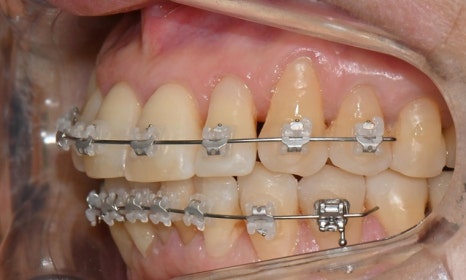
2 months after treatment
Two months after treatment, it can be seen that the right front tooth, which the patient most wanted to correct, had already become neatly aligned.
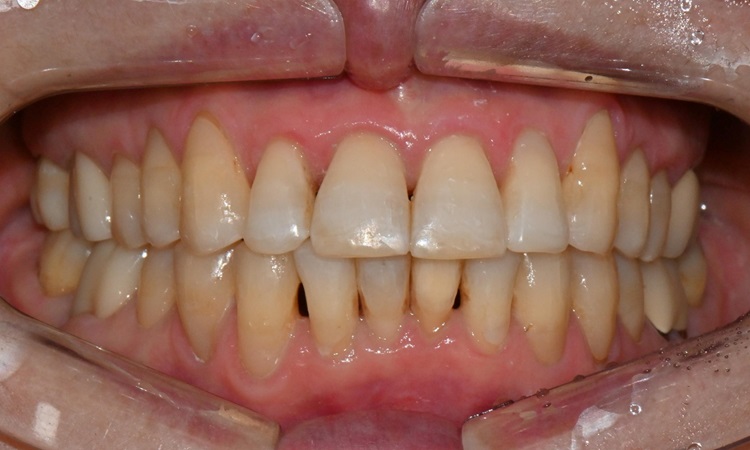
After completion of orthodontic treatment
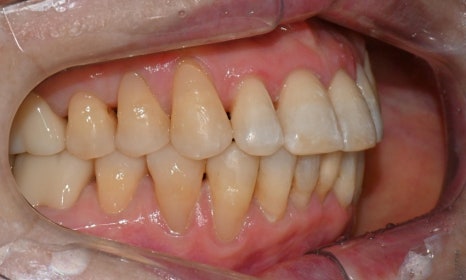
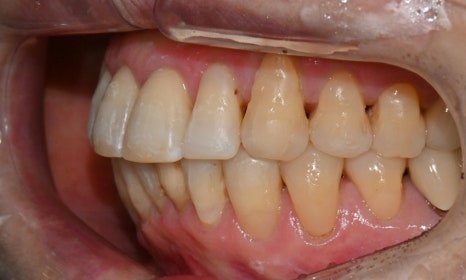
After completion of orthodontic treatment
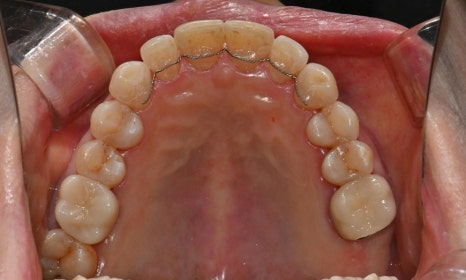
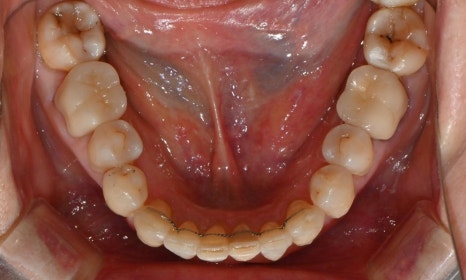
After completion of orthodontic treatment
Orthodontic treatment was completed after 8 months, and the patient was very satisfied, saying that her teeth had turned out beautifully. Some improvement in black triangles was achieved through interproximal reduction. Since she was also interested in whitening treatment, she returned two weeks later and underwent whitening as well.
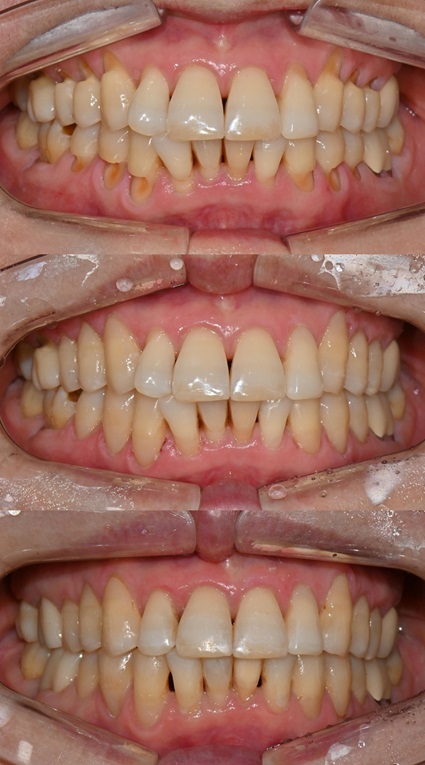
Before-and-after comparison
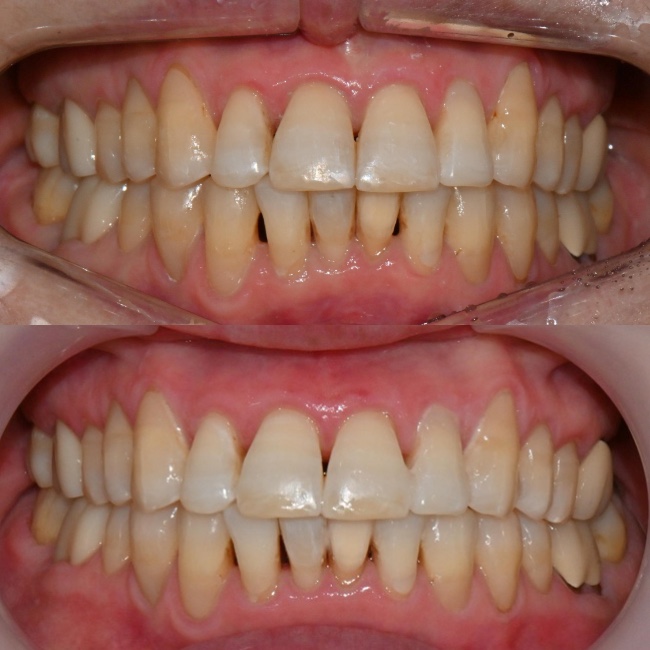
Before and after whitening treatment
Orthodontic treatment after middle age is not merely about making the teeth look aligned and beautiful; it can be an important treatment that determines the future lifespan of the teeth and oral health. If a plan is made that fits the current condition through accurate examination and periodontal assessment, stable results can be expected regardless of age. If you are considering orthodontics to use your teeth and gums well for life, now is the earliest time to start. We recommend checking the treatment direction that is right for you through professional consultation.
At Yonsei Jeongwon Dental Clinic, an orthodontic clinic in Daechi-dong, we have all the latest necessary equipment for orthodontic treatment, including the iTero Lumina 3D oral scanner, growth plate examination, and pre-/post-treatment simulation using the Morpheus facial scanner, allowing for more precise and systematic orthodontic care.
Many people considering orthodontics because of protruding mouth, crowded teeth, malocclusion, or underbite, etc., may already have gathered a lot of information through online searches. Even so, comparing the different appliances in person and hearing a detailed explanation can be very helpful in making a decision.
During consultation, you can directly compare various appliances such as Invisalign, Clarity, and Clippy-C, and receive detailed explanations of their advantages and disadvantages. We encourage you to call or visit for a consultation without 부담.
Yonsei Jeongwon Dental Clinic is close to Samseong Station, Hagyeoul Station, Daechi Station, and Hanti Station, making it very convenient for patients coming from Samseong-dong, Daechi-dong, Gaepo-dong, Dogok-dong, Ilwon-dong, Yeoksam-dong, Jamsil, and nearby areas.
Building next to BMW at the WooSung Apartment intersection in Daechi-dong
(opposite Starbucks / Samsung Store)
Yonsei Jeongwon Dental Clinic, an orthodontic clinic in Daechi-dong, offers
convenient and free parking
Consultation and inquiries: 02-501-2879