When you look in the mirror, you may sometimes notice
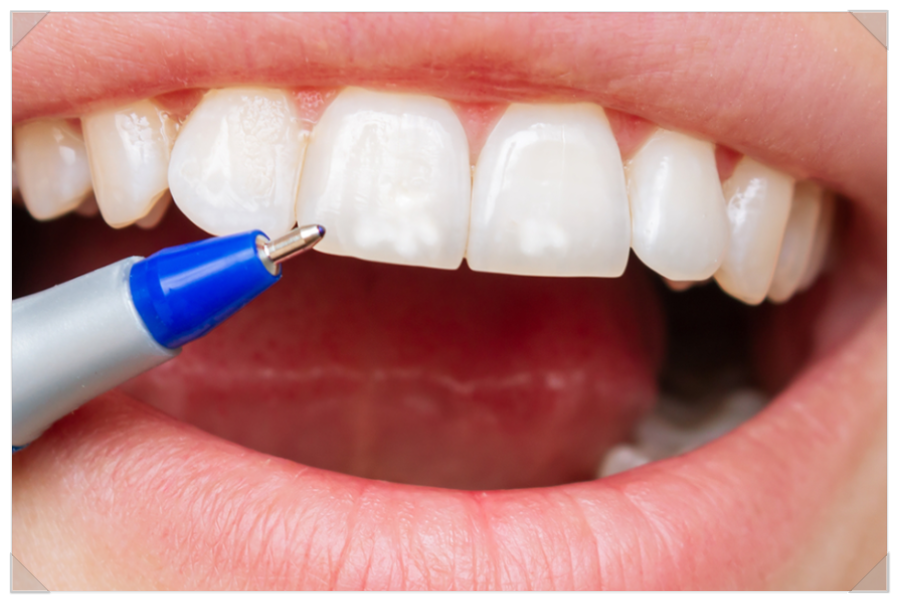
a white, opaque stain on the surface of a tooth.
At first, some people think it is just food staining
or a temporary mark,
and brush more forcefully
or try cleaning it several times.
However, if the white spot does not disappear
no matter how much you brush,
it may not be a simple stain.
Because it does not look yellow like tartar,
and it has not turned black like a cavity,
it is easy to dismiss it as no big deal,
but this kind of change can be a sign of tooth demineralization...!
Today, we will take a look at what tooth demineralization is,
what causes it,
and how to manage it when you find it :)
✅ White cavities on teeth,
demineralization?
Demineralization refers to the process in which minerals such as calcium and phosphorus
leach out from the enamel,
the outermost layer that protects the tooth surface.
Enamel is one of the hardest tissues in the human body,
but it can gradually weaken
when exposed to an acidic environment for a long time.
Bacteria in the mouth break down sugar and produce acid,
and when this acid attacks the tooth surface,
the minerals in the enamel begin to be lost.
The area where minerals have been lost
reflects light differently from normal enamel.
As a result, it appears as a white, opaque spot
on the tooth surface,
and this is called tooth demineralization.
In other words, demineralization is not yet a clear cavity,
but it can be considered an early stage
with the possibility of progressing into tooth decay.
✅ What causes it?
Tooth demineralization can occur due to
various causes,
and the most representative one is
poor oral hygiene.
If brushing is not done properly,
plaque builds up on the tooth surface.
Bacteria in plaque use the sugars in food to produce acid,
and this acid weakens the enamel
and can cause demineralization.
Especially during orthodontic treatment,
food and plaque are likely to remain around brackets and wires,
and if these areas are not cleaned properly,
white spots are more likely to form around the orthodontic appliances.
Also, if you frequently drink acidic beverages such as carbonated drinks or fruit juice,
the tooth surface is repeatedly exposed to acid,
which increases the likelihood that the enamel will weaken
and demineralization will progress.
In addition, if you vomit frequently
or have acid reflux symptoms,
strong acidic components come into contact with the teeth.
Gastric acid can strongly irritate the enamel,
which may cause surface damage and demineralization.
Not only that, but during the period when teeth are forming
or during growth,
poor nutrition,
or excessive exposure to fluoride,
can also lead to demineralization,
so it can occur for various reasons.
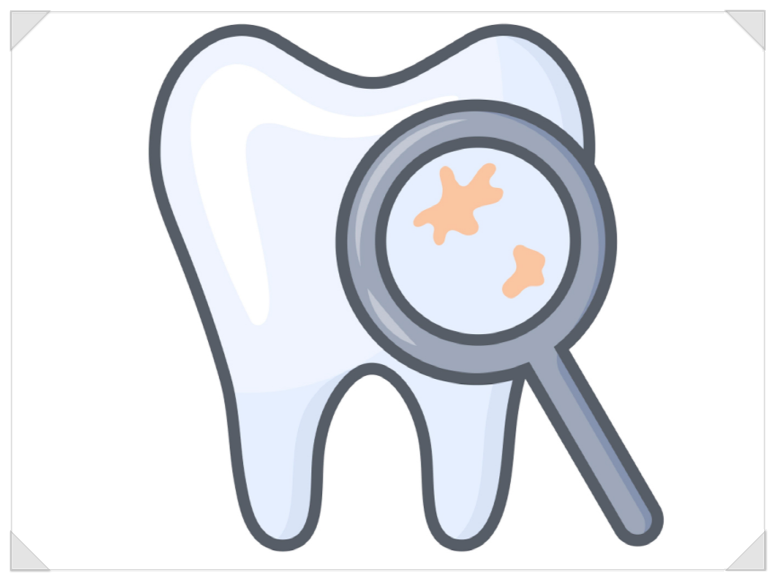
Sometimes, when people see a white stain on a tooth,
they think that brushing more diligently
will make it disappear.
However, an area of demineralization that has already formed because minerals have left the enamel
is difficult to fully restore to its original state
with brushing alone.
Of course, thorough brushing is very important.
To prevent demineralization from progressing into deeper decay,
clean and careful oral hygiene is necessary,
but if noticeable white spots have already appeared,
a dental examination is needed
to check the current condition.
On the other hand, if the damage is severe
or there are cosmetic concerns,
depending on the condition of the tooth,
various treatment options such as resin treatment, composite veneers, and crowns
can be considered.

In this way, we took a look at demineralization,
which is the white cavity on teeth.
If you see a white spot on the tooth surface that does not go away even after brushing,
rather than assuming it is simply a stain,
please visit a dental clinic
and receive a clear examination.
In addition, please try to prevent tooth demineralization
and maintain healthy teeth
through careful brushing habits and regular dental checkups!