What Causes Baby Bottle Tooth Decay,
and How Can It Be Prevented?
When your child’s first teeth begin to come in,
it can feel incredibly exciting and amazing for parents, too.
When one or two small, white front teeth
start to appear,
it can feel even more real
that your child is growing.
But did you know that letting your child fall asleep
with a bottle in their mouth
can cause cavities in the front teeth?
When your child is fussy or has trouble falling asleep,
many parents soothe them by giving them a bottle.
However, when this habit is repeated,
it can lead to baby bottle tooth decay..!
Today, we’ll take a step-by-step look at
what causes baby bottle tooth decay,
what symptoms may appear,
and how it can be prevented! :)
What Causes Baby Bottle Tooth Decay?
Baby bottle tooth decay
is a type of tooth decay commonly seen in infants and young children,
and it often affects several upper front teeth
at the same time.
But why does it occur?
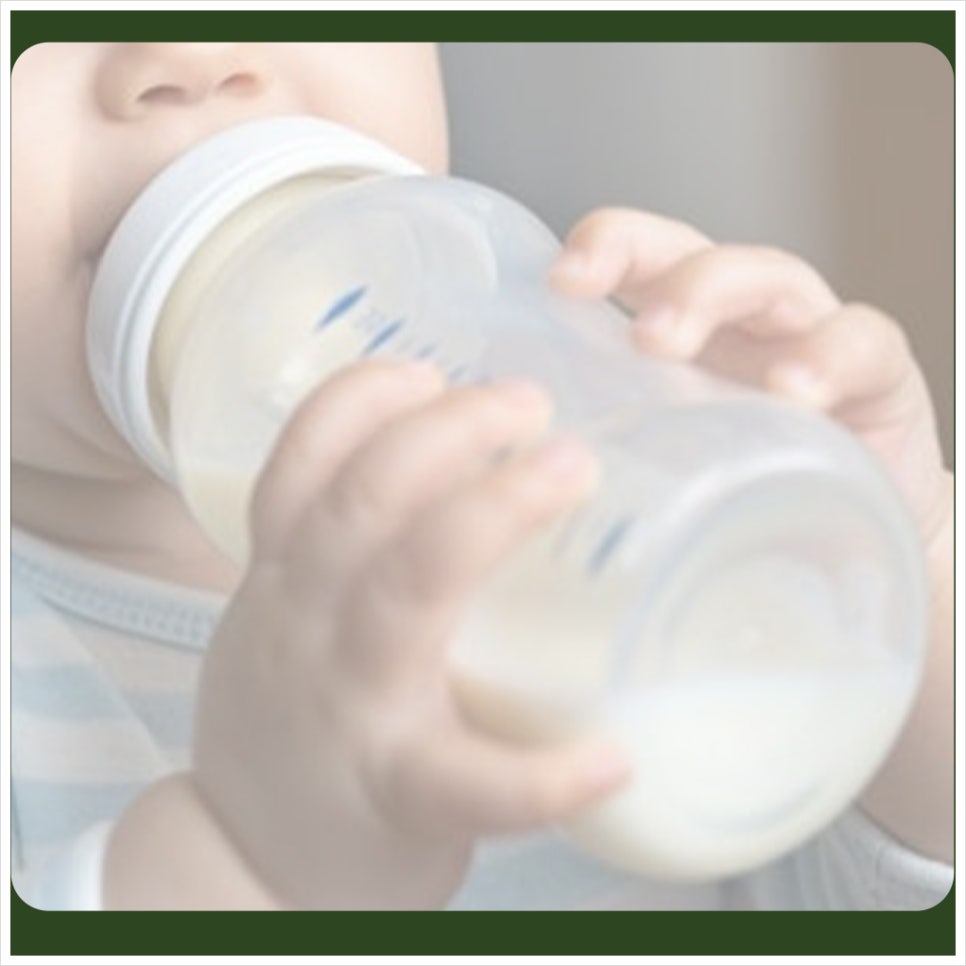
When a child falls asleep
while drinking milk, formula, or juice
from a bottle,
the sugars in the drink
remain on the surface of the teeth for a long time.
Bacteria in the mouth feed on these sugars
and produce acids.
These acids weaken the tooth surface,
which is how tooth decay begins.
Saliva, which helps rinse the mouth,
is produced in smaller amounts during sleep.
As a result, the sugars left on the teeth
remain there for longer,
making the teeth more vulnerable to decay.
Baby bottle tooth decay causes little to no pain in its early stages,
so it may be difficult for parents to notice.
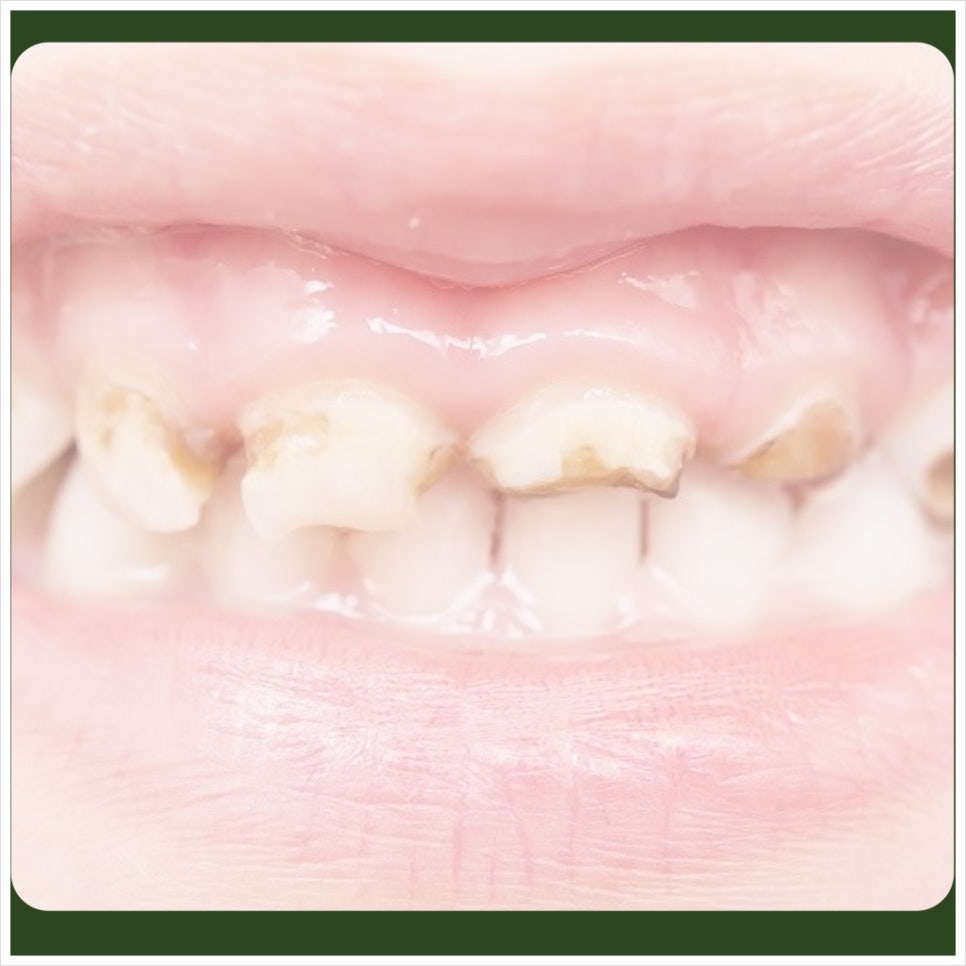
At first, white, cloudy spots
that look as though they have been dusted with chalk
may appear on the surface of the front teeth.
As it progresses,
yellow or brown stains may develop,
while the tooth surface may become rough
or look slightly pitted.
If the decay becomes deep,
the tooth may turn black
or parts of it may break off.
If your child often becomes fussy while eating,
avoids cold or hot foods,
or resists brushing much more strongly than usual,
it may be a sign that their teeth are uncomfortable.
Because infants and young children may have difficulty clearly expressing
where and how they are hurting,
parents need to check carefully for any signs.
Is Treatment Really Necessary?
Some people occasionally think that baby teeth
do not need to be treated
because they eventually fall out.
However, baby teeth are not simply
temporary teeth used for a short time..!
They are needed for chewing food and learning to pronounce sounds,
and they also affect the growth of the jaw and face.
They also help preserve space
so that the permanent teeth can come in their proper positions.
If baby teeth are lost too early because of decay,
nearby teeth may shift into the empty space,
which can leave insufficient room
for the permanent teeth to emerge later.
This may lead to irregular tooth alignment
or a situation that requires orthodontic treatment.
If the decay progresses deep enough to cause inflammation
around the tooth root,
it may also affect the permanent teeth
growing inside the gums.
For this reason, treatment should be sought as soon as possible.
Above all, prevention is important.
The first habit to change
is putting your child to sleep with a bottle in their mouth.
If your child insists on sleeping with a bottle,
how about filling it with water instead of milk~?
Also, if you give your child milk or formula
before bedtime,
it is best to brush their teeth if possible.
If brushing is difficult at this stage,
you can gently wipe the teeth and gums
with clean gauze or oral wipes.
After your child turns one,
it is important to gradually reduce bottle use
and begin practicing drinking from a cup.
This requires plenty of help and attention from parents.
Baby bottle tooth decay
often progresses simultaneously
in several front teeth,
so delaying treatment
can make things more difficult for both the child and the parents.
If you notice white spots on your child’s front teeth,
brown areas, or broken areas,
it is best not to dismiss them as simple staining.
Even if there is no pain,
tooth decay may still be progressing,
so please have the condition checked by a dentist!
Healthy baby teeth
provide a valuable foundation
that helps healthy permanent teeth grow.
To help your child eat and smile comfortably,
please establish proper feeding habits
and tooth-brushing habits together from an early age!