During hair loss consultations, I often meet patients who complain of scalp or hair pain.
Patients use expressions such as “my scalp hurts” or “I feel a sharp, tingling pain when I touch my hair.”
However, the exact cause of this scalp pain (trichodynia) has long remained unclear.

Recently, however, a study on this topic was published.
The study suggested a neurotransmitter called Substance P (SP) as the cause of this pain.
SP is a peptide involved in inflammatory responses and pain signal transmission, and it was found at particularly high concentrations in patients with hereditary hair loss.
Substance P, the cause of scalp pain?
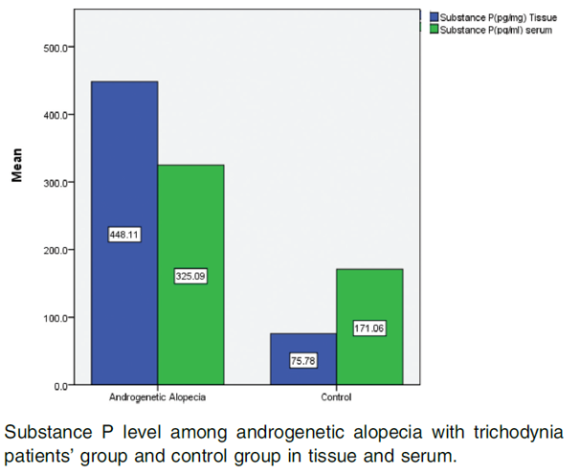
According to the study, in the scalp tissue of patients with hereditary hair loss who experienced trichodynia,
SP concentration was more than about 6 times higher than in the control group, and serum levels were also significantly increased.
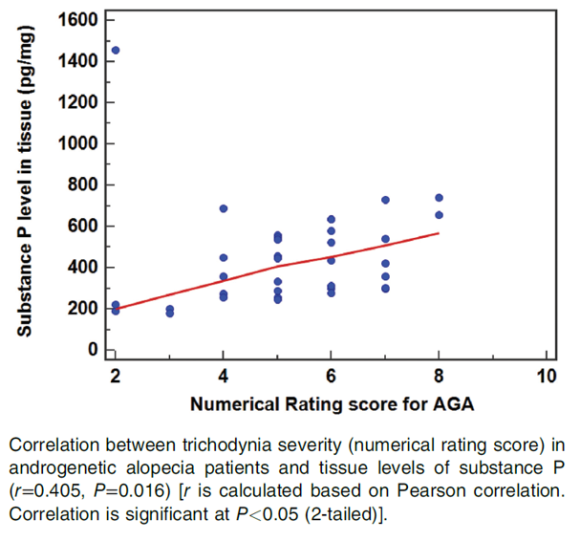
In particular, SP concentration showed a close correlation with pain intensity,
confirming that the higher the SP level, the more severe the pain.
These results suggest that SP may act as one of the main mechanisms of scalp pain.
It is explained that when SP triggers inflammation, amplifies pain signals, and accumulates in the tissues around hair follicles, it can cause pain and discomfort.
4 treatment methods to reduce SP
Then what are some ways to reduce SP?
The following treatments can help relieve scalp pain by suppressing SP.
- NK-1 receptor antagonists
These are drugs that block SP from binding to the NK-1 receptor.
They are already used in anti-nausea treatment, and their potential for managing scalp pain is also being reviewed.
- Anti-inflammatory treatment
Treatments that reduce inflammatory responses, such as steroid preparations or cooling therapy,
may help lower scalp inflammation and SP levels.
- Stress management
Because SP increases in stressful situations,
stress management methods such as meditation or exercise may contribute to suppressing SP.
- Topical treatment
Methods such as applying cooling sprays or local anesthetics to the scalp are also being considered
to reduce SP levels.
New possibilities for hair loss treatment
This study changes the existing view that hair-loss-related pain is merely a secondary issue.
If scalp pain is linked to SP, treatments that suppress it could greatly improve patients’ quality of life.
There is also the possibility of developing new therapies that target SP.
If we can manage pain in hereditary hair loss as well, the completeness of treatment will rise one level higher.
Now it is time for hairhair, Kim Jino.
필생신모(必生新毛).
Related paper: Gohary, Yasser M.a; Shaker, Olfat G.b; Elshimy, Lina A.c; Osman, Shimaa T.a. Tissue and serum levels of substance P in trichodynia of androgenetic alopecia patients. Journal of the Egyptian Women's Dermatologic Society 22(1):p 22-28, January-April 2025. | DOI: 10.4103/jewd.jewd_7_24
[In accordance with Article 56, Paragraph 1 of the Medical Service Act, this post is being written directly by the director for the purpose of providing information. Hair transplant surgery and treatment may have side effects, and they should be carefully decided upon through consultation with a specialist.]