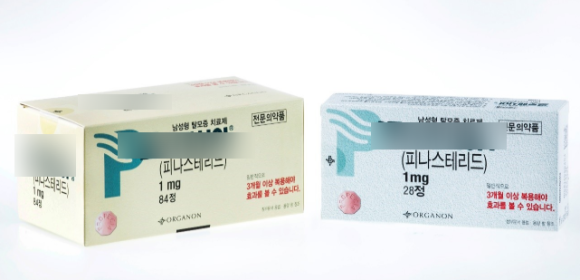
Source - Medipana News
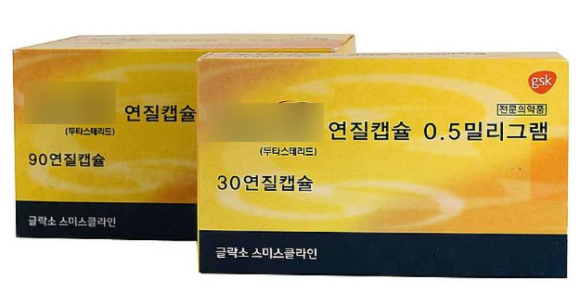
Source - Medigate News
When considering hair loss treatment, you may have heard of two names: finasteride and dutasteride.
If you look online, there is plenty of information about each drug’s effects and differences,
but the question of “which drug is right for me?” is not easily resolved.
In particular, as hair loss progresses, the desire to address it as quickly as possible grows stronger,
so the decision of which medication to choose must be made even more carefully.
What are the differences between finasteride and dutasteride?
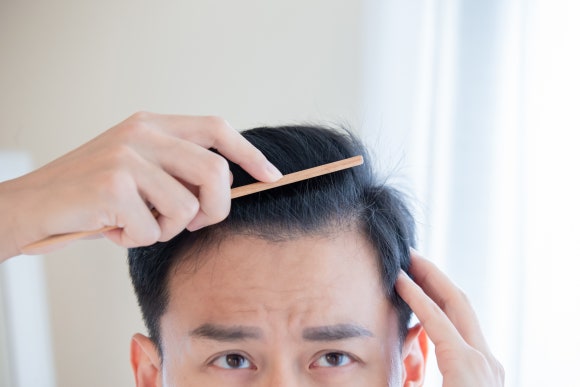
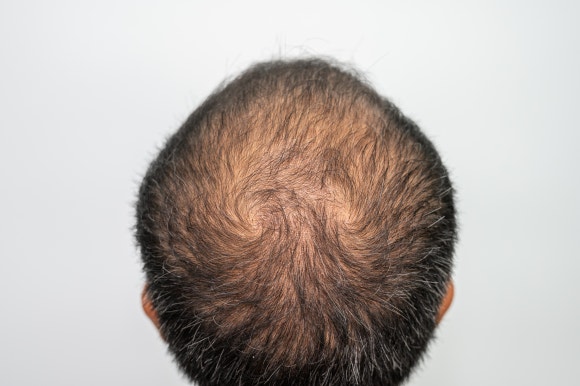
Male pattern hair loss (androgenetic alopecia) is mainly caused by the male hormone DHT, which acts on hair follicles.
Both finasteride and dutasteride inhibit 5-alpha reductase, blocking the conversion of testosterone into DHT (Estill et al. 2023a).
Through this, they may help prevent damage to hair follicles and slow or improve the progression of hair loss.
Finasteride Dutasteride
Main differences
- Finasteride: Selectively blocks only type II 5-alpha reductase, lowering DHT levels in the body by about 70% (Estill et al. 2023a).
It is generally used at a dose of 1 mg per day and is mainly used to treat early-stage and mild hair loss.
- Dutasteride: Inhibits both type I and type II 5-alpha reductase, and can reduce DHT levels by up to more than 90% (Estill et al. 2023a).
Because it has a broader mechanism of action than finasteride, it can also be effective in more difficult-to-treat areas of hair loss, such as an M-shaped hairline.
Comparison of clinical effects
Finasteride has been used as a hair loss treatment for the longest time,
and dutasteride has more recently had its effectiveness and safety confirmed (Park and Kim 2014).
Both drugs have shown, in clinical trials, an increase in hair count and an inhibitory effect on hair loss progression compared with placebo (Trüeb et al. 2018).
- Effect of finasteride: Most patients show stable improvement,
and with consistent use for more than one year, hair loss progression is noticeably reduced and some hair becomes thicker (Estill et al. 2023b).
- Effect of dutasteride: Because it has a stronger DHT-suppressing effect, it shows a good response in patients with moderate to severe hair loss who did not see results with finasteride (Lee 2022).
Side effects and safety
Because both finasteride and dutasteride affect androgen metabolism, sexual side effects such as decreased libido, erectile dysfunction, and reduced semen volume may occur (Shanshanwal and Dhurat 2017).
However, these side effects are relatively rare, and most can recover after stopping the medication (Estill et al. 2023b).
- Finasteride: Because it has a short half-life, it is quickly eliminated from the body after discontinuation.
Therefore, if side effects occur, recovery is more likely to be rapid.
- Dutasteride: Because its effects last longer, if side effects occur, it may take longer for the symptoms to go away.
However, studies report that the rate of side effects is not significantly different from that of finasteride (Shanshanwal and Dhurat 2017).
Medication selection guide by situation
- Early-stage and mild hair loss: Finasteride may be a good choice.
There are more long-term use data, so its safety is well established, and it is also cost-effective.
- Moderate to severe or rapidly progressing hair loss: If hair loss is already advanced or if there is no response to finasteride,
dutasteride may be more effective.
- If you are sensitive to side effects: If you are concerned about sexual side effects, it is good to start with finasteride and switch to
dutasteride if the effect is insufficient.
- If you also have benign prostatic hyperplasia: Dutasteride is also effective in reducing prostate
size,
so it may be advantageous for middle-aged and older men (Estill et al. 2023a).


Both finasteride and dutasteride are proven hair loss treatments.
It is important to consider your stage of hair loss, family history, scalp condition, and other factors, and then choose the appropriate medication after consulting a specialist.
Above all, don’t forget that consistent use determines the outcome.
It’s time for hairhair, Kim Jino.
Pilsaengsinmo (必生新毛).
References
• Estill, M.C., Johnson, B. and Smith, T. (2023a) ‘Finasteride vs Dutasteride: Comparison of DHT Reduction Rates’, Georgetown Medical Review, 22(3), pp.193–200.
• Estill, M.C., Johnson, B. and Smith, T. (2023b) ‘Review of Efficacy and Side Effects of Finasteride and Dutasteride’, Georgetown Medical Review, 22(2), pp.85–93.
• Lee, H.S. (2022) ‘Effectiveness of Avodart (MSD) in Treating Frontal Hair Loss’, Korea Biomedical Review, 16(3), pp.81–89.
• Park, J. and Kim, S.H. (2014) ‘24-Week Hair Count Increase with Dutasteride vs Finasteride’, International Journal of Dermatology, 53(2), pp.199–207.
• Shanshanwal, S.J. and Dhurat, R.S. (2017) ‘Comparison of Side Effects between Dutasteride and Finasteride’, Indian Journal of Dermatology, Venereology and Leprology, 83(7), pp.915–922.
• Trüeb, R.M., Cha, H.R. and Perez, M. (2018) ‘Meta-analysis: Hair Count Increase with Dutasteride’, Journal of the European Academy of Dermatology and Venereology, 12(4), pp.212–220.
[This post is written directly by the director for the purpose of providing information in accordance with Article 56, Paragraph 1 of the Medical Service Act. Hair loss surgery and treatment may involve side effects, so please make a careful decision after consulting with a specialist.]