Recently, transgender patients have shown a strong interest in improving their appearance to express their gender identity more clearly.
In particular, hair has become an important element in expressing personal identity.
Based on the latest paper, we will look at various treatments that transgender patients can use together with hormone replacement therapy
for hair growth or to improve hair loss.
For transgender women, estrogen helps reduce body hair, but there is a limitation in that facial hair does not decrease to a level similar to that of cisgender women.
Therefore, additional anti-androgen therapy may be needed, and medications such as spironolactone or finasteride may help promote scalp hair growth while reducing unwanted body hair.
On the other hand, for transgender men, testosterone therapy increases facial and body hair, but at the same time it may raise the risk of androgenetic alopecia (AGA).
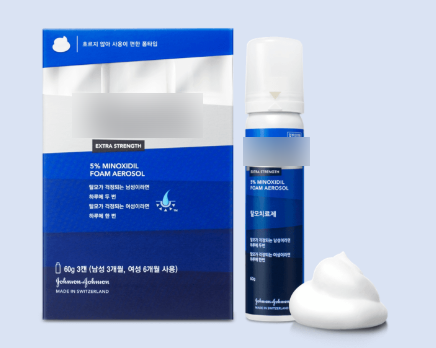
In this case, a strategy to promote hair growth and prevent hair loss using treatments such as minoxidil is needed.
Customized hair care strategy, treatment algorithm
The paper presents hair care methods for transgender patients.
The main points are as follows.
Source - Korea Johnson & Johnson


Source - Medical World News

Promoting hair growth
-
First-line treatment: Use of 5% minoxidil, which has proven safety and cost-effectiveness
-
Second-line treatment: For transgender women, additional anti-androgen therapy (e.g., spironolactone) is applied; for transgender men, oral minoxidil may be considered
-
Third-line treatment: Add finasteride or dutasteride
-
Fourth-line treatment: Consider surgical methods such as hair transplantation or hairline correction surgery
Body hair and facial hair removal
-
First option: Temporary hair removal methods such as shaving, waxing, and threading
-
Second option: Permanent hair removal methods such as laser hair removal or electrolysis
-
Adjunct option: Use additional depilatory agents such as eflornithine cream
In this way, through individualized treatment strategies, transgender patients can complement the hair changes that are difficult to achieve with hormone replacement therapy alone.
Hair care for transgender patients
Conclusion on hormone replacement therapy and additional treatment strategies
Hair care for transgender patients often cannot achieve satisfactory results with hormone replacement therapy alone, so pharmacologic treatment and individualized treatment strategies are essential.
In addition to various drug treatments for promoting hair growth and preventing hair loss, cosmetic options for body hair removal should also be comprehensively considered.
It is also important to develop the most suitable treatment strategy through close consultation with medical professionals.
Now it is time for hairhair, this was Kim Jino.
May new hair be born (必生新毛).
References
Onejeme, C., Fitzgibbon, M., Jimenez, A. & Ross, L. (2025) Clinical Pearls Addressing Hair Growth and Loss in Transgender Patients on Hormone Replacement Therapy. Dermatology Online Journal, 31(1), p.2. doi:10.5070/D331164961.
[This post is written directly by a board-certified plastic surgeon for informational purposes in accordance with Article 56, Paragraph 1 of the Medical Service Act. Hair loss surgery and treatment may have side effects, and please make a careful decision after consulting with a specialist.]