When you hear the word hair loss, words like genetics, stress, and hormones naturally come to mind.
But a study has found that hair loss may be related to the characteristics of immune cells.
As a doctor who has met countless hair loss patients, there has always been one question that came up repeatedly.
"Why does this kind of hair loss happen?" In particular, for alopecia areata patients, the phenomenon has often been explained with the word "stress."
However, the real patients seen in clinical practice had causes that were far more complex than that.
There are quite a few cases that cannot be explained by existing theories alone, such as cases that appear even without stress or cases with extremely different treatment responses.
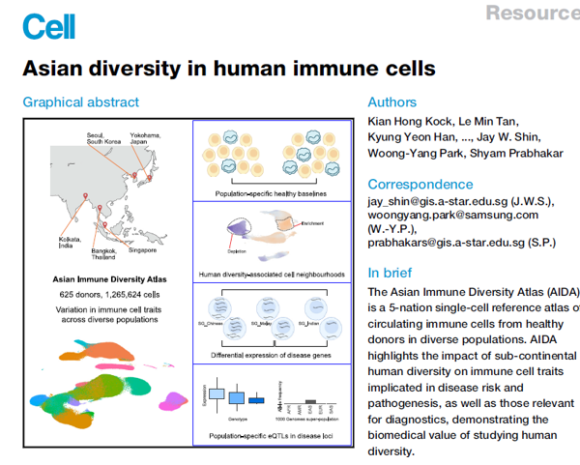
Amid such questions, the study I recently came across was the 'Asian Immune Diversity Atlas (AIDA)' project, a collaboration among research teams from five Asian countries, including Samsung Medical Center, the Genome Institute of Singapore, and RIKEN in Japan.
The researchers analyzed 1.26 million immune cells at the single-cell level from the blood of 619 healthy adults across seven Asian populations, including Korea, Japan, India, Thailand, and Singapore.
One surprising finding from this vast dataset was that Koreans had the lowest proportion of 'regulatory T-cells,' which are considered a key part of immune regulation.
Regulatory T-cells play a role in the immune system much like the brakes on a car.
These cells must function properly to suppress excessive immune responses and prevent the body from attacking itself.
But when these brakes are weak, immune cells mistake the body's own tissues—especially hair follicles—for foreign invaders and attack them. This is the essence of alopecia areata. The confusion in the immune system appears in the form of hair loss.
This study is the first case to demonstrate this quantitatively.
The immune characteristics of Koreans, which had previously only been suspected to have an 'autoimmune tendency,'
have now been clearly revealed with scientific data.
This study is not limited to alopecia areata.
The reason various autoimmune diseases such as lupus, psoriasis, and rheumatoid arthritis occur relatively frequently among Koreans can also be found in this immune profile.
A deficiency in regulatory T-cells can be a common basis for a wide range of autoimmune diseases.
Another important point is the difference in treatment response.
By looking not only at simple cell distribution but also at cell functionality, the researchers warn that populations with fewer regulatory T-cells, like Koreans, may respond less effectively to certain immunosuppressants or immuno-oncology drugs.
This clearly shows the need for personalized medicine for Asians, especially since existing global drug clinical trials have been conducted mainly on Western white populations.
In actual clinical practice, even when the same drug is used, responses differ, and even when patients show the same symptoms, their prognoses vary.
This study has provided part of the answer to that question.
Now, when facing alopecia areata in the clinic, we can explain to patients the concept of 'immune cell regulatory ability.'
Rather than simply looking for psychological causes, we can now explore new treatment strategies based on biological understanding.
The research team organized this data under the name 'Asian Immune Diversity Atlas' and released it as an open database.
This data is expected to be used as foundational research material in a variety of fields, not only for hair loss but also for various autoimmune diseases, vaccine responses, and responses to cancer immunotherapy drugs.
It is drawing significant attention in the international medical community as the first large-scale dataset to comprehensively reflect the genomic and immune cell characteristics of Asians.
When looking at hair loss now, a more integrated and personalized approach that also considers immune cells and genetic information seems necessary.
It is time for hair to grow again, this was Kim Jin-oh.
May new hair be born (必生新毛).
References
Kock, K.H., Tan, L.M., Han, K.Y., et al. (2025). Asian diversity in human immune cells. Cell, 188, 1–19. https://doi.org/10.1016/j.cell.2025.02.017
[This post is written directly by a board-certified plastic surgeon for informational purposes in accordance with Article 56, Paragraph 1 of the Medical Service Act. Hair loss surgery and treatment may have side effects, and you should make a careful decision after consulting with a specialist.]