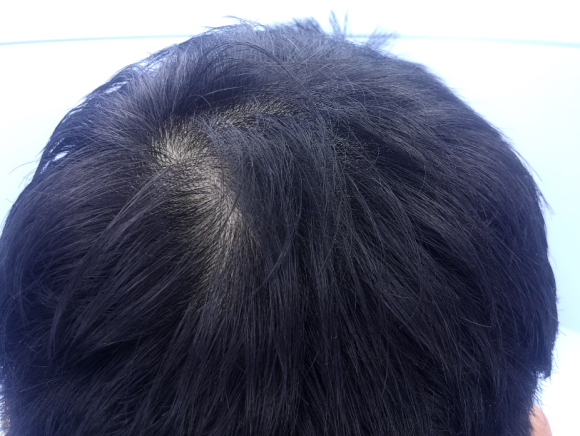
When looking at the back of someone’s head, there is a part where the gaze naturally lingers.
That is the whorl located at the center of the crown.
Like the eye of a typhoon, this small area where the hair swirls is a place that draws more attention than you might think.
Lately, when I look in the mirror, I feel like the area around my whorl looks more defined than before.
Has my hair volume decreased a little?
There are days when it feels strangely noticeable and I let out a sigh.
Whorl
Why do whorls form?
A whorl naturally forms during the fetal stage, as the scalp stretches in response to the skull expanding while the head grows.
At that time, it is created as the follicles form a rotating pattern according to the expansion of the scalp.
Simply put, just as wrinkles appear when fabric is pulled from one side, a whorl is a trace of the “pulling” that occurs as the scalp develops.
It is not merely a cosmetic feature, but a physiological structure that inevitably appears during the body’s growth process.
Is there a connection between whorl direction and handedness?
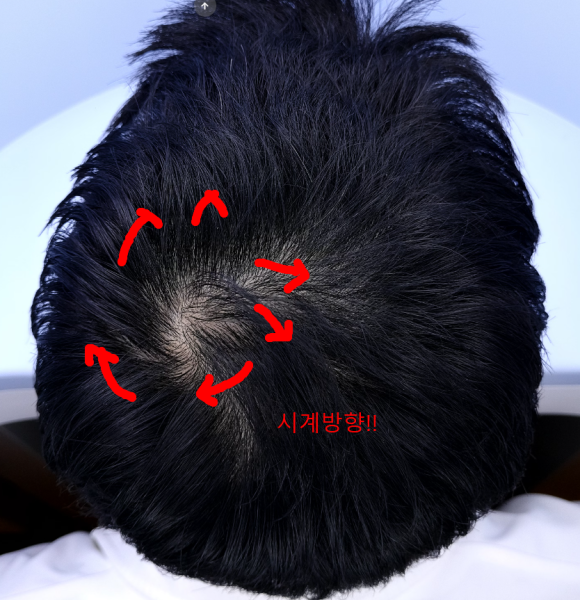
According to a study published in 2003, a person’s handedness and whorl direction may be genetically linked.
In general, right-handed people are said to have a higher chance of having a clockwise whorl, while left-handed people are more likely to have a counterclockwise whorl.
Of course, this is not true for everyone, but such research offers an interesting clue that whorls may not be formed by chance alone and could be related to genetic mechanisms.
Heartburn during pregnancy and a child’s hair volume?
Have you ever heard the saying, “If the mother has severe heartburn during pregnancy, the baby will have a lot of hair”? It may seem like a superstition, but there is some scientific basis for it.
Hormones secreted during pregnancy (progesterone, relaxin) can cause acid reflux, but they may also be involved in fetal growth and hair development.
In other words, the greater the hormonal changes, the higher the chance that the child may have abundant hair.
Of course, exceptions always exist, but it is also an interesting point from a biological standpoint.
Why does the whorl become more noticeable when hair loss begins?
The whorl is the central point where hair grows most densely.
However, if hair volume decreases starting from this area, the scalp becomes more visible in comparison.
In particular, in types of hair loss that progress at the crown, such as male pattern hair loss, the area around the whorl may be the first to stand out.
But the important point is that the whorl itself does not cause hair loss.
Hair loss occurs through a combination of factors such as genetics, hormones, and lifestyle habits.
So even if the whorl looks more prominent, it is difficult to conclude that this alone means hair loss.
A whorl, when you think about it, is a special trace that is uniquely yours
A whorl is not simply a pattern created by the meeting of hair directions.
It is a record of bodily growth and a pattern that reflects genetic traits.
It may be related to factors such as handedness and the environment during pregnancy, and it has long been a subject of people’s attention, enough that there are also cultural sayings connected to the number of whorls.
If your whorl stands out especially because of hair loss, the most important thing is to regularly check the condition of your scalp and maintain healthy habits.
Rather than worrying too much about the whorl itself, I recommend thinking in the direction of understanding your scalp and hair and managing them properly.
A whorl is a natural physical feature that reflects each individual’s characteristics very well.
I hope this becomes an opportunity to look back on your hair health based on accurate information rather than unnecessary worry.
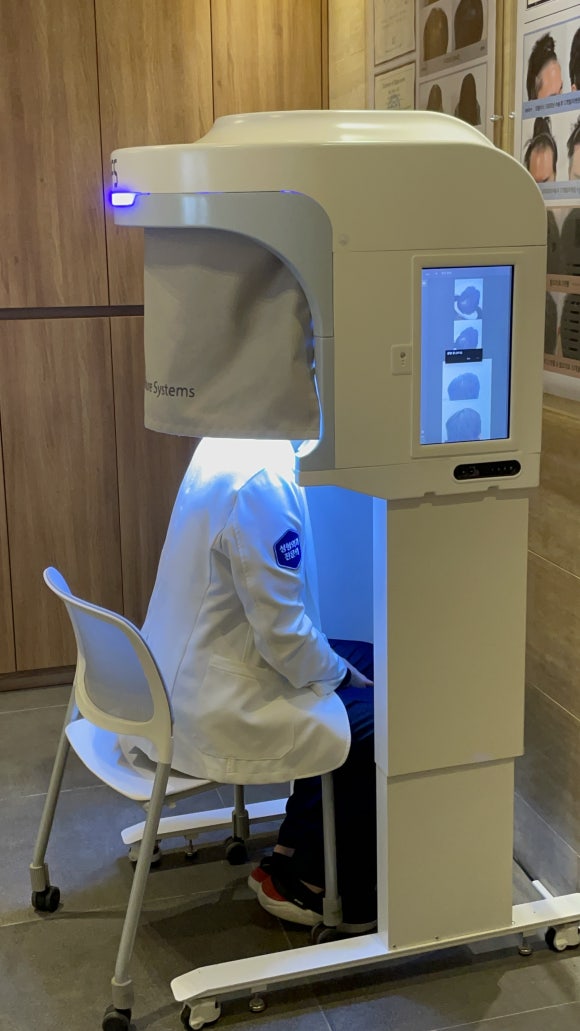
It is now time for hairhair to grow, Kim Jino here.
필생신모(必生新毛).
References
Klar, A. J. S. (2003). Human handedness and scalp hair-whorl direction develop from a common genetic mechanism. Genetics, 165(1), 269-276.
[This post is written directly by a plastic surgery specialist for the purpose of providing information in accordance with Article 56, Paragraph 1 of the Medical Services Act. Hair transplant surgery and treatment may have side effects, and you should make a careful decision after consulting with a specialist.]