Source - News1
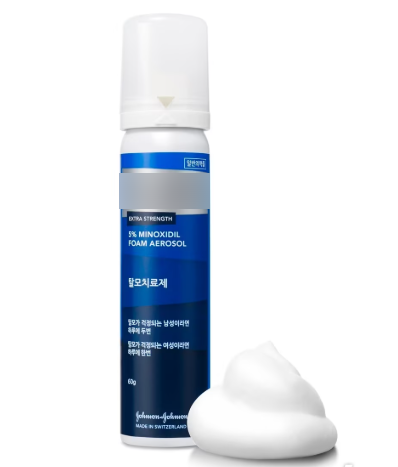
Minoxidil
"Is there any other option besides minoxidil?"
This is a question female patients often ask in the clinic.
While there are relatively established medications for male-pattern hair loss, such as finasteride and dutasteride, there are fewer effective drugs for female-pattern hair loss.
Minoxidil is available, but it is difficult to expect effects as strong as those of male hair loss medications.
Recently, however, a drug with the potential to change this situation has been drawing attention.
That drug is bicalutamide.

Source - Yakiyo
Prostate cancer treatment / Bicalutamide
Bicalutamide is a nonsteroidal anti-androgen originally used to treat prostate cancer.
It acts on androgen receptors and blocks the effects of dihydrotestosterone (DHT).
DHT is one of the main hormones that causes hair loss, so inhibiting it increases the possibility of improving hair loss.
Until now, bicalutamide has been handled cautiously because of concerns about side effects and the lack of clinical data in women.
In particular, concerns about elevated liver enzyme levels and long-term safety have made it difficult to use.
However, over the past few years, accumulated cases and research results in female hair loss patients have begun to change the situation.
In a paper published in JAAD Reviews in 2025, 13 clinical cases in which bicalutamide was applied to female hair loss were analyzed.
Most of them were small-scale, preliminary studies, but several interesting common points emerged.
• Effect: More than about 60% of patients reportedly experienced changes such as increased hair volume and reduced hair loss.
The research methods consisted of before-and-after photo comparisons, surveys, and physicians' clinical evaluations.
• Dosage: In most cases, 25 mg or 50 mg per day was taken, and some patients took it together with oral contraceptives.
• Side effects: Symptoms such as mild fatigue, menstrual irregularity, and breast pain were reported in some cases, and there were also cases of a temporary increase in liver enzyme levels.
However, serious liver damage was rare,
and most cases were temporary.
In one study, 25 female patients took 50 mg of bicalutamide for 6 months.
Before-and-after photos were compared, and the patients themselves evaluated whether their hair loss had improved.
As a result, more than 70% answered that there had been a "noticeable improvement."
In another study, the group taking bicalutamide together with oral contraceptives showed better results than the group taking it alone.
This study also observed changes in hair thickness and density.
Most studies monitored safety through regular liver function tests and hormone level measurements.
When side effects occurred, the drug was discontinued or the dosage was adjusted, and most patients recovered.
The studies say bicalutamide may be especially effective for women with the following conditions:
• Cases where existing treatments (minoxidil, spironolactone, etc.) were ineffective or caused side effects
• Women with high androgen levels, especially patients with polycystic ovary syndrome (PCOS)
• Perimenopausal women who can take it together with oral contraceptives
Bicalutamide is not yet officially approved as a treatment for female hair loss. However, this review is meaningful in that it is the first summary to scientifically analyze the use of bicalutamide, which had previously depended on the experience of individual physicians.
In hair loss treatment, sustainability and safety are just as important as effectiveness.
The options for female hair loss treatment are still limited.
More research will be needed, but bicalutamide could be a drug that adds a new possibility to this scarce set of options.

It is time for hair, this was Kim Jin-oh.
Pilsaengsinmo (必生新毛).
Reference
Perez, S. M., Nguyen, B., and Senna, M. M. (2025). Efficacy and safety of bicalutamide in female hair loss: a review of the literature. JAAD Reviews.
[This post is written directly by a plastic surgery specialist for the purpose of providing information in accordance with Article 56, Paragraph 1 of the Medical Service Act. Hair transplant surgery and treatment may have side effects, and please make a careful decision through consultation with a specialist.]