Many women experience their hair becoming thinner and falling out as they get older.
In particular, if your scalp has become more visible after menopause or you feel that your hair volume has decreased, it cannot be explained by simple aging alone.
I will explain the causes and treatment methods for hair loss in menopausal women in an easy-to-understand way.
Menopause and Hormonal Changes
Menopause is not simply the end of menstruation; it is a period accompanied by a sharp decrease in the female hormone estrogen.
Estrogen plays an important role not only in women’s reproductive function, but also in improving blood flow to the scalp and regulating the hair follicle growth cycle.
At this stage, estrogen drops sharply, while the relative proportion of male hormones (androgens) increases.
As a result, the influence of testosterone and dihydrotestosterone (DHT) becomes stronger, gradually changing hair follicles so that they produce only thinner, shorter hairs, which leads to hair loss.
Common Types of Hair Loss After Menopause
- Female pattern hair loss (Female Pattern Hair Loss, FPHL)
This is the most common type, and it is characterized by gradual thinning of hair on the crown and frontal scalp, with reduced density.
It is reported that about 50% of menopausal women experience this, and the combined effects of decreased estrogen and increased androgens are considered the main causes.
- Telogen effluvium (Telogen Effluvium, TE)
This is characterized by sudden hair shedding, and causes may include menopausal stress, medications, and illness.
A sharp decrease in estrogen is also one of the major factors in telogen effluvium.
- Frontal fibrosing alopecia (Frontal Fibrosing Alopecia, FFA)
This is a chronic inflammatory disease in which hair loss at the frontal hairline and eyebrow area gradually progresses. Its incidence is increasing in women after menopause, and autoimmune reactions and hormonal changes act together.
Biological Mechanisms Behind Hair Loss
-
Decreased estrogen: The signal that maintained the anagen phase is interrupted, shortening the hair growth cycle.
-
Increased DHT: Hair follicles gradually shrink, and the hair becomes thinner.
At the same time, the Wnt/β-catenin signaling pathway is suppressed.
-
Reduced scalp blood flow: As estrogen decreases, blood vessels constrict, leading to a lack of oxygen and nutrients delivered to the hair follicles.
-
Weakened immunity: Especially in FFA, the immune balance around the hair follicles is disrupted, triggering inflammation and damaging the follicles.
Treatments
1. Female pattern hair loss (FPHL)

Source - Health Chosun
Hair loss medications
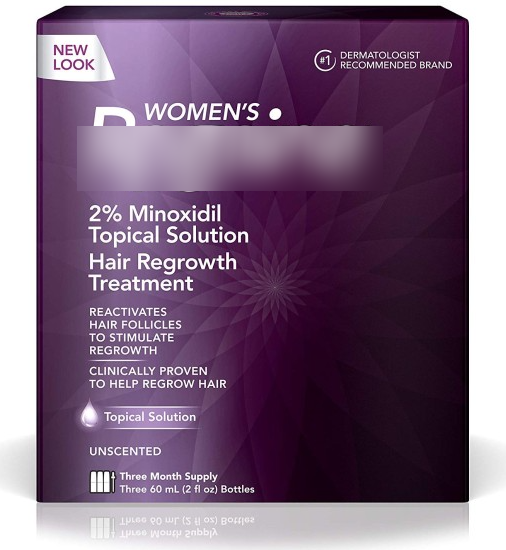
① Minoxidil: A topical medication in 2% or 5% concentration.
The only hair loss treatment for women approved by the U.S. Food and Drug Administration (FDA).
② Finasteride / Dutasteride: Oral medications that suppress the action of male hormones.
Dutasteride is more potent than finasteride.
③ Spironolactone, Cyproterone: Suppress hair loss by blocking androgen receptors.
④ Combination treatment: Can be used together with follicle injections (a treatment that injects growth factors or medications into the scalp), PRP (platelet-rich plasma injections using the patient’s own blood), microneedling (scalp needle treatment), and low-level laser therapy (LLLT).
2. Telogen effluvium (TE)
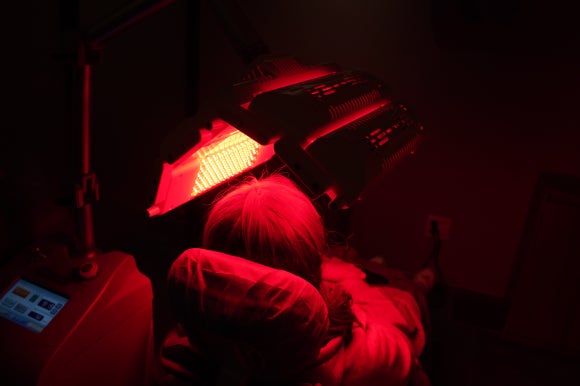
① Remove the cause first: Stress relief, reviewing current medications, and improving nutritional status are important.
② Minoxidil, steroids, and low-level laser therapy may be used as supportive treatments.
3. Frontal fibrosing alopecia (FFA)
① Immunosuppressants: Tacrolimus, clobetasol, hydroxychloroquine, and others are used.
② Combination with finasteride / dutasteride: Effective for suppressing inflammation and protecting hair follicles.
③ Low-level laser therapy and excimer laser may also be considered for inflammation control.
Many of the female patients who visit clinics and hospitals for hair loss complain of symptoms around the time of menopause.
However, hair loss is still often perceived as a men’s issue, and diagnostic and treatment standards for female hair loss are also insufficient.
If diagnosis is delayed, it can lead to permanent loss of hair follicles, so early diagnosis and treatment are very important.
Hair loss in women is not just an appearance issue; it is closely related to self-esteem, relationships, and mental health, so a careful approach is needed.

Menopause is an important turning point in a woman’s life, and various changes occur throughout the body.
Hair loss is one of the concerns that many women experience but find difficult to talk about.
Fortunately, recent research has been increasingly clarifying the causes and mechanisms of menopausal hair loss in women, and various treatment methods are also being developed.
The most important thing is to recognize hair loss early and find the treatment that suits you best with a specialist.
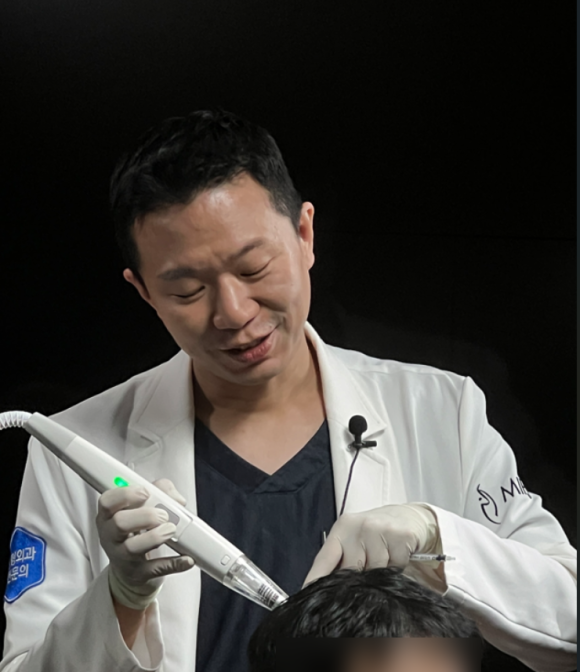
It’s time for hairhair, Kim Jino.
Pilsaengsinmo (必生新毛).
References
Gupta AK, Economopoulos V, Mann A, Wang T, Mirmirani P. Menopause and hair loss in women: Exploring the hormonal transition. Maturitas. 2025;198:108378.
[This post is written directly by a plastic surgery specialist for informational purposes in accordance with Article 56, Paragraph 1 of the Medical Service Act. Hair loss surgery and treatment may have side effects, and please make a careful decision after consulting with a specialist.]