“Please have a seat, and let me take a look in the mirror once.”
The consultation began with a phrase I often use in the exam room.
The patient said he had been struggling with hair loss for more than 10 years.
He said he did not feel motivated to take medication and that it was hard to come to the hospital often.
He also said that after recent shoulder surgery, he was in rehabilitation, so physically it was not easy.
He told me that he had taken hair loss medication for about a month in the past, but stopped quickly.
I recommended that he try taking the medication again.
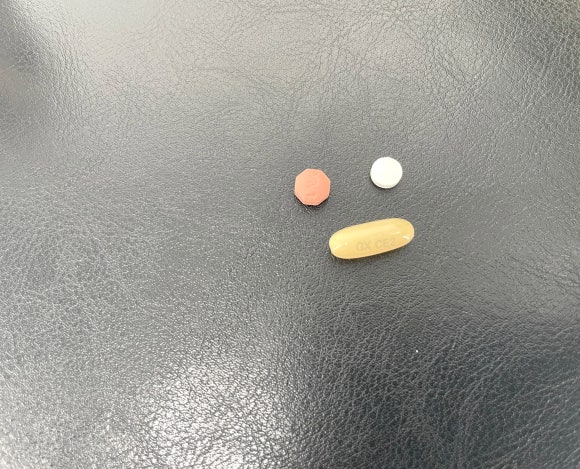
Then the patient said this.
“Isn’t this the same medicine I took 10 years ago?
So you’re still prescribing the same thing... I guess there hasn’t really been any progress in hair loss treatment.”
With a tone of resignation and a bitter smile. Seeing that, a sentence from a newspaper article I had seen in my school days suddenly came to mind.
‘Conquering cancer is not far away.’
I thought the world would change soon.
But even now, as I approach 50, those words have not become reality.
Hair loss is no different.
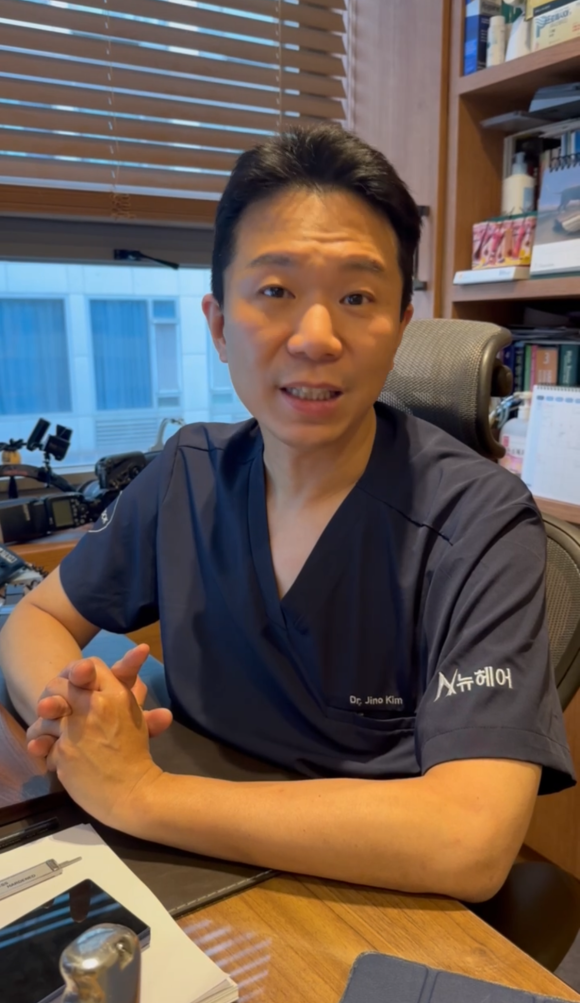
But saying there has been no progress is not right.
Just as cancer treatment has clearly advanced, hair loss treatment has also steadily moved forward.
Hair transplant techniques have improved dramatically, and it has become possible to perform transplantation without incisions.
Follicle injections, autologous cell therapy, low-level laser treatment, and topical finasteride formulations have also appeared.
However, from the patient’s perspective, it can still look like “it’s all the same.”
That is because there is still no treatment that solves everything in one shot.
Autologous cell therapy, which is often discussed these days, is no different.
Just hearing the name makes it sound like a cure-all, but the actual effect lasts only about 6 months to 1 year.
That alone is not enough, and in the end it has to be used together with medication or other methods.
Even so, many people still hope for a single breakthrough.
“Medication feels a bit burdensome. I’m worried about side effects too.”
When I hear that, I answer like this.
“I’ve been taking hair loss medication for 20 years too. One pill a day.”
It is not especially pleasant, but if you want to live with hair loss for a long time, you need a realistic choice.
A few days ago, another patient said this.
“Doctor, in movies the main character always has a full head of hair, and the supporting characters always have no hair.”
I laughed, but at the same time I felt a pang.
Because it contained both society’s gaze and personal wounds.
Hair is still an important symbol of appearance, and hair loss is seen as a weakness people want to hide as much as possible.
So even starting treatment takes a long time, all the way to the point of making the decision.
These conversations in the exam room become small records for me.
Hair loss treatment does not have a dramatic breakthrough like cancer treatment, but technology can advance rapidly at unexpected moments.
Smartphones did, and artificial intelligence did too.
Someday, the day will come when follicle cloning technology is commercialized.
But that day is not here yet.
So what matters is not missing the treatments we can do now.
Even while waiting, hair loss progresses, and patients easily become exhausted.
I, too, sometimes feel weary from repeating the same explanations, but even so, I keep talking.
Hair loss has not yet been conquered.
But treatment is clearly evolving.
Slowly, but steadily, it is moving forward without stopping.