When people talk about hair loss, that guy DHT always comes up.
It sounds a bit like a delivery company name, or maybe the name of a component found in tuna.
This substance is the abbreviation for dihydrotestosterone.
It is a substance found in the bodies of people of all ages and genders, and it is a powerful androgen hormone produced when testosterone, the leading male hormone, is converted by 5α-reductase.
This hormone plays an important role in forming male sexual characteristics, such as body hair growth, genital development, and prostate function.
However, DHT also acts on scalp hair follicles and can be a factor that causes hair loss.

It is a substance present in everyone’s body, so why does it cause hair loss in some people but not in others?
As in the YouTube comments above, many people wonder about this.
DHT itself does not directly cause hair loss; what matters is how sensitive each person’s hair follicles are to DHT.
This sensitivity is mainly determined by the genetic characteristics of the androgen receptor, which is needed when androgen hormones bind to cells.
When DHT binds to the androgen receptor in the hair follicle, if sensitivity is high, the signals that promote hair loss are transmitted more actively, and the hair follicle gradually shrinks and the hair becomes thinner.
The number of CAG repeats in the androgen receptor gene sequence is an important factor affecting receptor sensitivity.
The shorter the CAG repeat count, the greater the receptor’s activity, and accordingly, the higher the responsiveness to DHT.
These genetic differences make each person respond differently to DHT and determine whether hair loss occurs.
Also, not all areas of the scalp respond to DHT in the same way.
Hair follicles in the back and sides of the head are relatively insensitive to DHT, while hair follicles in the front and crown areas respond more sensitively, so hair loss tends to occur more concentrated in those regions.
This is also an important reason why the “occipital hair follicles” are used as the donor area in hair transplantation.
I also once mentioned in a previous post that, by origin, the hair in the front and the hair in the back came from different places.
Back hair: mesodermal origin, front hair: ectodermal origin
Related post
It is a bit difficult, right? So in actual consultations, I often explain it to patients with a simple analogy.
It can be compared to the relationship between sunlight and skin.
Sunlight shines on everyone equally, but some people get sunburned easily while others tolerate it without any problem at all.
Even Dracula would burn and disappear if exposed to sunlight.
Likewise, DHT exists in everyone, but whether hair loss occurs depends on how the hair follicles receive it.
In the end, more important than DHT itself is the sensitivity of the hair follicles.
People whose responsiveness to DHT is increased due to genetic factors are more likely to experience progressive hair loss, while others may not lose hair even at the same DHT level.
Therefore, hair loss treatment and prevention require an approach that goes beyond simply lowering hormone levels and takes into account an individual’s genetic traits and the sensitivity of their hair follicles.
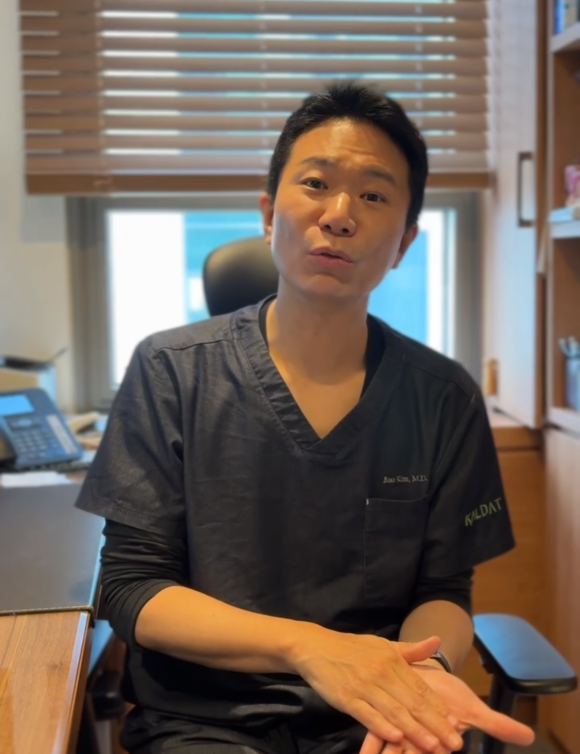
It is now time for hair to grow, this was Kim Jin-oh.
Pilsaengshinmo (必生新毛).
References
-
Sawaya, M.E., & Price, V.H. (1997). Different levels of 5α-reductase type I and II, aromatase, and androgen receptor in hair follicles of women and men with androgenetic alopecia. Journal of Investigative Dermatology, 109(3), 296–300.
-
Hillmer, A.M., Hanneken, S., Ritzmann, S., Becker, T., Freudenberg, J., Brockschmidt, F.F., ... & Nöthen, M.M. (2005). Genetic variation in the human androgen receptor gene is the major determinant of common early-onset androgenetic alopecia. American Journal of Human Genetics, 77(1), 140–148.
[This post was written directly by a plastic surgery specialist to provide information in accordance with Article 56, Paragraph 1 of the Medical Service Act. Hair loss surgery and treatment may have side effects, and you should make a careful decision after consulting with a specialist.]