
The clinic room door opened quietly.
A man who looked to be in his early 40s came in.
He had neatly trimmed short hair and a tidy appearance, but there was some hesitation in his expression.
As soon as he sat down, he spoke carefully.
“Doctor, I feel like my forehead has been getting wider lately...”
I looked closely at his face.
His hairline seemed slightly higher, but there was no obvious recession like typical M-shaped hair loss.
It looked like a change that anyone might experience as they get older.
“When did you start noticing that?”
When I asked, he pointed to his forehead and said:
“Since last year. My forehead has always been a bit wide, but lately it looks even more noticeable after I wash my hair.
At work, people joke, ‘Hey, your forehead looks wider, doesn’t it?’...
I laugh it off, but it’s been bothering me.”
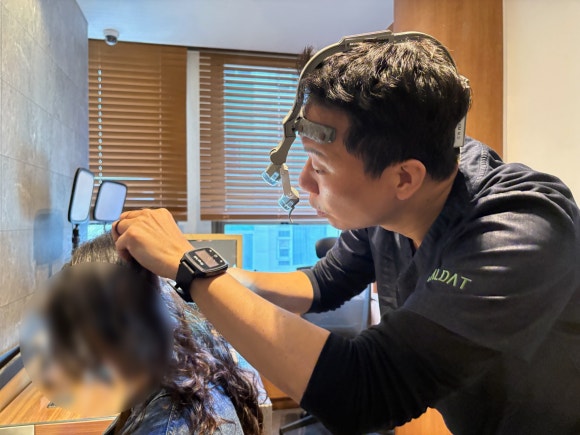
At that, I nodded and took out a magnifier to examine the hairline.
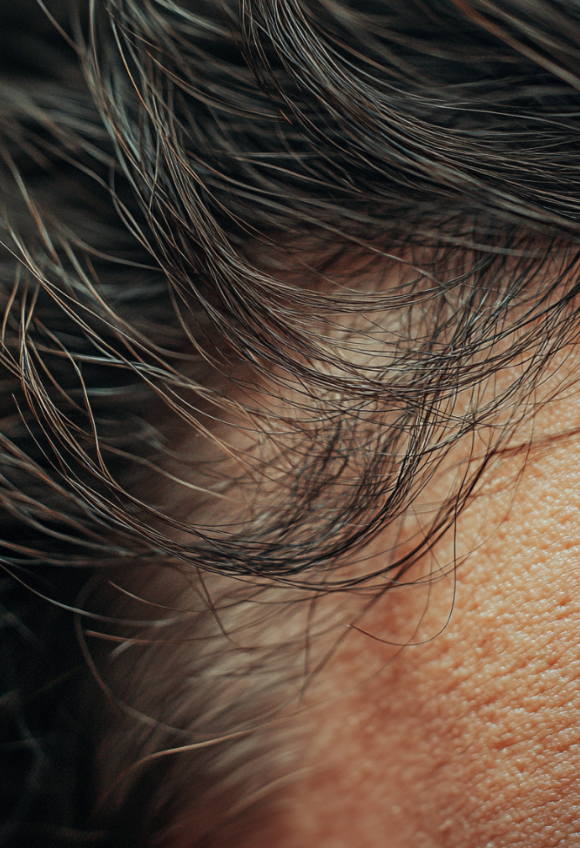
“What we’re seeing now is something called hairline maturation.”
His eyes widened for a moment.
“Maturation?”
“Yes. Up until young adulthood, there are many fine hairs at the front of the forehead.
But as time passes, these fine hairs naturally disappear, and the forehead can look slightly wider.
It’s not pathological hair loss, but a normal physiological change.”
Only then did his shoulders seem to relax a little.
“Then this doesn’t need treatment?”
“That’s right. This is not a condition that requires treatment.
However, it can still be helpful to take a closer look at the current scalp condition in case there is a possibility of future hair loss progression.”
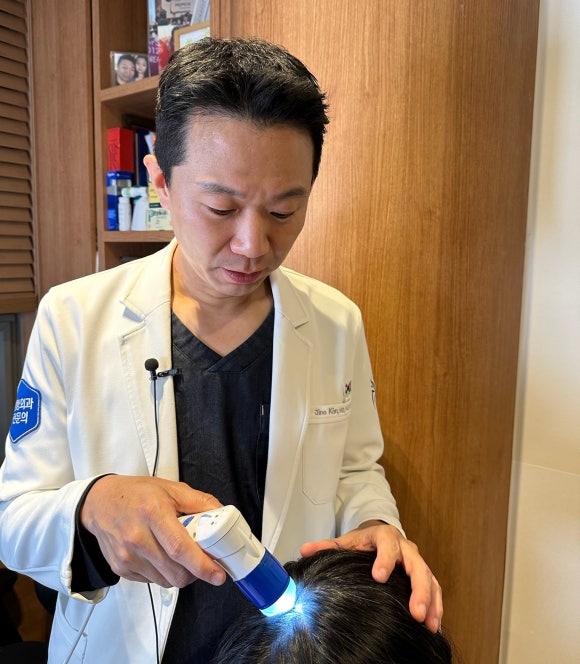
We then examined the scalp in detail, and fortunately, there were no signs of hereditary hair loss.
“Does anyone in your family have hair loss?”
He thought for a moment and nodded.
“My father started losing a lot of hair in his 50s.
So I think that makes me extra sensitive about it.”
“Then it’s even more important to maintain good habits in daily life.
You don’t need to worry right now, but managing stress, keeping the scalp clean, and getting enough sleep can all influence what happens later.
If hair loss does actually begin, responding early can still lead to very good results.”
When the appointment ended, he looked at himself in the mirror and smiled.
“I thought a wider forehead automatically meant hair loss.
I learned more than I expected.”
As he left the room, his back looked much lighter than when he first came in.
Looking out the window, I thought to myself.
Even a small change that everyone experiences can make us sensitive to the feeling of ‘getting older.’
But that feeling does not have to be fear; it can also become a chance to understand ourselves better.