Source - Newsis
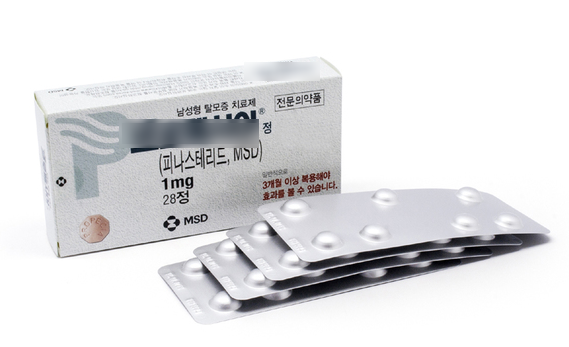
Finasteride
"Hair loss medication side effects, they were there, but now they’re gone."
"It felt a little strange at first, but after a few months, it got better."
I often hear this from patients taking finasteride in the clinic.
Because this medication is effective at suppressing hair loss, many people take it, but some also worry about side effects such as decreased sexual function or mood changes.
Surprisingly, quite a few people say their side effects decreased over time.
Does it really get better as time passes?
To find the answer to this question, let’s look at two studies on changes in side effects after taking finasteride.
One analyzed patients who took it for 2 years, and the other analyzed patients who took it for more than 4 years.
Taken for 2 years: Side effects exist, but they can be reduced

In the first study, the results of about 6,500 men who took finasteride for 2 years were analyzed.
At the beginning of treatment, sexual function-related side effects such as erectile dysfunction and decreased libido were somewhat common, but as time passed, the symptoms tended to gradually ease.
However, this was not true for every patient.
About 15–20% continued to experience side effects, and they appeared more often in people who had previously experienced similar symptoms.
The research team noted that lowering the dose or taking the medication every other day could be effective in reducing side effects.
Taken for more than 4 years: Side effects mostly disappear
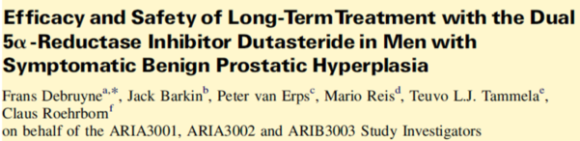
The second study analyzed data from more than 4,000 people who had taken finasteride for over 4 years.
Here, the results were much more encouraging.
Among patients who took it long term, the rate of new side effects was very low, and about 70% of patients who had experienced early side effects no longer reported the same symptoms.
This suggests that over time, the body may adapt to the medication or that the physiological response causing the side effects may weaken.
Why does this change happen?
Finasteride is a 5-alpha reductase inhibitor.
It helps prevent hair loss by blocking the conversion of testosterone, the male hormone, into DHT (dihydrotestosterone), which contributes to hair loss.
However, DHT is also related to sexual function, so when this hormone decreases, side effects can occur.
But our bodies regulate themselves to maintain homeostasis.
Over time, hormone receptor sensitivity may change, or other hormonal pathways may become active, allowing gradual adaptation.
In fact, in some patients, compensatory effects such as a slight increase in LH and FSH levels have been observed.
Points to keep in mind when taking it
- Even if you feel uncomfortable at first, it is best to observe the course for at least 3–6 months.
Most cases improve over time.
-
At the beginning of treatment, you may consider starting with a low dose or taking it every other day.
-
If you already have decreased sexual function or psychological stress, be sure to consult a specialist before taking it.
-
While taking the medication, carefully record your physical condition and observe any changes over time.
Hair loss medication side effects: Do they really decrease? Scientifically verified changes
Conclusion
Finasteride is a hair loss treatment with proven effectiveness.
However, some people stop taking it because of side effects when they first start.
Several studies suggest that these side effects may decrease or disappear over time.
In other words, even if it is difficult at first, your body may adapt and things may get better over time.
If hair loss has lowered your self-esteem and made daily life uncomfortable, continuing treatment consistently may be the better choice, even if you have to tolerate some inconvenience.
Take the medication consistently, and let changes happen slowly. That is the key to taking hair loss medication.

It’s now time for hair to grow, this was Kim Jin-oh.
Pilsaengsinmo (必生新毛).
References
-
Wu, X.J., Zhi, Y., Zheng, J., He, P., Zhou, X.Z., Li, W.B. and Zhou, Z.S. (2014). Dutasteride on benign prostatic hyperplasia: A meta-analysis on randomized clinical trials in 6460 patients.
-
Debruyne, F., Barkin, J., van Erps, P., Reis, M., Tammela, T.L.J. and Roehrborn, J. (2004). Efficacy and safety of long-term treatment with the dual 5a-reductase inhibitor dutasteride in men with symptomatic benign prostatic hyperplasia. European Urology, 46(4), pp.488–495. [pdf] Available from
[In accordance with Article 56, Paragraph 1 of the Medical Service Act, this post is written directly by a plastic surgery specialist for informational purposes. Hair loss surgery and treatment may have side effects, and you should make a careful decision after consulting with a specialist.]