
There is a question I sometimes hear in the clinic.
"Doctor, could my hair be falling out because of the medication?"
Hair loss can sometimes occur because of medication.
One of those medications is antidepressants, and if hair loss begins after taking an antidepressant,
it is likely telogen effluvium, one type of hair loss.
Telogen effluvium occurs when the balance of the hair growth cycle is disrupted by external triggers such as stress, illness, childbirth, or medication.
Normally, about 90% of our hair is in the anagen phase,
but after taking antidepressants, this proportion decreases, many hairs enter the telogen phase, and they suddenly fall out.

Source - The Young Physician
Bupropion
This phenomenon has been reported particularly with drugs such as SSRIs (selective serotonin reuptake inhibitors) and bupropion.
Fortunately, this type of hair loss is mostly temporary and may gradually recover as the body adapts to the medication, or it may improve by adjusting the medication being taken.
It is not easy to determine whether hair loss is caused by medication.
In particular, telogen effluvium occurs 2 to 3 months after taking the medication, so the causal relationship is easy to overlook.
The cause can be estimated through the questions below.
-
When did the hair loss start?
-
Did the timing of starting the new medication match the timing of the hair loss?
-
Have there been other stress factors recently, such as illness, surgery, or sudden weight loss?
If these apply, the likelihood of medication-induced hair loss is
high.
How to deal with antidepressant-related hair loss
- Consult a specialist
Stopping or reducing antidepressants on your own is very dangerous.
Because depression or anxiety symptoms may worsen, any adjustment must be made only after consulting the prescribing doctor.
In some cases, side effects can be reduced by changing the type of medication, lowering the dose, or switching to a drug from a different class.
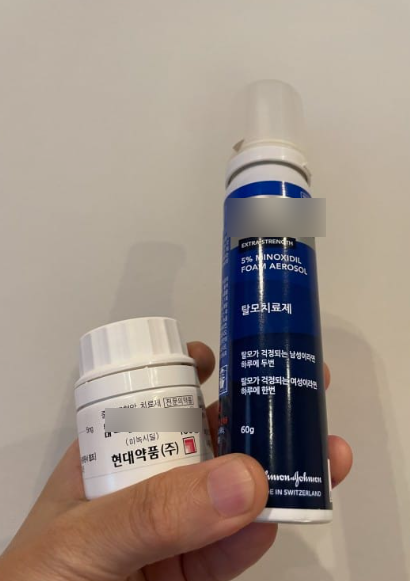
- Minoxidil
Minoxidil is a topical treatment used for hair loss, and products with concentrations of 2% to 5% can also be purchased over the counter.
It increases blood flow and promotes the supply of oxygen and nutrients to hair follicles, encouraging hair growth.
At the beginning of use, hair loss may temporarily seem worse, but this is a phenomenon that appears as telogen hairs fall out and new anagen hairs begin to grow.
Low-dose oral minoxidil may have a stronger effect, but it requires a prescription after evaluation by a specialist.
- Improve nutrition and lifestyle habits
Hair loss is not simply a medication issue.
If nutrients such as iron, zinc, and vitamin D are lacking, they can negatively affect hair growth.
Regular aerobic exercise, enough sleep, and stress relief are of great help not only for hair recovery but also for mental health recovery.
Telogen effluvium can mostly recover naturally.
This is because the hair follicles are not destroyed; they are simply in a temporarily inactive state.
Recovery usually begins naturally within 3 to 6 months, and in some cases it can take up to 9 to 12 months.
However, since hair loss itself can become another psychological stressor and worsen mental health, more active treatment is needed if the symptoms are noticeably severe or if the stress is significant.
Is there a link between hair loss and depression medication (antidepressants)?
Conclusion
Antidepressants are essential medications that help restore life.
However, because unexpected side effects such as changes in appearance can cause patients additional stress, they should not be ignored.
Rather than stopping the medication or giving up on treatment, the wisest approach is to manage the medication and side effects well and find a balance.
Hair can recover, and life can become healthy again.

It is time to let your hair grow, this was Kim Jino.
One must grow new hair.
[This post is written directly by a board-certified plastic surgeon for information-sharing purposes in accordance with Article 56, Paragraph 1 of the Medical Service Act. Hair transplant surgery and treatment may have side effects, and they should be decided carefully through consultation with a specialist.]