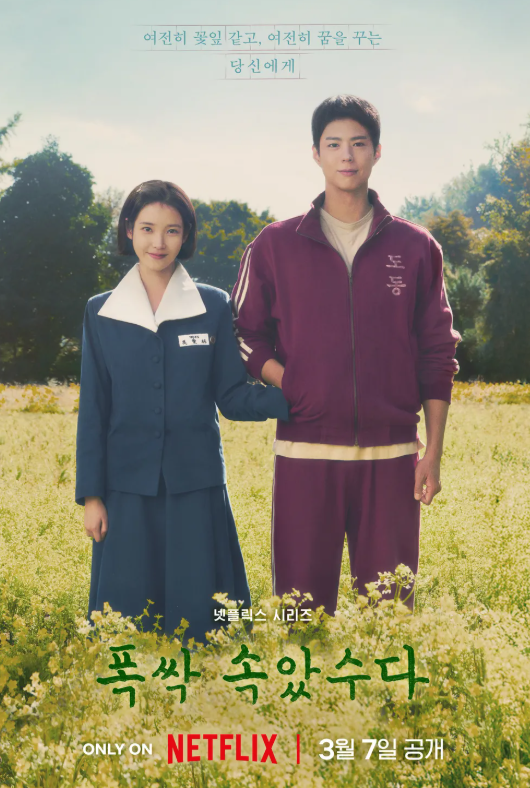
Source - Netflix
A while ago, while chatting with a patient from Jeju Island who had come in for a consultation, the topic naturally turned to the much-talked-about drama When Life Gives You Tangerines.
When I said, “Jeju dialect is hard to understand even with subtitles,”
the patient laughed and said,
Only three people in that drama actually speak true Jeju dialect.
The grandmother of Gwan-sik, who scattered red beans to IU, and the elderly couple who brought rice.
The rest of the actors’ dialects sounded awkward.
I had no idea at all. I thought everyone did a natural, good job.
Thinking about it, just as a foreigner can speak Korean fluently and yet still feel unfamiliar to us in some way,
dialect seems to have those subtle nuances too.
There seems to be a kind of “authenticity” in intonation, pronunciation, and the rhythm of speech—something that only a true native speaker can produce.
As we talked, a memory that had made me embarrassed suddenly came back to me.
It was almost 20 years ago, during my residency.
I had attended a conference in Busan and gone to a restaurant with colleagues.
At the time, mixing in some unnecessary playfulness and friendliness, I ordered like this:
“Ajumma, give us three bowls of pork soup here, please.”
The atmosphere instantly turned cold.
I thought it sounded natural, but the restaurant owner’s face stiffened.
After that incident, a friend from Gyeongsang Province told me something.
The awkward accent was probably part of the problem, but I learned for the first time then that mimicking a dialect itself can feel degrading to someone.
After that, I became more careful, and at the same time, I came to like dialects even more deeply.
Because dialect is not just a way of speaking.
It contains nuance and emotion, time and feeling.
In a single line of dialogue, it can hold the history of a region, a family’s memories, and memories of love.
I really like lines spoken in dialect.
When I actually talk with people around me, I often use them too.
For example, adapting the movie The Unjust:
“I went to a conference with Professor OOO yesterday, wrote a paper, asked questions, and did everything!”
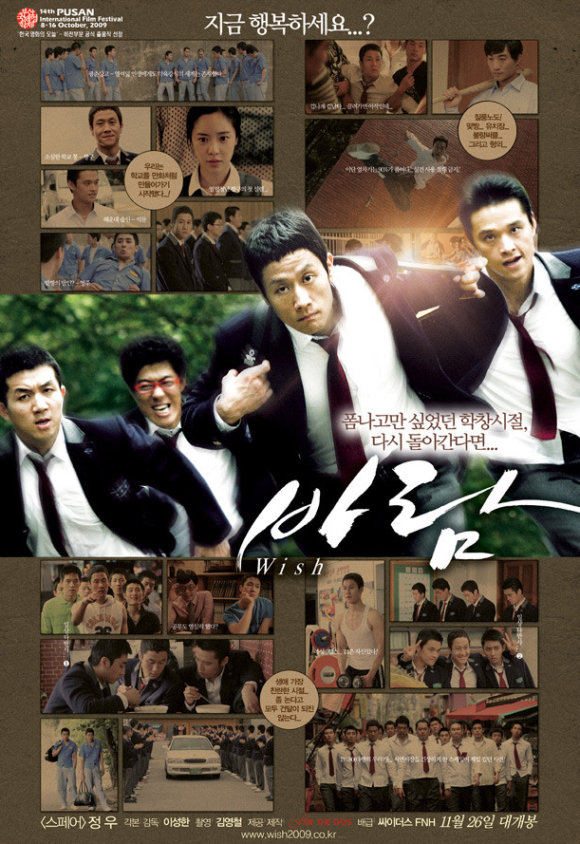
I also use the line from the movie Bleak Night often:
“That’s not right. You can’t miss the deadline for the conference presentation!”
And there’s a line from actor Im Si-wan in the drama Boys Over Flowers that comes to mind:
“Is it a hunger-relief crop? Why do you keep prying?”
If Seoul speech is like a polished document, dialect is like messy handwriting.
Seoul speech is smooth, but cold,
while dialect may be unpolished, but it has warmth.
Maybe that’s why. When I meet people who speak in dialect, my heart opens first for no reason.
Perhaps it’s because within that accent, I can feel a warmth like a joke, and a history hidden at the end of each sentence.
That is why I become even more cautious.
Mimicking a dialect may not just be copying a way of speaking, but something that could amount to imitating an entire way of life.
Because within it are the history and culture of that region, and the time lived there.
When I finished the consultation, I carefully said one thing.
“You’ve come such a long way for your appointment. That must have been hard.”
It felt awkward. I was nervous too.
But the patient smiled and replied,
“Doctor, that must have been hard for you too. Haha.”
Those words made my heart feel very warm.
To me, dialect is like a hometown I can never quite reach.
A warm, friendly way of speaking that feels human.
Within those words, perhaps, someone’s life is contained.