Stories in the Name of Science
The classroom was ordinary, but the story that unfolded there that day was very compelling.
On June 5, 2025, during a class in the Korean Medical Association’s Advanced Medical Policy Program, the person at the podium was Professor Jeong Hui-seon, Distinguished Professor at Sungkyunkwan University.
Despite the somewhat dry title, “About Drugs in General,” the lecture was filled with stories that blended human warmth and tension.
I truly felt how kind and firm science can be when it faces people.
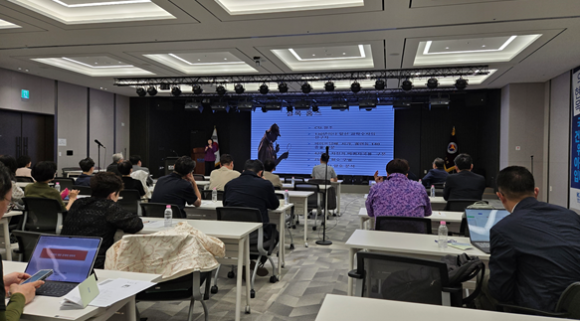
From the very first day of Professor Jeong’s appointment as head of the National Forensic Service, it was already a “drama.”
Before the inauguration ceremony had even ended, a request for an autopsy in the shooting of a Mount Kumgang tourist arrived,
and that night, the autopsy began.
The moment I heard that story, the National Forensic Service was no longer an unfamiliar institution from the news.
I could feel, almost physically, that it is a place where the final truth of society gathers, and where someone’s injustice is revealed for the first time.
The gap between the images portrayed in works such as the drama CSI and Sign and reality was also explained.
In the American drama CSI, one investigator handles everything from evidence collection to analysis and resolution, but that is not true. She said it seemed to be done that way to make it look more dramatic.
In reality, evidence collection is handled by the police, analysis by the National Forensic Service, and investigations by the police or the prosecution, each performing their own role.
The anecdote that, while the drama Sign was airing, calls flooded in to the National Forensic Service saying “Don’t lose to the prosecution,” after seeing content about the National Forensic Service in conflict with the prosecution, gently showed the mismatched expectations between reality and fiction with a smile.
Professor Jeong said, “Forensic science is about resolving the grievances of a body that cannot speak.”
Literally, the traces left by a body are its final voice.
A case in which strangulation was identified from subtle congestion in the tracheal mucosa of a body that appeared to have no external injuries showed how delicately and thoroughly science can work.
Technology is important, but in the end, the sense and attitude of the person who observes it is what matters.
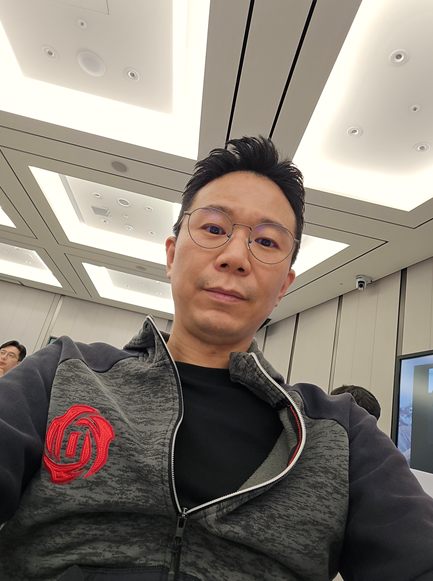
“Bones are silent, but they do not lie.” Those were Professor Jeong’s words.
From bones alone, one can determine sex, age, and even medical history. The story of identifying the remains of a Korean War missing person through mitochondrial DNA analysis showed that science can become a way of restoring memory.
Bringing forgotten beings back into view—science itself was a kind of mourning and justice.
An interesting story: a nurse who remembered the symptoms of poisoning from Agatha Christie’s detective novels diagnosed a child’s thallium poisoning and saved the child’s life.
Fiction saved reality. Christie was in fact a pharmacist, and scientific precision was woven into her works.
It was a fresh reminder of how literature reflects reality, and how imagination can join hands with science.
The real-life model for Sherlock Holmes was Professor Joseph Bell of the University of Edinburgh Medical School.
He inferred a patient’s occupation and medical history from the way they walked, their fingernails, and their collar.
Professor Jeong says, “A doctor can become the best forensic investigator.”
The medical sense for handling vast amounts of data and the reasoning of forensic science that pursues a culprit are ultimately headed in the same direction.
The Seohae Village infant body case was an incident that spoke to the intersection of humanity, science, and ethics.
The two children were born alive and died by suffocation.
The National Forensic Service’s genetic analysis matched that of three French institutions, and the French media issued an official apology to the Korean National Forensic Service.
It was a moment that once again confirmed that science can function not as technology, but as a language of respect.
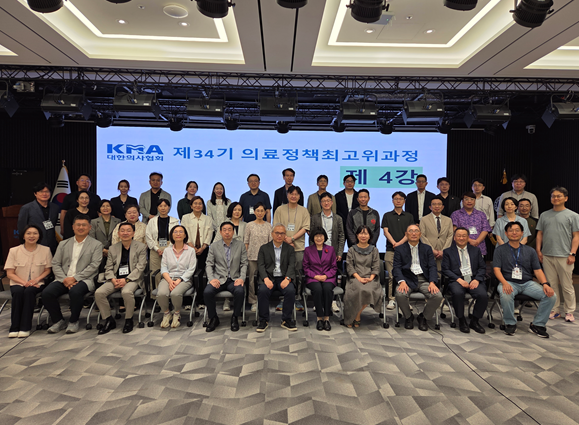
Professor Jeong Hui-seon’s lecture was not simply an information session; it was a heartwarming talk that contained the ethical value of forensic science, social responsibility, and courtesy toward human beings.
After listening to the lecture, the National Forensic Service’s slogan, “The power of science that reveals the truth,” no longer felt like a simple catchphrase, but a phrase that truly resonated in the heart.
I finally came to understand why the National Forensic Service is called “the nation’s final institution for realizing justice.”