Many patients undergoing cancer treatment worry about hair loss just as much as they worry about the treatment’s effectiveness.
This is because anticancer drugs do not selectively attack only cancer cells; they also affect all rapidly dividing cells.
One of the main areas affected is the follicle cells in the scalp.
Why do anticancer drugs cause hair loss?
The basic principle of anticancer drugs is to attack rapidly dividing cells.
Because cancer cells multiply faster than normal cells, this property is used to achieve treatment effects.
However, follicle cells, intestinal mucosal cells, bone marrow cells, and nail cells also belong to the group of rapidly dividing cells, so side effects are unavoidable.
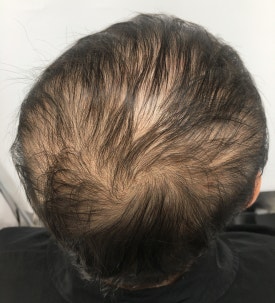
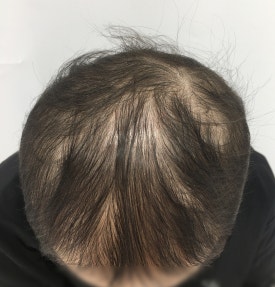
Especially follicle cells are key cells that maintain the hair growth cycle, and under the influence of anticancer drugs, they stop growing or undergo degeneration.
As a result, hair loss begins 1 to 3 weeks after the start of cancer treatment, and in most cases, repeated treatment leads to overall hair loss.
Not all anticancer drugs cause hair loss
Not all anticancer drugs cause hair loss.
The degree of hair loss varies depending on the type of drug used, dosage, treatment period, whether combination therapy is used, and other factors.
In particular, the following classes of anticancer drugs are known to have a high likelihood of causing hair loss.
-
Anthracycline class: 대표적으로 doxorubicin, adriamycin
-
Taxane class: paclitaxel, docetaxel
These drugs are known to have strong toxicity to follicle cells, and some have been reported to even cause permanent hair loss.
By contrast, immune checkpoint inhibitors or targeted anticancer drugs often have a low or nearly nonexistent likelihood of causing hair loss.
Why hair loss is especially concerning for breast cancer patients
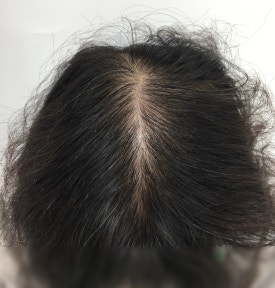
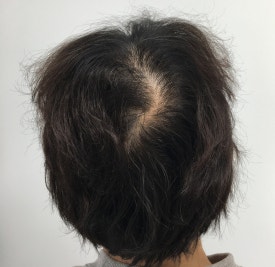
Hair loss is treated as a particularly important issue for breast cancer patients.
-
There are many relatively young female patients who are active in society
-
Combination treatment with anticancer drugs that have a high rate of causing hair loss is common
-
As early diagnosis and treatment improve survival rates, quality of life has become an important issue
In actual breast cancer treatment, anthracycline and taxane anticancer drugs are often administered in combination, and as a result, the rate of permanent hair loss also tends to increase.
How can hair recovery after cancer treatment be supported?
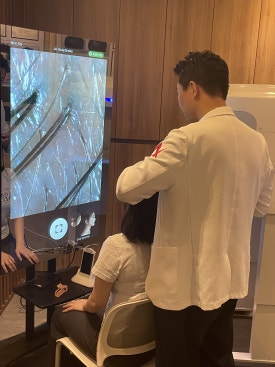
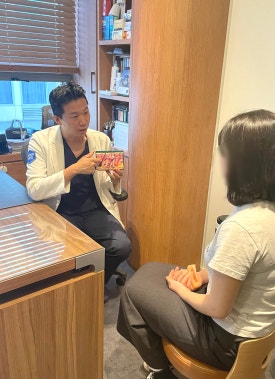
After cancer treatment ends, hair usually recovers naturally within a few months in most cases.
However, in some patients, recovery is slower, or the hair grows back finer and thinner.
In such cases, the following treatments may be considered.
Topical minoxidil: Acts on follicle cells and helps maintain the hair growth phase.
Hair supplements: Provides nutrients needed for hair health by supplementing biotin, zinc, iron, protein, and more.
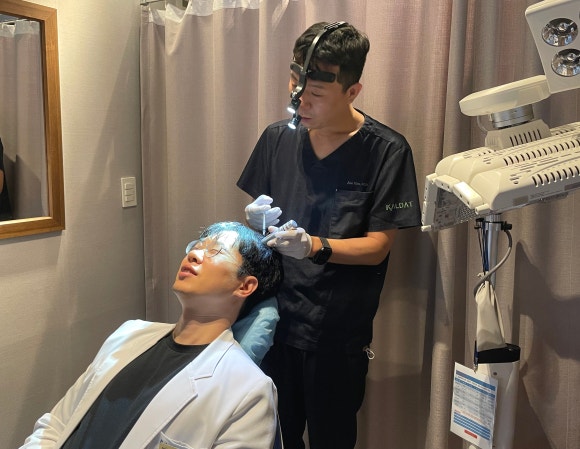
Scalp injection therapy: Used as an adjunctive approach that may help hair growth by utilizing ingredients related to skin regeneration, such as PDRN. Whether the procedure is performed and how it is applied are determined by medical staff depending on the patient’s condition.
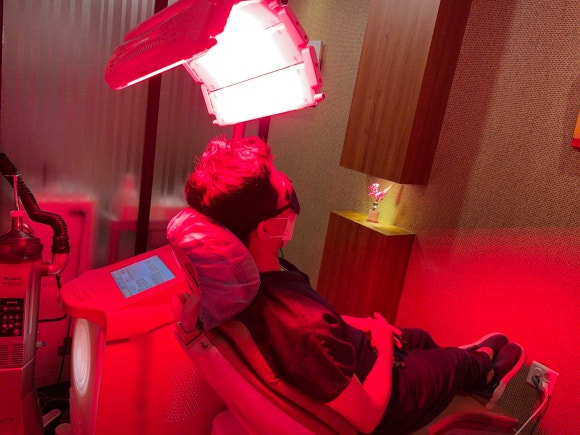
Low-level laser treatment: Used in a way that may help hair recovery by stimulating cellular metabolism in scalp tissue.
These treatments are being used as adjunctive therapies for hair recovery after cancer treatment, and the method of application may vary depending on the patient’s condition and the timing of treatment.
Because hair loss after cancer treatment has complex causes and mechanisms, it is important to establish an appropriate treatment plan through consultation with a specialist based on the individual’s condition.