A middle school student who stepped into the examination room was hanging their head low.
They were wearing a cap pulled down tight, and their mouth was firmly shut.
Before I could speak first, the child muttered softly,
"My hair is falling out too much."
The child's words were very small, but the feelings contained in them were heavy.
These days, children like this often come to the clinic.
Hair loss is no longer the exclusive concern of middle age.
According to a study in the United States, about 3% of pediatric outpatient patients visit a clinic or hospital because of hair loss problems.
Even so, in many cases they are not diagnosed early and miss the chance to receive treatment, wandering without help.
Adolescence is a time of becoming stronger, but it is also a time of being easily shaken.
Appearance is part of self-esteem, and hair is one of its most visible symbols. When children's hair begins to fall out, it is not just a matter of hair shedding.
It means losing the courage to face the mirror, becoming reluctant to take photos, and constantly being pushed to the back row among friends.
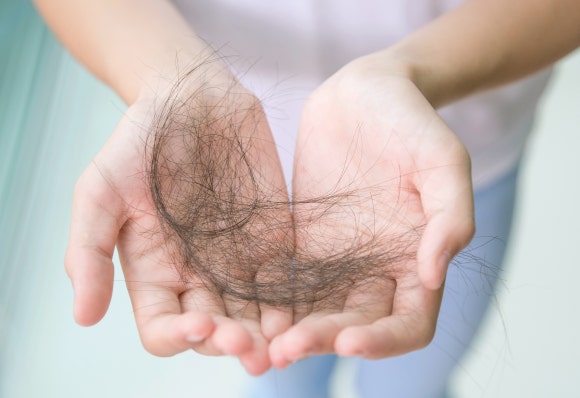
One study divided adolescent hair loss into five types.
- Androgenetic hair loss
This is hair loss with a genetic component.
It is especially common in boys, and in girls it can be associated with conditions such as polycystic ovary syndrome (PCOS).
There are also reports that 5% minoxidil is effective for adolescents aged 11 to 19.
- Alopecia areata
An autoimmune reaction causes sudden round patches of hair loss.
Smooth, coin-sized so-called "bald spots" or patches appear.
Multiple patches can also develop.
Around them, short hairs with a "exclamation mark" shape remain, and systemic conditions are also often present.
This is why it is important to look at the child's overall physical condition, not just the skin.
- Telogen effluvium
One day the hair starts falling out, but the cause may be an infection, stress, dieting, or medication from 2 to 3 months earlier.
Most cases recover, but the anxiety during that time is very great.
It is also associated with vitamin D, iron, and B12 deficiency.
- Traction alopecia
Hair that is continuously pulled, such as dreadlocks or tightly tied ponytails, will eventually come out.
But if it is noticed early and loosened, it can grow back.
All you need to do is loosen the tight tie a little.
- Trichotillomania
Some children keep touching their hair with their fingertips.
They unconsciously pull out their hair, it becomes a habit, then guilt, and then the cycle repeats.
This is not just a simple habit. It is often linked to anxiety, depression, and obsessive-compulsive symptoms.
In such cases, behavioral therapy, especially cognitive behavioral therapy (CBT), can help.
A little earlier!
There is a phrase I often say in the clinic.
"I'm really glad you came now."
Hair that has already fallen out may never come back.
But the wounded mind can begin treatment.
The problem is that too many children come too late.
While parents say, "It's just like that at that age," the child loses the courage to stand in front of the mirror.
If you see a lot of hair in the drain after your child's shower, if the part has become noticeably wider, or if the forehead looks especially broad when tying the hair back, that is not just a change in appearance.
It may be a cry for help from the child.
Hair is also the child's shield.
When I see a child leaving the clinic with lighter steps, I sometimes think that hair is not just hair.
For someone, it is self-esteem, and for someone else, it is the last shield protecting them.
Hair loss can be treated. Before that, it can be understood.
If we can receive the quiet signals children send a little earlier and a little more gently, they will be able to lift their heads again.
So today, please give your child's head a gentle pat.
Even without words, that light touch will be a great comfort to the child.
References
Garcia, S. & Kenner-Bell, B. (2025). Hair Loss in Teenagers: A Review for Primary Care Pediatricians. Pediatric Annals, 54(6), e189–e195.
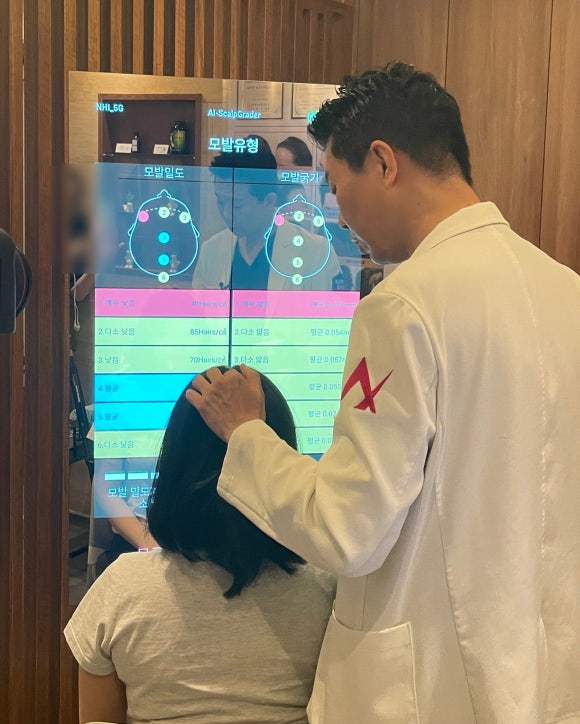
It is now time for hair to grow again, this was Kim Jino.
필생신모(必生新毛).
[This post was written directly by a board-certified plastic surgeon for informational purposes in accordance with Article 56, Paragraph 1 of the Medical Service Act. Hair loss surgery and treatment may have side effects, and you should make a careful decision after consulting with a specialist.]