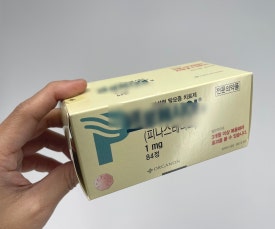
When choosing a medication, we always ask this:
“Is this medicine really safe?” If it is about hair, that question feels even more urgent.
When you look in the mirror every day and see your hair thinning, it is easy to feel shaken.
At times like that, the name many people think of is finasteride.
It is one of the most commonly prescribed medications for male pattern hair loss.
FDA-Approved Hair Loss Medication: Check Safety Information
For decades, countless men around the world have taken this medicine.
The FDA approved the oral 1 mg dose, and Health Canada and Korea’s MFDS (Ministry of Food and Drug Safety) apply the same standard.
And the message from all those years of clinical research is this:
“It is safe for most people. But the possibility of side effects is definitely there.”
Finasteride is a 5-alpha reductase inhibitor.
This enzyme converts testosterone into a hormone called DHT, and DHT causes hair loss by shrinking hair follicles.
Finasteride inhibits that enzyme, lowers DHT levels, and helps hair follicles regain health.
The amount absorbed into the body and the risk of side effects differ depending on whether it is taken orally or used as a topical treatment.
Oral vs. Topical: What’s the Difference?
Oral finasteride has passed the FDA’s strict standards.
However, no matter what medication it is, saying it is “safe” does not guarantee every situation.
In particular, side effects related to sexual function are important to keep in mind.

Several studies have reported low rates in the 2% range or the 3–4% range[1].

Reduced libido and erectile dysfunction are the most common, but most cases improved after stopping the medication[2].

Looking at long-term data, a study that followed more than 3,000 people for over three years found an overall side effect rate of only 0.7%, and the most common side effect was mild decreased libido[3].

Another 10-year follow-up study also found that 6.8% experienced mild symptoms, but all continued treatment[4].
Mood Changes and Depression: What the Research Shows
These days, this question comes up often.
“Could this medicine increase depression?” The FDA notes that possibility on the label, and several studies have looked into the issue.

One study analyzing the World Health Organization database reported that men under 45 had relatively more depression, anxiety, and suicidal thoughts[5].
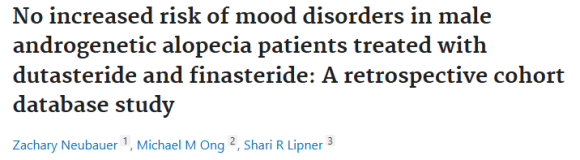
However, another large-scale study concluded that overall, the risk of mood disorders did not increase[6].
Therefore, if you have had depression in the past or are currently receiving treatment, it is best to consult a doctor.
Topical Finasteride: Comparing Side Effect Potential and Effectiveness
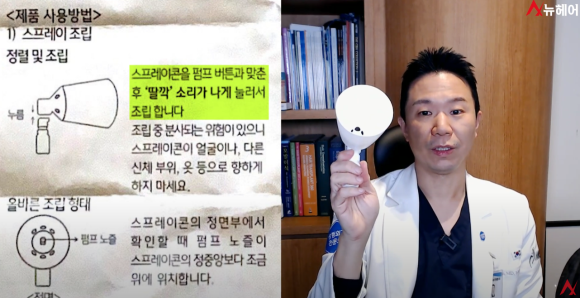
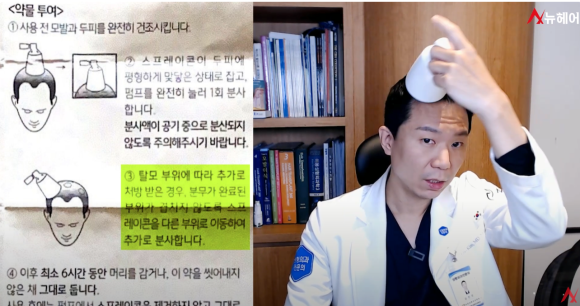
There is another question many people are curious about these days.
“Is the topical version safer than the oral medication?”
It may have a lower chance of side effects.
When applied to the skin, less of it is absorbed systemically, so the risk of side effects may also be lower.
However, compared with oral medication, topical versions may be somewhat less effective.
Absorption and effectiveness can vary greatly depending on the patient and the condition of the skin.
Dosage and Dosing Intervals: What to Watch for When Adjusting
If the dose is higher or the dosing interval is shorter, systemic exposure increases.
So some people try dividing the dose on their own, but this is not safe.
It is best to adjust it only after consulting a doctor.
Hormonal Changes and Reproductive Health: What Do the Studies Show?
Because finasteride blocks the conversion to DHT, testosterone may rise slightly for a short time, but over time the body returns to balance.

There have been cases in which sperm counts increased in some men with infertility[7],
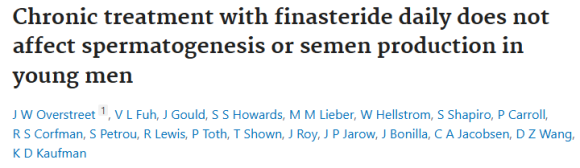
but many studies show that it usually does not affect healthy men[8].

Depending on the source, rates have been reported from 3% up to 15%[9].
However, why this difference occurs and in whom it appears more often has not yet been clearly identified.
At present, there is only the assumption that individual sensitivity to DHT changes may play a role.
Things to Check Before Taking It and Other Treatment Alternatives
If you are considering this medication, the first step is to have a thorough discussion with your doctor.
If your spouse or wife is pregnant or planning to become pregnant, or if you have a history related to mental health, be sure to let them know.
Finasteride is not the only treatment for hair loss.
There are other options such as minoxidil and hair transplantation, so it is worth considering them as well.
Choose Carefully and Consult a Specialist
Numerous studies and real-world cases show this.
Finasteride is effective for treating male pattern hair loss, and many people take it without major problems.
But that does not mean there are no side effects at all.
Please consider your health condition and medical history as a whole and make a careful decision.
Hair is visible, but the effects of your choice can extend to your body, mind, and future.
Please make your decision after receiving care from a trustworthy medical professional.
Now it’s time for hairhair, this was Kim Jino.
Pilsaeng Sinmo (必生新毛).
References
[1] Mysore V. (2012). Finasteride and sexual side effects. Indian Dermatology Online Journal, 3(1), 62–65. https://doi.org/10.4103/2229-5178.93496
[2] Shapiro, J., & Kaufman, K. D. (2003). Use of finasteride in the treatment of men with androgenetic alopecia. Journal of Investigative Dermatology Symposium Proceedings, 8(1), 20–23. https://doi.org/10.1046/j.1523-1747.2003.12167.x
[3] Sato, A., & Takeda, A. (2012). Evaluation of efficacy and safety of finasteride 1 mg in 3177 Japanese men with androgenetic alopecia. The Journal of Dermatology, 39(1), 27–32. https://doi.org/10.1111/j.1346-8138.2011.01378.x
[4] Yanagisawa, M., et al. (2019). Long-term (10-year) efficacy of finasteride in 523 Japanese men with androgenetic alopecia. Clinical Research and Trials, 5(5). https://doi.org/10.15761/crt.1000273
[5] Nguyen, D., et al. (2020). Investigation of suicidality and psychological adverse events in patients treated with finasteride. JAMA Dermatology, 157(1), 35. https://doi.org/10.1001/jamadermatol.2020.3385
[6] Neubauer, Z., Ong, M. M., & Lipner, S. R. (2025). No increased risk of mood disorders in male androgenetic alopecia patients treated with dutasteride and finasteride. Journal of the American Academy of Dermatology, 93(1), 197–199. https://doi.org/10.1016/j.jaad.2025.03.068
[7] Samplaski, M. K., et al. (2013). Finasteride use in the male infertility population: effects on semen and hormone parameters. Fertility and Sterility, 100(6), 1542–1546. https://doi.org/10.1016/j.fertnstert.2013.07.2000
[8] Overstreet, J. W., et al. (1999). Chronic treatment with finasteride daily does not affect spermatogenesis or semen production in young men. The Journal of Urology, 162(4), 1295–1300.
[9] Hirshburg, J. M., et al. (2016). Adverse Effects and Safety of 5-alpha Reductase Inhibitors: A Systematic Review. The Journal of Clinical and Aesthetic Dermatology, 9(7), 56–62.
[This post is written directly by a plastic surgery specialist to provide information in accordance with Article 56, Paragraph 1 of the Medical Service Act. Hair loss surgery and treatment may have side effects, so please make a careful decision after consulting a specialist.]