As people get older, hair loss is often considered a natural phenomenon.
However, some people begin to worry as their forehead gets wider and their part line becomes thinner even at a relatively young age.
Androgenetic alopecia is the most common type of hair loss in men, and genetic factors and hormones are known to be the main causes.
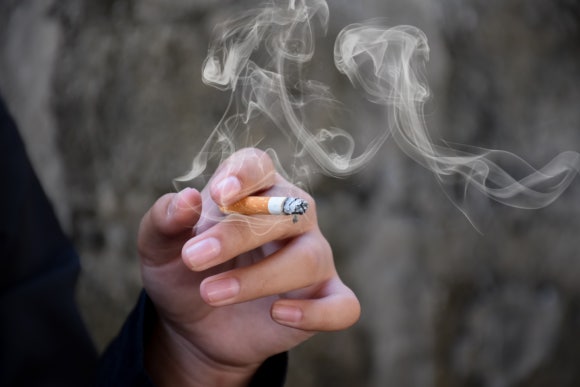
However, lifestyle factors, especially smoking, have recently been drawing renewed attention as an important variable.
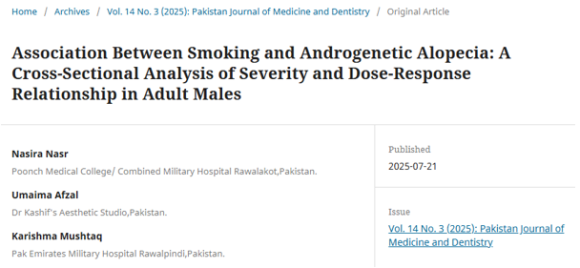
A study from Pakistan published on July 21, 2025 provided specific data supporting that point.
The study was conducted over six months at Combined Military Hospital in Rawalakot, and a total of 120 adult men participated.
The study subjects were men aged 18 to 50.
The research team categorized each participant’s smoking status in detail into current smokers, former smokers, and non-smokers, and also collected smoking duration and daily cigarette consumption to analyze a dose-response relationship.
A structured questionnaire was used for data collection, and a dermatologist directly examined the participants and recorded the stage and extent of hair loss.
Of all participants, 84 people (70%) had androgenetic alopecia.
Among current smokers, the presence and severity of androgenetic alopecia were significantly higher (p < 0.0001).
In addition, the greater the amount smoked and the longer the smoking duration, the higher the stage of hair loss progression.
This suggests that not only smoking itself, but also the intensity and duration of smoking, can have a direct effect on hair health.
The research team explained that oxidative stress caused by smoking, vasoconstriction, and reduced microcirculation around the hair follicles act as the main mechanisms in this process.
These mechanisms shorten the anagen phase of hair growth and increase the telogen phase, ultimately reducing hair density and thickness.
The paper also mentioned the difference between former smokers and current smokers.
Androgenetic alopecia was more common in former smokers than in non-smokers,
but the degree was lower than in current smokers.
This suggests that some recovery or slowing of progression may be possible even after quitting smoking.
Rather than thinking, “It’s already too late,” there is now scientific basis for the idea that quitting smoking now may help protect the future condition of your hair.
This study is meaningful not only because it confirms the association between smoking and hair loss,
but also because it presents specific numbers and mechanisms.
For anyone trying to manage hair loss, it is necessary not to rely only on medication or procedures,
but also to examine their smoking habits and lifestyle.
You can recognize for yourself that making lifestyle improvements is important in order to protect your hair.
Hair loss affects not only appearance but also quality of life and confidence.
This study shows that one small habit in everyday life can change the fate of hair follicles in the scalp.
It would be good to remember that making lifestyle changes is just as important as medication or procedures when it comes to protecting your hair.

Now it’s time for hair growth, this was Kim Jin-oh.
Filsaengsinmo (必生新毛).
References
Nasr N, Afzal U, Mushtaq K. Association Between Smoking and Androgenetic Alopecia: A Cross-Sectional Analysis of Severity and Dose-Response Relationship in Adult Males. PJMD [Internet]. 2025 Jul. 21 [cited 2025 Jul. 26];14(3). Available from: https://ojs.zu.edu.pk/pjmd/article/view/3837
[This post is written directly by a plastic surgery specialist for informational purposes in accordance with Article 56, Paragraph 1 of the Medical Service Act. Hair loss surgery and treatment may have side effects, and they should be carefully considered through consultation with a specialist.]