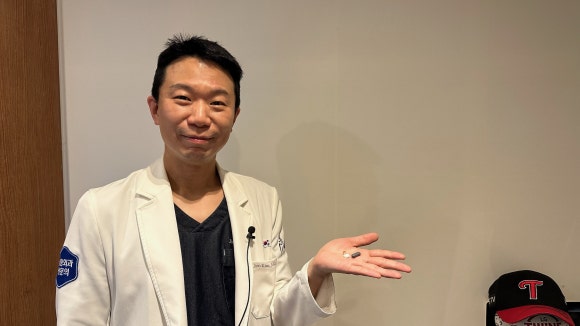
When starting hair loss medication, we always become impatient.
We stand in front of the mirror every day, counting each strand of hair and asking,
“Is this medicine really working properly for me?” But the world of hair loss medication requires a longer perspective than you might think.
Around 3 months after starting the medication, about 30% of the expected overall effect becomes visible.
Around this time, you begin to get a sense of whether the medication suits you and what changes may follow.
It is still not very clear, but since the hair follicles are waking up and entering the growth phase, the changes may be limited.
After 6 months, the situation becomes much clearer.
About 60% of the expected final result is visible, and you may feel that the crown area or part line is gradually filling in.
For people who respond well to the medication, noticeable changes begin to appear clearly from this stage.
However, if there is no feeling of growth at all even after 6 months, it may be a sign that it is difficult to expect much improvement from hair loss medication alone.
This point is an important time for deciding the future direction of treatment.
In other words, after prescribing hair loss medication and waiting about 3 to 6 months, it becomes a point at which you can decide whether to wait longer or
consider other treatments, including hair transplantation.
However, there is one important point.
In the case of hereditary hair loss, even if hair loss medication does not seem to produce a noticeable effect,
it is still recommended to continue taking it because it helps suppress further worsening of hair loss.
When you complete 1 year, more than 90% of the total expected effect appears.
After that, some people continue to improve gradually through the 2nd and 3rd year,
but it is not at the same pace as during the first year, and some people only feel a maintenance effect after about 1 year.
After that, it enters the maintenance phase.
From that point on, hair loss medication’s role is less about continuously creating new hair and more about preserving the current state.
Hair loss medication is not a medicine that magically restores hair density in the short term.
However, if you take it consistently for about 3 to 6 months, you can roughly estimate the progress
and determine whether the medication suits your body.
By observing the changes up to this point, you can decide whether to wait longer or consider
other treatments such as hair transplantation.
If you are currently taking the medication, please evaluate the changes so far with your attending physician after taking it for 3 months, or up to 6 months at the longest.
Doing so will help you gauge how the medication’s effects may develop going forward and discuss whether additional treatment is needed.





It’s time for hairhair, this was Kim Jin-oh.
Pilsaengsinmo(必生新毛).
References
-
Kaufman KD et al. "Finasteride in the treatment of men with androgenetic alopecia." J Am Acad Dermatol. 1998;39(4):578-589.
-
Mella JM et al. "Efficacy and safety of finasteride therapy for androgenetic alopecia: a systematic review." Arch Dermatol. 2010;146(10):1141-1150.
-
Olsen EA et al. "A randomized clinical trial of 5% topical minoxidil versus 2% topical minoxidil and placebo in the treatment of androgenetic alopecia in men." J Am Acad Dermatol. 2002;47(3):377-385.
-
Sato A et al. "Long-term (10-year) efficacy of finasteride in 523 Japanese men with androgenetic alopecia." Dermatol Ther. 2019;32(3):e12837.
[This post is written directly by a board-certified plastic surgeon for informational purposes in accordance with Article 56, Paragraph 1 of the Medical Service Act. Hair loss surgery and treatment may have side effects, and you should make a careful decision after consulting a specialist.]