“I feel like my hair is falling out more after I got stressed.”
This is something we hear often in the clinic.
Can stress actually cause hair loss?
The answer is yes, stress can actually cause hair loss.
Stress is one of the important acquired factors that can lead to hair loss, and it is especially known as a major trigger of temporary telogen effluvium.
The Connection Between Stress and Hair Loss?
Stress can play a role in female pattern hair loss, telogen effluvium, and alopecia areata, and in the case of male pattern hair loss, it can also be a factor that speeds up progression.
When you are stressed, a hormone called cortisol is secreted.
If this level remains high or persists, scalp blood flow may decrease,
and it can negatively affect the growth and division of hair follicle cells.
As a result, growing hairs may switch to the resting phase more quickly, which can lead to hair loss.
Recently, a device that can simply measure stress status has been introduced,
which can help assess its effect on hair loss and be used as a reference for identifying causes and determining treatment direction.
How is the stress test done?
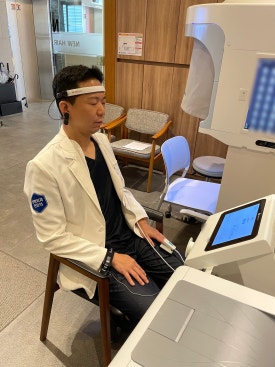


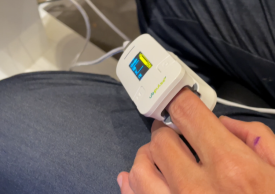
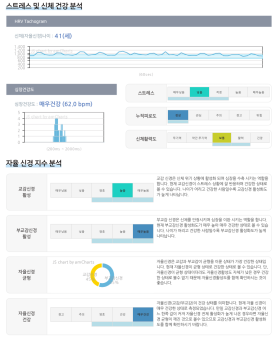
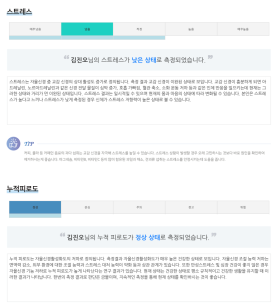
A sensor is attached to the fingertip to measure heart rate variability.
Through this, stress level, sympathetic and parasympathetic nervous system activity, autonomic balance, biological age, and accumulated fatigue can be evaluated.
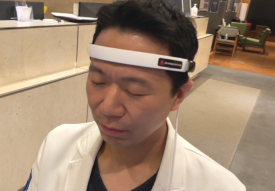
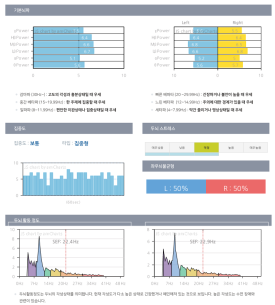
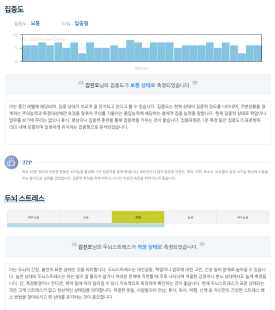
Sensors attached to the forehead and scalp measure the brain’s electrical activity.
It can help identify concentration, tension, emotional stress, and lack of sleep,
so it can indirectly show how much the stress response is affecting hair loss.
These test results are used not as a simple subjective judgment that you are under a lot of stress,
but as evidence for medical assessment.
Can stress-related hair loss recover?
Fortunately, hair loss caused by stress is often temporary,
and when stress is relieved or managed, hair may have a chance to recover.
However, the problem is that if repeated stress or chronic autonomic imbalance accumulates,
the hair follicles can gradually weaken, and hair loss may become chronic.
That is why the important thing is not to start hair loss treatment blindly,
but to begin by first understanding the individual’s condition, including stress.
That is the true starting point of hair loss treatment.
Is my stress affecting my hair loss right now?
The signals your hair sends may sometimes be clear enough that you cannot simply dismiss them as a passing mood.
How stress is affecting hair loss,
and checking your current condition through objective indicators can also be one way to manage hair loss.
Based on pulse wave and EEG measurements, the balance of the sympathetic nervous system, concentration, fatigue, and sleep status are checked, and these are used as reference data to more systematically identify various factors that may affect hair loss.
These test results can help improve understanding of the patient’s current condition
and may help establish a personalized hair loss management plan.