There are patients I often meet in the clinic.
They are not simply people worried about hair loss, but people who have chosen a new direction in life: transgender patients.
Consultations with them are always handled a little more carefully, and with that much more sincerity.
Hair is not just an element of appearance.
It is a language for expressing oneself and a frame that shows identity.
For transgender patients, especially those transitioning from male to female (MTF), hair transplantation is more than a simple cosmetic procedure.
It is an important process for completing a feminine appearance and for feeling fully themselves in daily life.
In this post, I would like to share, based on my experience, why hairline design is important for MTF patients
and how it should be approached.
Simply lowering the forehead line is not enough.
The hairline itself must be redesigned in a feminine way, and that requires clear anatomical standards and an aesthetic sense.
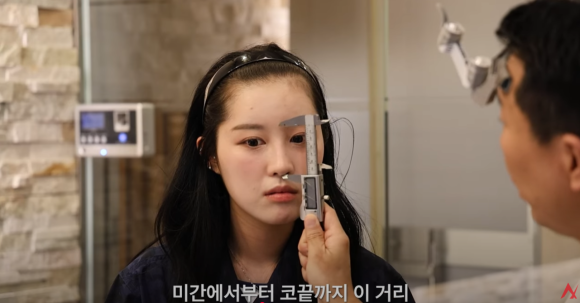
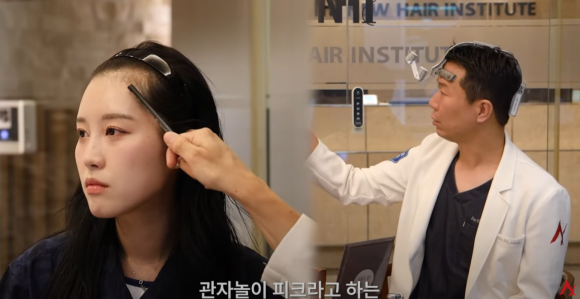
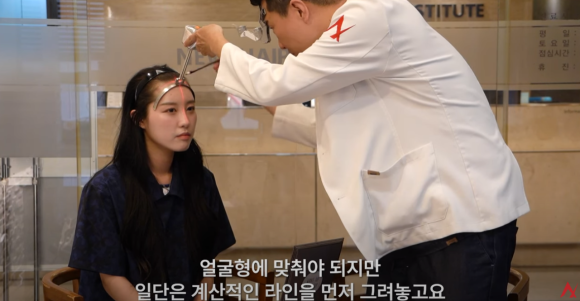
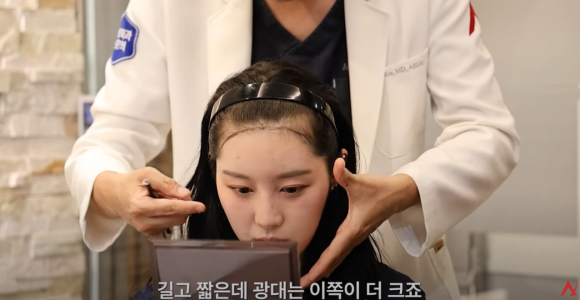
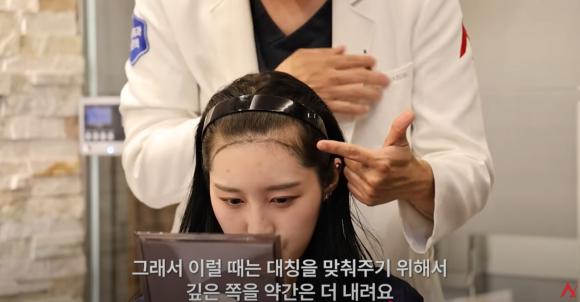
The most representative feature of a feminine forehead is the curved prominence on the sides of the forehead called the "temple mound."
The height of the center of the forehead is generally set about 6 to 6.5 cm above the glabella, and the temple mound is set at points 4 cm to the left and right of the center of the hairline.
The hairline should not be a straight line, but should be composed of irregular curves, and it should be transplanted with consideration of the cowlick and widow’s peak so that it looks natural.
When designing the hairline, above all, it is important that surgery to reshape the facial bone structure into a more feminine form be performed first.
If the forehead bone is prominent, procedures to reduce it or flatten it, and surgeries that soften the overall impression of the face by changing the shape of the jaw, cheekbones, or Adam’s apple, will alter the overall appearance of the face.
Only after these procedures are performed first can an accurate hairline design be created to match them, and the result will harmonize naturally.
If the order is reversed, the transplanted hair may already be damaged, or it may not suit the facial shape and could create an awkward impression.
And one important point: even if hair loss has not yet appeared,
early use of DHT inhibitors such as finasteride and dutasteride is recommended.
This is because, in transgender women, even after the testes are removed, a small amount of male hormones (androgens) may still be secreted by the adrenal glands, and male-pattern hair loss (androgenetic alopecia, AGA) can slowly progress.
Even after gender-affirming surgery to feminize the genitals (sex reassignment surgery), continued use of hair loss medication may still be necessary for some patients.
A perspective that respects identity is the most important thing of all.
For transgender people, the hairline is also the first gateway through which identity is shown to society.
That is why it must be approached more carefully and with greater empathy.
Sometimes, patients with severe hair loss stages also visit the clinic.
In such cases, even with every technique available, it is difficult to achieve a completely feminine hairline.
At times like this, a wig may provide a much more satisfying result than surgery, so it is important to accurately assess the condition.
The procedure called hair transplantation is not merely about planting hair; it is also about planting a life.
Especially for transgender people, that meaning is even heavier and deeper.
What we can do is stand carefully and respectfully alongside that life.
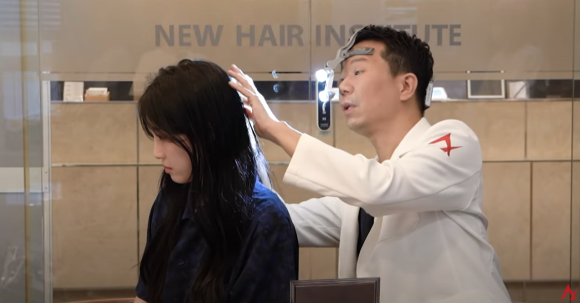
It is now time to let the hair grow, Kim Jin-oh speaking.
Pilsaengsinmo (必生新毛).
References
-
True, R.H. (2024). Transgender: Crucial Aspects of Hair Transplant Design. Hair Transplantation, 2e Part A, ch.8C, pp.11–16.
-
Bared, A., & Epstein, J.S. (2019). Hair transplantation techniques for the transgender patient. Facial Plast Surg Clin North Am, 27(2), 227–232.
Radix, A. (2019). Hormone therapy for transgender adults. Urol Clin North Am, 46(4), 467–473.
- Kabaker, S. (2011). Transgender hairline restructuring. In Unger, W. & Shapiro, R. (Eds.), Hair Transplantation. New York: Informa, pp. 488–489.
[This post is written directly by a board-certified plastic surgeon for informational purposes in accordance with Article 56, Paragraph 1 of the Medical Service Act. Hair loss surgery and treatment may involve side effects, and careful decision-making is advised through consultation with a specialist.]