Many patients undergoing chemotherapy are most worried about one side effect: hair loss (chemotherapy-induced alopecia, Chemotherapy-Induced Alopecia).
Recently, low-dose oral minoxidil has been drawing attention as a new alternative.
I’ve organized the questions patients often ask in a Q&A format.
Q1. Why does hair loss occur with chemotherapy?
Chemotherapy drugs travel through the bloodstream and reach the hair follicles.
In particular, hair in the anagen phase is highly active in cell division, so it is strongly affected by chemotherapy.
According to research, topoisomerase inhibitors cause hair loss with a probability of 50–60%¹.
Q2. Is there a way to prevent chemotherapy-induced hair loss?
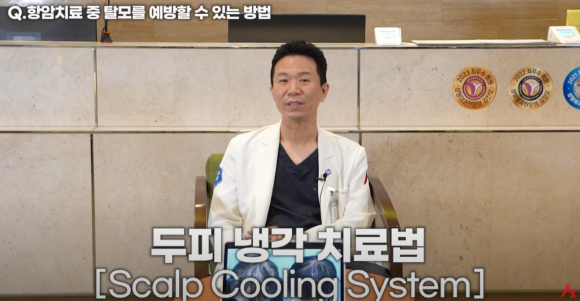
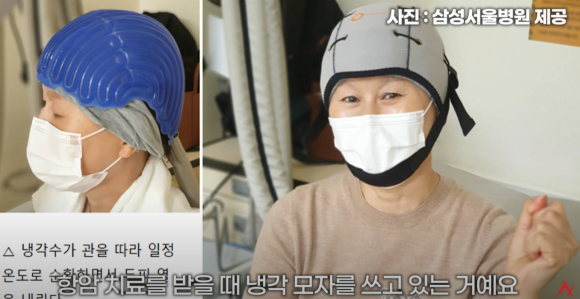
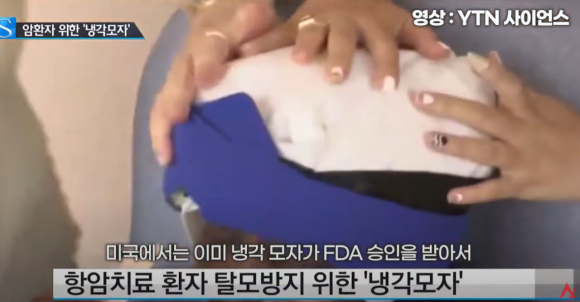
At present, the only FDA-approved method is scalp cooling.
It works by constricting the blood vessels in the scalp so that less chemotherapy drug reaches the hair follicles.
However, the effect varies depending on the type of chemotherapy drug.
For example, it is effective for taxane-based agents, but less effective for anthracyclines².
Q3. How does low-dose oral minoxidil work?
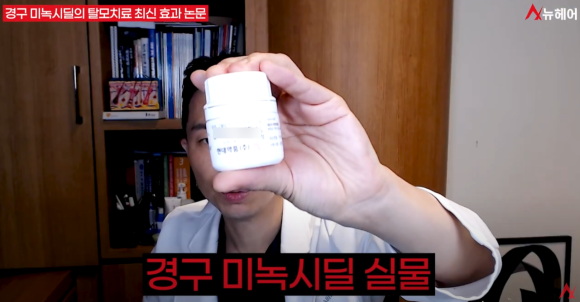
Minoxidil was originally a blood pressure medication, but after a hair-growth side effect was discovered, it began to be used as a treatment for hair loss.
Activated minoxidil in the hair follicle increases blood flow, promotes metabolism, and prolongs the anagen phase.
In simple terms, it shortens the resting phase and quickly promotes hair growth³.
Q4. Is it safe to take during chemotherapy?
Low-dose oral minoxidil is generally safe.
Common side effects include hypertrichosis (within 50%), mild edema (5–20%), and palpitations (around 10%), and most are resolved by adjusting the dose.
No serious cardiovascular adverse effects have been reported⁴.
However, when combined with chemotherapy drugs such as paclitaxel, there is a possibility of hypotension, so medical monitoring is needed.
Q5. Does it work during chemotherapy?
There is still a lack of direct research in humans.
However, in animal studies, minoxidil injection before cytarabine administration showed a hair-loss prevention effect⁵, and when used together with paclitaxel, faster hair recovery was observed⁶.
In human studies, when topical minoxidil was used, some results suggested that the speed of hair regrowth increased⁷.
Q6. What is the future direction of research?
In the future, studies are needed to evaluate the safety and effectiveness of taking low-dose oral minoxidil during chemotherapy.
In particular, its significance may be greater in patients receiving anthracyclines, where scalp cooling is less effective.
Chemotherapy-Induced Hair Loss, Low-Dose Oral Minoxidil Q&A
Summary
| Question | Summary Answer |
|---|
| Cause of chemotherapy-induced hair loss? | Anagen-phase hair follicles are damaged by chemotherapy¹ |
| Prevention method? | Scalp cooling (effect varies depending on the chemotherapy drug)² |
| How does minoxidil work? | Promotes blood flow and metabolism, prolongs the anagen phase³ |
| Safety? | Generally safe; hypertrichosis, edema, and palpitations may occur⁴ |
| Effect? | Evidence from animal studies and small clinical studies suggests prevention of hair loss and promotion of regrowth⁵⁻⁷ |
| Future research? | Safety and effectiveness during chemotherapy need to be verified |
Written by: Kim Jino of New Hair Plastic Surgery (Public Relations Director, Korean Association of Plastic Surgeons / Chief Hair Loss Committee Chair, Korean Society of Laser Dermatology and Hair)
Now it is time for hair to grow hairhair, this was Kim Jino.
Philsaengsinmo (必生新毛).
References
-
Trüeb RM. Chemotherapy-induced alopecia. Curr Opin Support Palliat Care. 2010.
-
Nangia J, et al. Effect of a Scalp Cooling Device on Alopecia in Women Undergoing Chemotherapy for Breast Cancer. JAMA. 2017.
-
Messenger AG, Rundegren J. Minoxidil: mechanisms of action on hair growth. Br J Dermatol. 2004.
-
Zaminski D, et al. Tolerability and effectiveness of low-dose oral minoxidil for alopecia in patients with breast cancer. JAAD. 2024.
-
Hussein AM. Protection against cytosine arabinoside-induced alopecia by minoxidil in a rat model. Int J Dermatol. 1995.
-
Chen YF, et al. Minoxidil is a potential neuroprotective drug for paclitaxel-induced peripheral neuropathy. Sci Rep. 2017.
-
Duvic M, et al. A randomized trial of minoxidil in chemotherapy-induced alopecia. JAAD. 1996.
[This post was written directly by a board-certified plastic surgeon for informational purposes in accordance with Article 56, Paragraph 1 of the Medical Service Act. Hair transplant surgery and treatment may have side effects, and please make a careful decision after consulting with a specialist.]