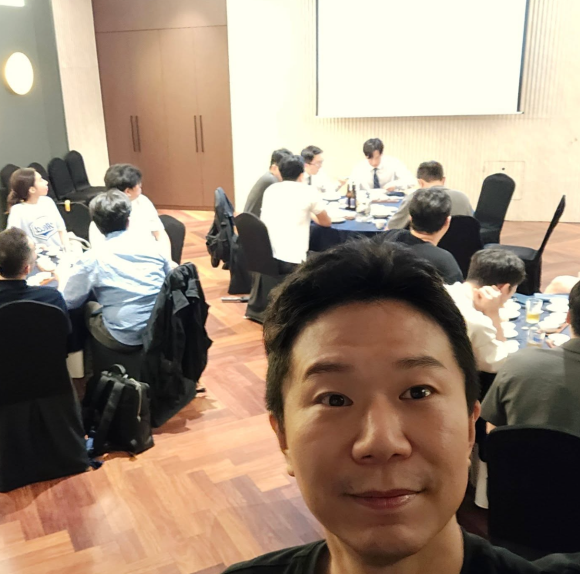
Recently, whenever I get together with friends, there is one topic that never fails to come up: AI.
Conversations like “I heard a new version came out,” “the translation is amazing,” and “Isn’t it about to take over medicine too?” can make you feel as if you are drifting somewhere between reality and science fiction.
But one line I heard at a gathering recently is still stuck in my head.
“I always speak to AI politely. If it becomes the ruler later, it won’t spare people who used honorifics?”

Source - Chosun Ilbo
Everyone burst out laughing at that moment. It was a joke, but the serious tone made it even funnier.
Still, a part of me felt oddly startled.
It crossed my mind that this idea might be connected to a future like Terminator’s “Skynet.”
I still do not use honorifics with AI.
I am used to writing short requests like “organize this” or “tell me.”
But my friend’s words kept coming back to me.
If I asked politely, “Could you tell me?” would anything change?
AI’s answer would probably be the same. But my attitude might change.
Wouldn’t it feel like I was treating it more courteously, while also straightening up my own mindset a little?
As a doctor, I have always valued “scientific evidence.”
But that day, everyday curiosity came before research papers.
I began to think that honorifics may be more than just a way of speaking; they may be an attitude that acknowledges the other side as a being.
If I were to write, “Could you tell me today’s schedule?” the answer on the screen might not change, but my own feelings might subtly shift.
My friend’s joke was something to laugh off, but it left behind a strange sense of tension.
Are we already, however vaguely, assigning personhood to AI? What if the day really comes when honorifics are needed?
It is still just imagination, but when I think that moment lies somewhere between “no way” and “maybe,” I cannot help but smile.