
Source - Daily Pharm
Finasteride, dutasteride
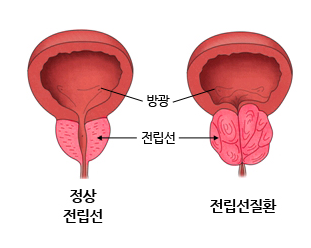
Source - Asan Medical Center
Many patients take medications such as finasteride or dutasteride for hair loss treatment.
However, many people do not know that these medications can affect PSA (Prostate-Specific Antigen) levels, which are used in prostate cancer screening.
Today, I will organize the questions patients often ask in a Q&A format.
Q1. What do PSA levels mean?
A1. PSA is a protein secreted by prostate cells and can be measured through a blood test.
Even under normal circumstances, a small amount is present, but levels can rise in various situations such as prostate cancer, benign prostatic hyperplasia, and prostatitis¹.
Conversely, taking 5-alpha reductase inhibitors (5ARIs), which are used as hair loss medications, can reduce PSA by nearly half.
Therefore, cancer is not diagnosed based on the number alone; it is judged comprehensively with other tests.
Q2. Does taking hair loss medication change how PSA is interpreted?
A2. Yes, it does. If you take a 5ARI medication for more than 6 months, the PSA level will appear about half of the actual value, so the test result should be multiplied by two².
For example, if PSA is 3.0 ng/mL, it should be interpreted as 6.0 ng/mL in reality.
In clinical practice, I have also seen cases where a patient taking hair loss medication felt reassured after looking only at the PSA result, but prostate abnormalities were found later on additional testing.
Therefore, it is essential to inform the doctor whether you are taking hair loss medication, and the result must be interpreted with caution.
Q3. If PSA is slightly elevated, when should a biopsy be performed?
A3. This differs somewhat depending on the guidelines.
-
The American Urological Association (AUA, 2023) does not set a specific absolute threshold, but says that biopsy may be considered when PSA is in the 2.5–4.0 ng/mL range in high-risk patients³.
-
The European Association of Urology (EAU, 2024) gives a clearer recommendation: biopsy is advised when PSA exceeds 3.0 ng/mL or when a nodule is felt on digital rectal examination (DRE)⁴. In other words, not only the number itself but also the patient’s age, family history, and DRE findings must be considered together.
Q4. Is MRI absolutely necessary before a biopsy?
A4. Yes. Recent guidelines all recommend multiparametric magnetic resonance imaging (mpMRI) before biopsy.
If MRI shows PI-RADS 3 or higher, the general rule is to perform both targeted biopsy and systematic biopsy⁵.
In practice, performing MRI first reduces unnecessary biopsies and increases the chance of not missing significant lesions.
In Korea, insurance coverage has expanded since 2019, and its use is steadily increasing.
Q5. How should patients with hair loss get a PSA test?
A5. There is no need to avoid PSA testing just because you are taking hair loss medication.
However, you must inform your doctor that you are taking it, and when interpreting the result, apply the principle that “actual PSA = test result × 2.”
Also, rather than judging cancer risk based on PSA alone, it is safer to look at the trend over time (PSA velocity), the value relative to prostate size (PSA density), and MRI findings together.
| Situation | Criterion | Interpretation/Recommendation |
|---|
| Patient taking hair loss medication (5ARI) | PSA × 2 | Interpret as actual PSA |
| AUA (2023) | PSA 2.5–4.0 ng/mL (high-risk patients) | Biopsy may be considered |
| EAU (2024) | PSA > 3.0 ng/mL or abnormal DRE | Biopsy recommended |
| Common | PI-RADS ≥ 3 on mpMRI | Perform targeted + systematic biopsy |
It is time to hairhair, this was Kim Jin-oh.
필생신모 (May new hair be born).

Written by: Kim Jin-oh, New Hair Plastic Surgery (Public Relations Director, Korean Association of Plastic Surgeons / Academic Director, Korean Association of Laser Dermatology and Hair)
References
-
EAU Guidelines Panel. EAU Guidelines on Prostate Cancer. European Association of Urology, 2024.
-
Andriole, G.L. et al. AUA Guideline: Early Detection of Prostate Cancer. Journal of Urology, 2023.
-
Carter, H.B. et al. PSA Testing and Prostate Cancer Risk Stratification. Urology Practice, 2023.
-
Ahmed, H.U. et al. Diagnostic accuracy of multi-parametric MRI and TRUS biopsy in prostate cancer (PROMIS study). Lancet, 2017.
[This post is written directly by a board-certified plastic surgeon for informational purposes in accordance with Article 56, Paragraph 1 of the Medical Service Act. Hair transplant surgery and treatment may have side effects, and you should make a careful decision after consulting with a specialist.]