I am a board-certified plastic surgeon. Many people think of plastic surgery in terms of the eyes, nose, and facial lines, but in fact, plastic surgery is also a surgical field that deals with trauma and reconstruction.
When I was working as a resident at a university hospital, I went in and out of the emergency room every day.
From simple laceration sutures to patients whose facial bones were shattered in traffic accidents, workers who came in with severed fingers, and children burned by hot water, all of that was within the scope of plastic surgery.
The emergency room was, quite literally, the front line of a battlefield.
When I heard that there was discussion in politics about legislating the “unconditional acceptance of emergency patients,” I suddenly had this thought.
Do politicians really understand the weight of the emergency room? To frame it simply as a noble slogan of “let’s save people” creates too wide a gap from reality.

I, too, have been to the emergency room as a patient.
A few years ago, when I went to the emergency room at 3 a.m. with severe abdominal pain and a high fever, the waiting room was already full of patients. A nurse checked my condition and said,
“Right now, there’s a cardiac arrest patient coming in, and there’s also a traffic accident patient, so... I think you’ll have to wait a bit.”
That “a bit” ended up being two hours.
In front of me, crouched down while clutching a vomit bag, was a patient with a broken arm, and next to me was an older woman with a pale face.
At that moment, I asked myself,
“Was I really a patient who should have come here?”
Through that experience, I realized once again:
The emergency room is not a place that runs on goodwill and kindness alone, but a fierce setting where patients’ conditions must be accurately assessed and priorities must be set.
The word “unconditional” can sound warm.
But the emergency room is not a karaoke room. Patients’ conditions vary widely, and medical staff’s judgment must vary accordingly.
The problem with saying all patients should be accepted unconditionally is not simply that things get “busier.”
To determine whether a patient is in an emergency situation, numerous resources—doctors, nurses, administrative staff, and more—are mobilized. In the meantime, if a cardiac arrest patient comes in? Because resources are spread thin, it may even become impossible to save the patient who could otherwise have been saved.
The emergency room is already overwhelmed. Staff are limited, and the number of patients they see in a day is beyond imagination.
The phrase “unconditional acceptance” sounds as though it is demanding that every patient be taken in while also receiving the same level of care. But reality is not that simple.
I currently work in hair loss and hair transplantation, but I still hear the word “unconditional” often.
“Doctor, my wedding is coming up soon. If I get a hair transplant, I’ll definitely have fuller hair, right?”
I smile and reply,
“That’s not unconditional.”
The word unconditional is always dangerous. Everything has context and conditions. Medicine is especially like that.
Accepting one emergency patient is not simply a matter of providing a bed; it means doctors, nurses, equipment, time, and countless resources that other patients must give up all move together.

I am no longer a doctor working in the emergency room, but I understand very well why the doctors on the front lines are angry.
Those who make the laws only see the lights and microphones on stage; they do not see the reality of the medical staff moving frantically behind them.
When laws are made while ignoring reality, the first thing to collapse is the front line, and eventually even public safety is put at risk.
The same is true for plastic surgery. We must reconnect severed fingers and suture torn facial wounds.
Simply accepting patients unconditionally does not guarantee proper treatment.
The phrase “unconditional acceptance” may seem warm, but sometimes that warmth comes from ignoring reality.
And in the medical field, that kind of disregard can lead to someone’s life.
I heard a similar question in the clinic today as well.
“Doctor, if we just do this part, it’ll definitely look natural, right?”
Once again, I say: there is no such thing as unconditional. Not for our bodies, and not for our lives.
And that applies to the emergency room as well.
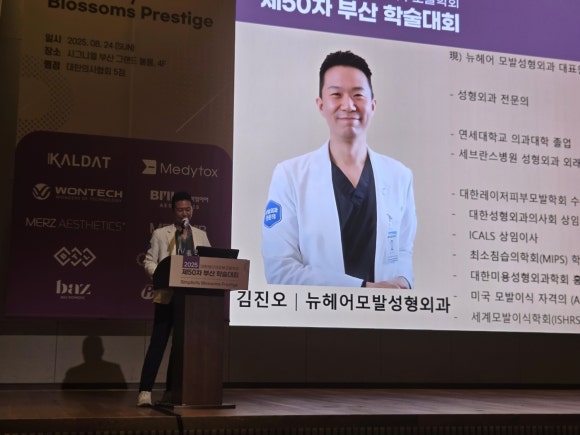
Written by: Kim Jin-oh of New Hair Plastic Surgery (Public Relations Director, Korean Association of Plastic Surgeons / Academic Director, Korean Laser, Dermatology and Hair Society)