AI-translated archive post

Academic English #61. respectively: 각각

New Hair Institute · 김진오의 뉴헤어 프로젝트 · September 10, 2025

"respectively" is an adverb used to connect two or more items with the corresponding descriptions. In Korean, it is translated as "각각" or "각기." It is usually placed at the end of a...

AI translation notice

This page is an English translation of a Korean Naver Blog archive entry. For exact wording and source context, verify against the Korean archive original and the original Naver post.

Clinic: New Hair Institute

Original post date: September 10, 2025

Translated at: April 25, 2026 at 8:20 AM

Medical note: This translation does not guarantee medical accuracy or suitability for treatment decisions.

"respectively" is an adverb used to connect two or more items with the corresponding descriptions.

In Korean, it is translated as "각각" or "각기." It is usually placed at the end of a sentence or after a comma, clearly showing how multiple items are connected in order.

Americans use it frequently not only in everyday conversation but also in academic and scholarly writing.
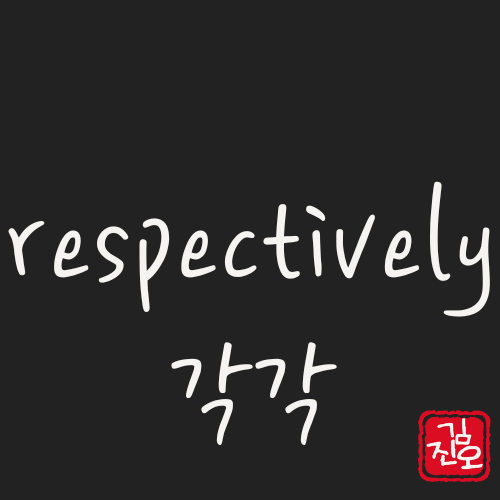
Academic English #61. respectively: 각각 image 1

3 everyday conversation examples

  • They live in New York, Chicago, and LA, respectively.

  • My brothers are 25, 27, and 30 years old, respectively.

  • The three teams finished first, second, and third, respectively.

3 academic/professional English examples

  • The three groups of patients received medication, injection, and surgery, respectively.

  • The average progression time and hair shaft thickness were measured at 2.5 years and 0.07 mm, respectively.

  • The response rates in men and women were reported as 68% and 72%, respectively.

Continue browsing

Keep exploring this clinic's public source trail

Return to the source archive for more translated posts, or open the Korean clinic profile to compare other public channels.