Q1. How does low-level light therapy (LLLT) work on the hair?
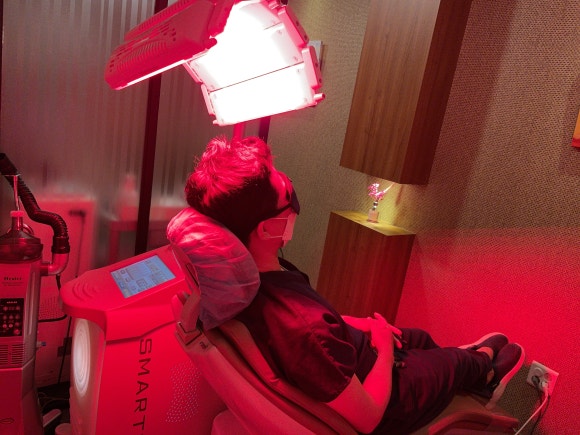
Low-level light therapy works by shining light of specific wavelengths (such as red and near-infrared) onto the scalp to stimulate the cells around the hair follicles.
When enzymes in the mitochondria absorb the light, the cell’s energy source (ATP) increases, and improved blood flow and anti-inflammatory effects occur.1,2
In addition, a small amount of reactive oxygen species (ROS, signaling molecules that act as stimulants) is generated, waking up hair follicle cells and promoting hair growth.3
The important point is that more light is not always better; the effect is maximized only at an appropriate intensity and duration.4
Q2. Do laser helmets for home use (products like Prael) really work?
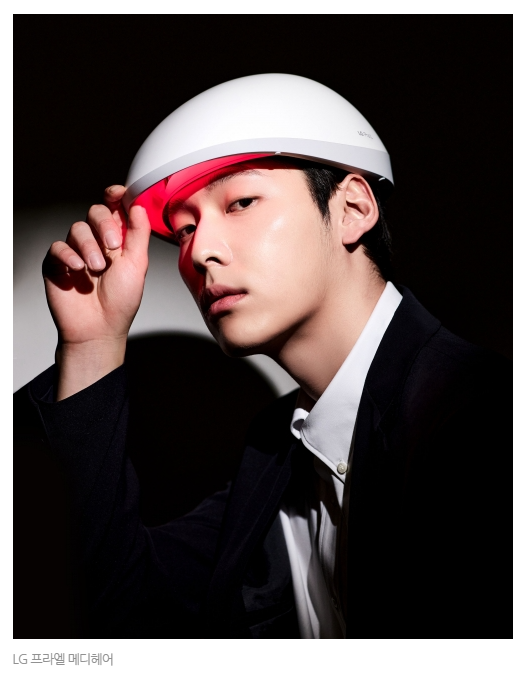
Source - Consumer Times
In Korea, helmet-type devices such as LG Pra.L Medihair have drawn significant attention.
These devices are structured with multiple lasers and LEDs to stimulate the entire scalp, and in randomized controlled clinical trials, there have been reports of an average increase of 28.5 hairs/㎠ in hair density.5
In my clinic as well, many patients who use home devices, including Prael, in combination often say that “less hair is falling out.”
Q3. Is there a synergy when used together with medication?
Yes, there is. Medications such as minoxidil or finasteride play a role in suppressing the hormonal causes of hair loss, while LLLT improves cellular metabolism and blood flow to change the hair follicle environment.6
Several papers have shown evidence of complementary effects when the two treatments are used together.7
In actual patient cases as well, many have reported that “their hair became thicker and more resilient than when using medication alone.”
Q4. Can it help with hair loss caused by COVID aftereffects (long COVID)?
Yes. In an observational study, when red LED was applied to patients who continued to experience hair loss long after COVID-19, improvements in hair thickness and density were observed.8
However, large-scale studies are still lacking, so it is reasonable to think of it as an “adjunctive therapy.”
Among the patients I have seen, there were also people whose hair loss worsened after COVID, and I have observed cases where shedding decreased after LED therapy was used alongside medication.
Q5. Could it also work for alopecia areata or scarring alopecia?
In alopecia areata, there are reports that a 308 nm excimer laser restored more than 50% of hair regrowth in some patients.9
There is also a record stating that “10 out of 14 people regained more than half of their hair.”9
In scarring alopecia, anti-inflammatory and blood flow–improving effects may be expected, but it is still appropriate to understand this as an adjunctive treatment.10
Q6. How long do you actually need to use it to see results?
Usually, you need to use it consistently for at least 12 weeks, and sometimes 24 weeks or longer, to notice changes.1,6
The most common protocol is about 10 to 20 minutes a day, 3 to 7 times a week.
Using it too often or for too long may reduce its effectiveness.4
Hair loss management, not with medicine but with light?
Summary table of low-level light therapy management methods explained in Q&A
| Question | Key answer | Representative evidence |
|---|
| LLLT mechanism | Increased cellular energy, blood flow/anti-inflammatory effects, cellular activation | Avci et al. (2014)1 |
| Effect of home-use devices | Helmet-type devices including Prael, density increased by +28.5 hairs/㎠ | Thomas et al. (2025)5 |
| Combination with medication | Synergy with minoxidil and finasteride | Lueangarun et al. (2021)7 |
| Hair loss after COVID aftereffects | Improved thickness and density with red LED | Gerkowicz et al. (2024)8 |
| Alopecia areata | More than 50% hair regrowth recovered in some patients | Ohtsuki et al. (2013)9 |
| Duration of use | Consistent use for at least 12 to 24 weeks | Avci et al. (2014)1 |
Now it’s time for hair to grow, this was Kim Jino.
필생신모(必生新毛).
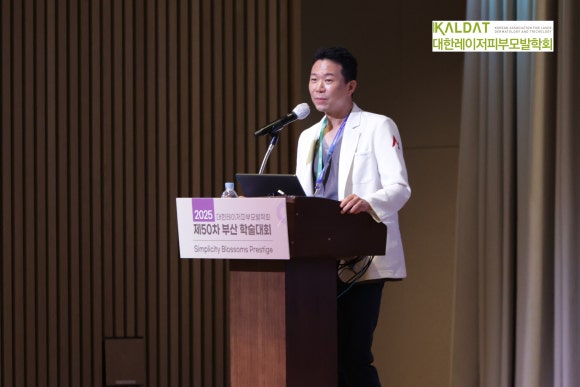
Written by: Kim Jino of New Hair Plastic Surgery Clinic (Public Relations Director, Korean Association of Plastic Surgeons / Academic Director, Korean Laser Dermatology and Hair Society)
References
-
Avci, P., Gupta, G.K., Clark, J. et al. Low-Level Laser (Light) Therapy for Treatment of Hair Loss. Lasers in Surgery and Medicine, 2014.
-
Heiskanen, V. and Hamblin, M.R. Photobiomodulation: lasers vs light emitting diodes? Photochemical & Photobiological Sciences, 2018.
-
Hamblin, M.R. Photobiomodulation for the management of alopecia. Photobiomodulation, Photomedicine, and Laser Surgery, 2019.
-
Huang, Y.-Y., Chen, A.C.-H., Carroll, J.D. and Hamblin, M.R. Biphasic dose response in low level light therapy. Dose-Response, 2009.
-
Thomas, M., Stockslager, M., Oakley, J., Womble, T.M. and Sinclair, R. Clinical Safety and Efficacy of Dual Wavelength Low-Level Light Therapy in Androgenetic Alopecia. Dermatologic Surgery, 2025.
-
Jimenez, J.J., Wikramanayake, T.C., Bergfeld, W. et al. Efficacy and safety of a low-level laser device in male and female pattern hair loss. American Journal of Clinical Dermatology, 2014.
-
Lueangarun, S., Suchonwanit, P. and Jung, S. Systematic Review and Meta-analysis of RCTs of FDA-approved Home-use LLLT Devices. JCAD, 2021.
-
Gerkowicz, A., Krasowska, D., Niemczyk, A. et al. Red LED light therapy for telogen effluvium in long COVID. AAEM, 2024.
-
Ohtsuki, A., Hasegawa, T., Tsujioka, K. et al. 308-nm Excimer Lamp for Alopecia Areata. Case Reports in Dermatology, 2013.
-
Jafari, M.A., Sabour, S., Shafiee, S.M. et al. Efficacy and Safety of Laser Therapy and Phototherapy in Alopecia Areata: A Systematic Review. Health Science Reports, 2024.
[This post has been written directly by a board-certified plastic surgeon for informational purposes in accordance with Article 56, Paragraph 1 of the Medical Service Act. Hair loss surgery and treatment may have side effects, and you should make a careful decision after consulting with a specialist.]