Hair loss during chemotherapy is not just a change in appearance; it can also significantly affect a patient’s self-esteem and emotional stability.
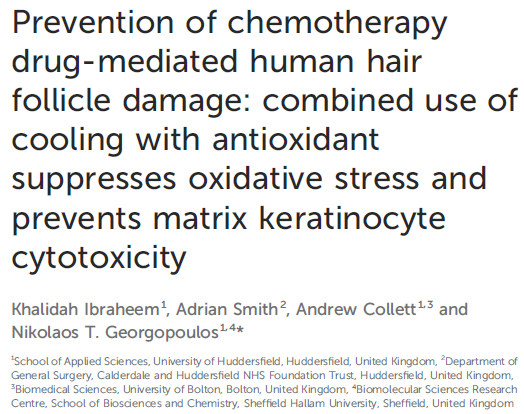
A recent study by Ibraheem et al. (2025) showed an important possibility that combining scalp cooling with antioxidants may reduce chemotherapy-induced damage to hair follicles¹.
Below is a FAQ-style summary of questions that patients often ask.
Q1. Why does hair fall out during chemotherapy?
Chemotherapy drugs have the property of attacking rapidly dividing cells.
Matrix keratinocytes, which form hair, also divide very quickly and are therefore easily damaged.
At this time, reactive oxygen species (ROS) generated by chemotherapy accelerate cellular damage, and
as a result, hair enters the resting phase and massive hair loss occurs¹.
Q2. How does scalp cooling work?

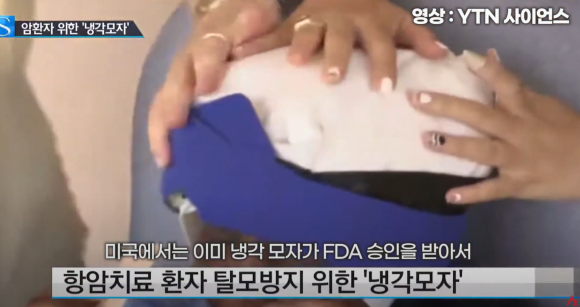
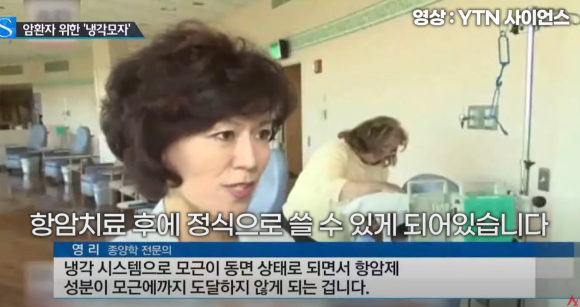
When the scalp is lowered to a certain temperature, blood flow decreases, which reduces the amount of chemotherapy drug that reaches the hair follicles.
This is the principle behind making hair follicle cells less exposed to the toxicity of chemotherapy drugs.
In other words, the lower the temperature, the greater the effect, but in actual clinical practice, it is difficult to cool all patients down to 18°C.
Q3. What effect does using antioxidants together have?
The research team combined cooling with antioxidants such as NAC, Trolox, Resveratrol, and MitoTEMPO.
-
As a result, even at 26°C under partial cooling, cell viability improved significantly
-
A protective effect confirmed at a level almost similar to the effect of 18°C cooling alone¹
In other words, antioxidants have limited effects on their own, but show a synergistic effect when used together with cooling.
Q4. Are antioxidants taken orally or applied topically?
It was suggested that direct application to the scalp may be more effective than oral intake.
The researchers proposed developing formulations such as mists, gels, and sprays,
and explained that using them together during scalp cooling could be clinically beneficial¹.
Q5. If this were applied to actual patient treatment, what changes might there be?
Stable hair loss prevention could be expected even if the cooling temperature differs from patient to patient
Additional benefits such as hair growth, melanin preservation, and suppression of cell death could be achieved
Reduced psychological burden and improved quality of life for patients are expected
If scalp cooling treatment and combination studies continue to be introduced in Korea as well, it will be of great help to many patients.
Hair Preservation During Chemotherapy-Induced Hair Loss,
Summary Table of the Scalp Cooling + Antioxidant Strategy Revealed by the Study
| Item | Conventional Method | New Approach (Cooling + Antioxidants) |
|---|
| Main principle | Suppress chemotherapy drug influx by reducing scalp blood flow | ROS suppression + partial cooling support |
| Optimal temperature | 18°C (high difficulty to implement) | Effectiveness secured even at 26°C |
| Cell viability | 70% or higher only at 18°C | Maintained at 60–70% even at 26°C |
| Role of antioxidants | Limited effect on their own | Synergistic effect maximized when combined with cooling |
| Method of application | Cooling device only | Cooling + antioxidant mist/gel/spray |
Now it’s time for hairhair. This was Kim Jin-oh.
Pilsaengsinmo (必生新毛).
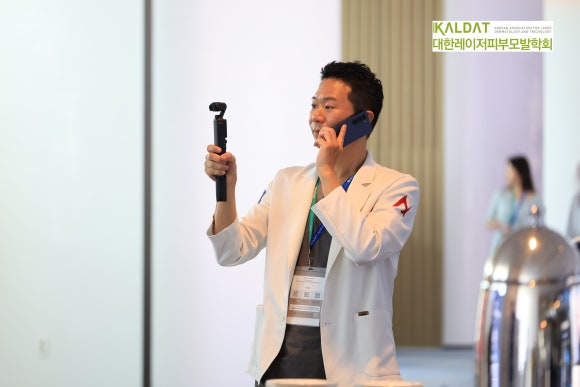
Written by: Kim Jin-oh, New Hair Plastic Surgery Clinic (Public Relations Director, Korean Association of Plastic Surgeons / Academic Director, Korean Society of Laser Dermatology and Hair)
References
Ibraheem K, Smith A, Collett A and Georgopoulos NT (2025) Prevention of chemotherapy drug-mediated human hair follicle damage: combined use of cooling with antioxidant suppresses oxidative stress and prevents matrix keratinocyte cytotoxicity. Front. Pharmacol. 16:1558593
[In accordance with Article 56, Paragraph 1 of the Medical Service Act, this post is being written directly by a board-certified plastic surgeon for informational purposes. Hair loss surgery and treatment may have side effects, and please make a careful decision after consulting with a specialist.]