
The first question patients ask when starting hair loss treatment is, “Which medication should I choose?”
In particular, for female pattern hair loss, prescriptions that combine multiple ingredients to expect a synergistic effect—so-called “combination medications”—are often used more than a single drug.
In this process, one ingredient that is almost always mentioned is spironolactone.
However, many patients ask this question:
“Isn’t this originally a blood pressure-lowering drug? If I take it, won’t I develop low blood pressure?”
In fact, because this medication has a diuretic effect, there is a strong perception that it can affect blood pressure.
Today, based on a recently published study¹ and real-world clinical experience, I will organize the questions patients ask most often.
Hair Loss Combination Medication: Is Blood Pressure Okay When Taking Spironolactone?
Conclusion
Spironolactone is a medication that can be used relatively safely in female pattern hair loss patients, and the risk of low blood pressure is not high.
However, if you are also taking blood pressure medication or have another chronic condition, closer monitoring is needed.
Taken together with the medical evidence¹ and real-world clinical experience, spironolactone is a medication for which “reasonable management, rather than excessive worry,” is important.
Q1. What kind of drug is spironolactone originally,
and why is it used for hair loss treatment?
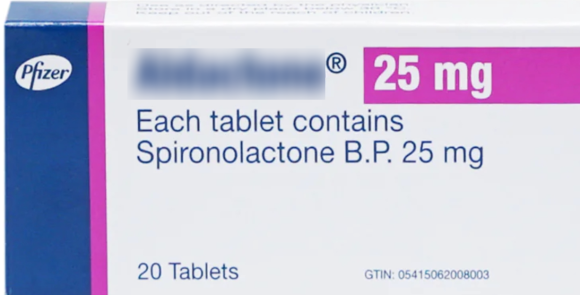
Source - Pharmnews
Spironolactone
Spironolactone was originally developed as a diuretic to remove excess fluid from the body in conditions such as heart failure, cirrhosis, and edema.
At the same time, it also has anti-androgen properties because it acts on androgen receptors and suppresses androgen activity.
Because female pattern hair loss is strongly influenced by hormones, spironolactone, with its dual action, has become an effective treatment option.
In actual clinical practice, it is often prescribed as part of a “combination medication” together with finasteride, dutasteride, oral minoxidil, and brewer’s yeast.
Q2. If it’s a diuretic, won’t blood pressure drop a lot?
This is the part patients worry about most.
There are many questions like, “If my blood pressure drops too much, won’t I feel dizzy?”
A recent study published in the United States¹ gave a clear answer to this question.
The research team analyzed data from 185 women who took spironolactone for hair loss, and as a result, there was almost no change in blood pressure.
These differences were not statistically significant, and clinically meaningful low blood pressure occurred in only 5 people.
In other words, in generally healthy women with hair loss, spironolactone is unlikely to lower blood pressure to a dangerous level¹.
Q3. Does the risk of low blood pressure increase as the dose goes up?
In the study, even in the group taking 100–200 mg per day, blood pressure changes were not significant¹.
In other words, neither low nor high doses had a major effect on blood pressure.
However, individual differences do exist, so in actual clinical practice, prescriptions are customized by considering the patient’s underlying conditions, body weight, and overall health.
Q4. I’m already taking blood pressure medication. Is it okay to use this together?
Caution is needed here. In this study, patients who had already been diagnosed with hypertension or were taking blood pressure medication were excluded.
Therefore, if you are taking antihypertensive medication, you must consult your doctor.
In actual clinical practice, combining it with blood pressure medication can cause unexpected drops in blood pressure, so more careful monitoring is necessary.
Q5. How is it managed in actual clinical practice?
Based on clinical experience, it is safest to check blood pressure before starting the medication and measure it again within 1 to 2 weeks after taking it.
If dizziness or orthostatic hypotension symptoms occur rarely, the timing of the dose is changed or the dose is adjusted.
Through this process, most patients can continue treatment without major problems.
| Category | Result |
|---|
| Study population | 185 women (average age 41, range 19–76 years) |
| Maximum dose | Median 100 mg (range 25–200 mg) |
| Average blood pressure change | Systolic -0.88 mmHg, diastolic -0.05 mmHg (not significant) |
| Absolute hypotension (systolic | |
Now it is time for hair hair, Kim Jino.
Filsaengsinmo (必生新毛).

Written by: Kim Jino of New Hair Plastic Surgery Clinic (Public Relations Director, Korean Association of Plastic Surgeons / Academic Director, Korean Society for Laser Dermatology and Hair)
References
- Mirmirani P, et al. Low Risk of Hypotension in Healthy Women Treated for Hair Loss With Oral Spironolactone. Dermatol Pract Concept. 2025;15(3):e2025202. doi:10.2340/dpc.2025202
[This post is written directly by a board-certified plastic surgeon for informational purposes in accordance with Article 56, Paragraph 1 of the Medical Service Act. Hair loss surgery and treatment may have side effects, and you should make a careful decision through consultation with a specialist.]