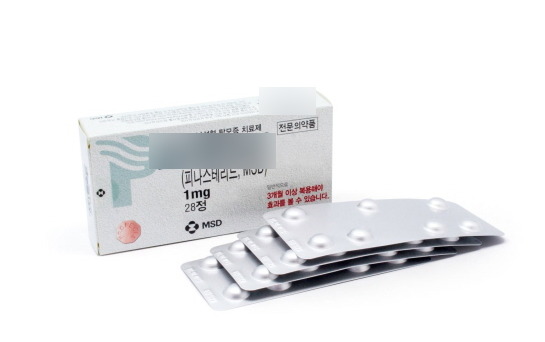
Source - Health Chosun
Finasteride
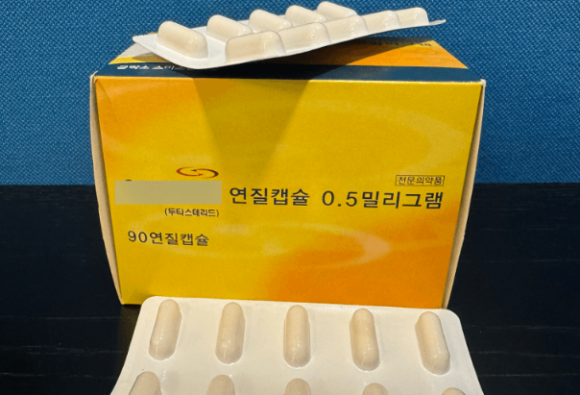
Source - My Own Doctor
Dutasteride
One of the most common questions among people taking hair loss medication is:
“Could it affect sperm health?”
Recently, interest has grown even more after a study in mice reported that finasteride and minoxidil caused changes in sperm-related organs¹.
But can these results be applied to humans as they are?
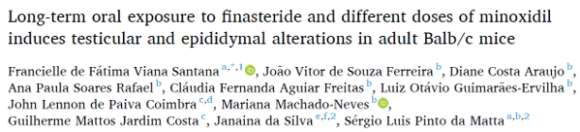
Does hair loss medication affect sperm quality?
Conclusion
Source - Korea Economic Daily
Sperm
Hair loss medications are important treatments that have improved the quality of life for countless patients.
Although it is difficult to apply the results of mouse experiments directly, some clinical cases have confirmed that they can affect sperm health.
However, since most cases recover when the medication is stopped, rather than excessive concern,
what is needed is balanced use through consultation with a specialist.
Q1. What were the results in the mouse study?
When mice were given long-term, high doses of finasteride and minoxidil (tens to hundreds of times the human therapeutic dose), changes such as reduced sperm motility, decreased sperm count, testicular tissue changes, and increased oxidative stress were observed¹.
The researchers interpreted this as meaning that minoxidil may also affect male reproductive health.
However, an important point is that the experimental doses were much higher than the doses actually taken by humans.
Therefore, it is difficult to conclude that the same results would appear in people.
Q2. Does finasteride actually affect sperm in humans?
According to studies in humans, there have been cases in which sperm count decreased in some men taking finasteride².
However, after stopping the medication, sperm count recovered by an average of more than 11 times, and cases were also reported in which it returned to the normal range³.
In other words, while it can rarely have an effect, it has been confirmed that in most cases it recovers reversibly after the medication is discontinued.
Q3. What about minoxidil?
No direct link between topical formulations and sperm health has been reported.
In recent years, low-dose oral minoxidil (0.25–5 mg) has been used as a hair loss treatment, but data on long-term use is still insufficient.
Based on the mouse study results, potential risks cannot be completely ruled out, but this is a stage where more clinical experience is still needed¹.
Q4. Is long-term use okay?
Finasteride has already been used long-term for decades in patients with benign prostatic hyperplasia.
During that time, there have been very few reports of major reproductive health problems.
By contrast, minoxidil has a shorter history of use as an oral medication, so reliable long-term data are lacking.
Therefore, what matters at this stage is balanced understanding rather than excessive fear.
The best choice is to consult a specialist and decide according to your own situation.
Q5. What message can be given to actual patients?
Finasteride: sperm count may decrease in some cases,
but in most cases it recovers after stopping the medication.
Minoxidil: clinical data are still limited, so
more research is needed in the future.
Common point: in reality, the improvement in quality of life gained through hair loss treatment
is significant, and the effect on infertility is not common.
| Category | Animal study results¹ | Human studies²³ | Interpretation |
|---|
| Finasteride | Reduced sperm motility, decreased sperm count | Decreased in some cases, average 11-fold recovery after discontinuation | Rarely affects, mostly reversible |
| Minoxidil | Tissue changes, oxidative stress, hormonal imbalance | Long-term data lacking | Possibility exists, further research needed |
Now it’s time to be Hair-hair, this was Kim Jin-oh.
Pilsaengsinmo (必生新毛).
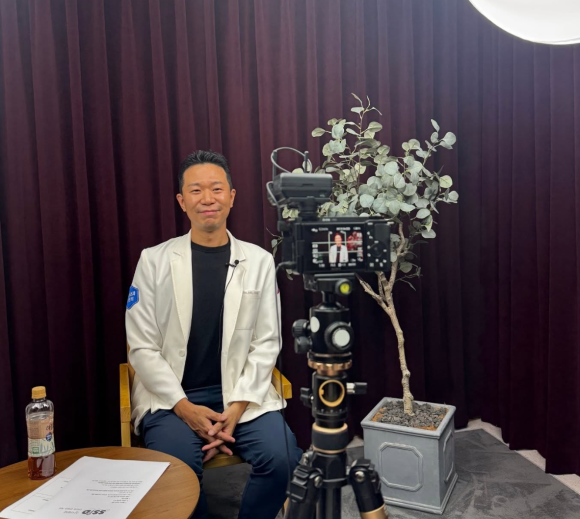
Written by: Kim Jin-oh, New Hair Plastic Surgery (Public Relations Director, Korean Association of Plastic Surgeons / Academic Director, Korean Society of Laser Dermatology and Hair)
References
-
Santana, F.F.V., Ferreira, J.V.S., Araujo, D.C., Rafael, A.P.S., Freitas, C.F.A., Guimarães-Ervilha, L.O., Coimbra, J.L.P., Machado-Neves, M., Costa, G.M.J., da Silva, J., & Pinto da Matta, S.L. (2025). Long-term oral exposure to finasteride and different doses of minoxidil induces testicular and epididymal alterations in adult Balb/c mice. Toxicology, 518, 154278. https://doi.org/10.1016/j.tox.2025.154278
-
Samplaski, M.K., Lo, K., Grober, E. & Jarvi, K. (2013). Finasteride use in the male infertility population: effects on semen and hormone parameters. Fertility and Sterility, 100(6), 1542–1546. https://doi.org/10.1016/j.fertnstert.2013.07.2000
-
Chiba, K., Yamaguchi, K., Li, F. & Ando, M. (2011). Finasteride-associated male infertility. International Journal of Urology, 18(7), 536–538. https://doi.org/10.1111/j.1442-2042.2011.02784.x
[This post is written directly by a board-certified plastic surgeon for informational purposes in accordance with Article 56, Paragraph 1 of the Medical Service Act. Hair loss surgery and treatment may have side effects, and you should make a careful decision after consulting with a specialist.]