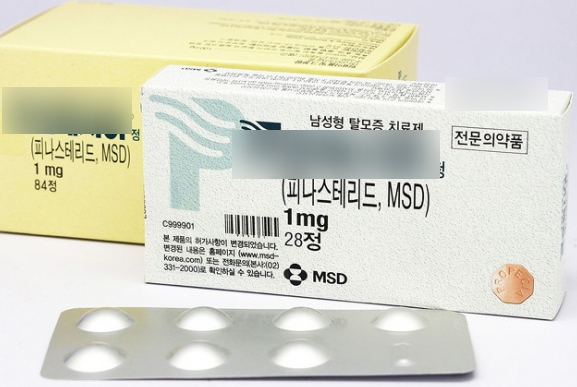
Source - Hit News
Finasteride
Finasteride is a representative treatment for male pattern hair loss that has been used for more than 40 years.
However, recently, the claim that it increases the risk of depression or suicide has often been mentioned among patients.
I have summarized this based on actual research data and clinical experience.
Is Finasteride Safe to Take? Study Results Based on 40 Years of Data
(Debate Over Depression·Suicide) Summary Table
| Item | Details |
|---|
| Study period | 1985–2024 |
| Analysis target | 40 cases of mental side effects unrelated to sexual function |
| Average age | 31 years old |
| Suicide-related | 40% (thoughts 35%, attempts 5%) |
| Symptom onset | Half occurred within 9 months of taking the drug |
| Improvement after discontinuation | 45% |
| Persistent cases | 25% (average of 20+ months) |
| Large-scale studies | Depression risk ↑ (1.5–2x), suicide risk unclear |
| Absolute risk | Low (about 2–3 additional cases per 1,000 people) |
Q1. Does taking finasteride really cause depression?

Yes, some studies have found that the risk of depression increases.
According to a recent report analyzing the French pharmacovigilance database (BNPV, 1985–2024), more than 40 cases of depression were identified, regardless of sexual dysfunction¹.
Among these, suicidal thoughts or attempts were reported in 40%, and symptoms often appeared on average within
9 months after starting the drug.
However, because this is data from a spontaneous reporting system, it is difficult to estimate the actual incidence accurately.
In large cohort studies, the risk of depression increases by about 1.5–2 times,³⁴ but the absolute number remains low.
In practice, it is roughly the level of 2–3 newly diagnosed cases of depression per 1,000 users.
Q2. Does the risk of suicide also increase?
To put it simply, the suicide risk is not clear.
A JAMA Internal Medicine study (2017) did not find a statistically significant increase in suicide risk³.
Another JAMA Network Open study (2022) also confirmed a risk of depression but did not find a clear association with suicide⁴.
In other words, depression requires relatively close attention, but the data on suicide risk itself are inconsistent.
Q3. Why do these side effects happen?
Researchers explain that finasteride affects neurosteroid synthesis in addition to inhibiting DHT.
In particular, the level of a substance called allopregnanolone decreases,
which is an important neuromodulator in the brain that helps reduce anxiety and has antidepressant effects⁵.
In fact, there have been reports that allopregnanolone levels gradually decreased in patients who took the drug for 12 months.
This raises the possibility that mood changes may occur.
Q4. Isn’t it just because of the stress from hair loss?
Many patients ask, “Hair loss itself is stressful, so isn’t that the cause?”
However, researchers emphasize that the same level of depression and suicidal thoughts was not reported in minoxidil users⁶.
Therefore, it is difficult to explain this purely as stress from hair loss, and we cannot rule out the possibility that the mechanism of finasteride played a role in part.
Q5. Then how should it be taken safely?
Most patients receive the treatment benefit without any problems.
However, because severe side effects may occur rarely, monitoring is key.
-
Before taking it: Check whether there is a history of depression
-
During treatment: Check for mood changes, sleep patterns, and reduced motivation
-
If abnormal symptoms occur: Consult a medical professional immediately, and if necessary, stop the medication and consider alternative treatment
It's time for hairhair, Kim Jin-oh.
May new hair be born (必生新毛).
Written by: Kim Jin-oh, New Hair Plastic Surgery (Public Relations Director, Korean Association of Plastic Surgeons / Academic Director, Korean Society of Laser Dermatology and Hair)
References
-
Geniaux H, Laroche ML. Isolated depressive disorders and suicidality with finasteride use for androgenetic alopecia: a call for enhanced vigilance. Therapies. 2025. doi:10.1016/j.therap.2025.09.004.
-
Altomare G, Capella GL. Depression circumstantially related to the administration of finasteride for androgenetic alopecia. J Dermatol. 2002;29:665-9.
-
Welk B, et al. Association of suicidality and depression with 5α-reductase inhibitors. JAMA Intern Med. 2017;177:683.
-
Garcia-Argibay M, et al. Association of 5α-reductase inhibitors with dementia, depression, and suicide. JAMA Netw Open. 2022;5:e2248135.
-
Dušková M, Hill M, Stárka L. The influence of low dose finasteride, a type II 5α-reductase inhibitor, on circulating neuroactive steroids. Horm Mol Biol Clin Investig. 2010;1:95-102.
-
Wu M, Yu Q, Li Q. Differences in reproductive toxicology between alopecia drugs: an analysis on adverse events among female and male cases. Oncotarget. 2016;7:82074-84.
[This post is written directly by a plastic surgery specialist for informational purposes in accordance with Article 56, Paragraph 1 of the Medical Services Act. Hair transplant surgery and treatment may have side effects, and you should make a careful decision through consultation with a specialist.]