Reports online often say that after taking the hair-loss medication finasteride, “the side effects continue even after stopping the drug.”
In particular, as such cases have stood out among younger hair-loss patients, the term “Post-Finasteride Syndrome (PFS)” has even emerged.
However, in prostate patients who take the same ingredient at a higher dose, similar reports are almost nonexistent.
So why do finasteride side effects seem to be concentrated among younger patients?
In this article, we look at the reasons from two perspectives: medical evidence and social factors.
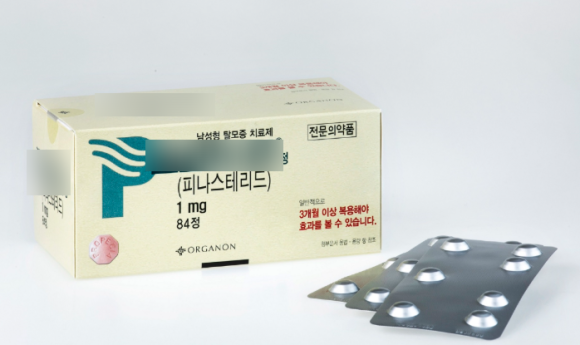
Finasteride
Source - Health Joongang
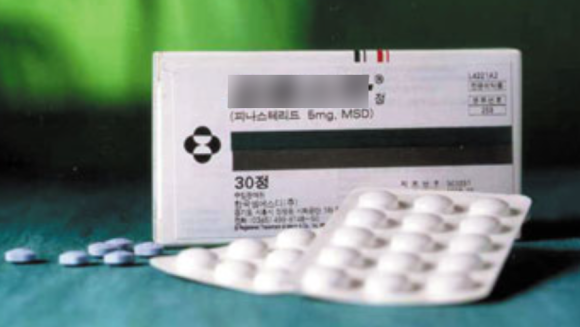
Finasteride
Source - Pharm News
Finasteride Side Effects for Hair Loss: Why Are They Reported More Often in Younger Patients?
Summary
| Category | Content |
|---|
| Main symptoms | Changes in sexual function, fatigue, reduced concentration, depression |
| Group mainly reported | Young hair-loss patients (Propecia 1 mg users) |
| Group rarely reported | Patients with benign prostatic hyperplasia (Proscar 5 mg users) |
| Regulatory stance | Possible link mentioned, causality uncertain |
| Researchers’ interpretation | Classified as a functional illness, emphasizing social and psychological factors |
| Similar case | Increase in reports of side effects from silicone implants |
Q1. After taking finasteride for hair loss, is it true that the “side effects last a long time”?
Finasteride is a drug that slows hair loss by inhibiting the production of DHT (dihydrotestosterone).
However, as some patients reported that “sexual function problems continue even after stopping the medication,” the term “Post-Finasteride Syndrome (PFS)” appeared.
That said, PFS is not currently a medically established disease.
Of the 59 cases of persistent erectile dysfunction reviewed by the FDA, 51 had no information about other causes
(stress, lifestyle, illness, etc.)¹.
In other words, the issue pointed out was not the side effect itself, but the “reliability of the reports.”
Therefore, at present it is only assessed as a possibility, and a clear causal relationship has not been proven.
Q2. Then why are these side effects mainly reported among
“young hair-loss patients”?
Even when taking the same drug, responses are reported differently depending on age group.
The higher-dose version of finasteride (Proscar 5 mg) is used as a treatment for benign prostatic hyperplasia in middle-aged men,
but similar side-effect cases are rarely reported in that patient group.
Researcher Justman asks the following question.
“If this symptom really is caused by the drug, why does it not appear in prostate patients who have taken the higher dose for a long time?”¹
The key to explaining this difference is “psychological response and social perception.”
For younger patients, changes in sexual function are shocking, and this is accompanied by anxiety and changes in self-perception.
By contrast, middle-aged and older adults have already experienced natural age-related changes, so they may interpret the same symptoms differently.
In other words, it may be not the symptom itself, but the “interpretation of the symptom” that differs.
Q3. Then is it possible that it is not actually a
“side effect caused by the drug”?
Based on the current medical evidence, it is difficult to conclude that PFS occurs through the direct pharmacological action of finasteride.
Researchers classify it under the category of “functional illness.”
This refers to a condition in which the patient genuinely reports discomfort even though there is no clear tissue damage or hormonal abnormality.
Irritable bowel syndrome and chronic fatigue syndrome also fall into this category.
In other words, the explanation is that PFS symptoms are also more likely driven by stress, cognition, and social context rather than physiological changes¹.
Q4. Do social factors really have that much influence?
In fact, after the FDA label change in 2011, media coverage, online communities, and lawsuits followed one after another, and the term “PFS” spread socially.
As a result, reports of side effects increased dramatically, which is interpreted not as a real rise in incidence, but as an “awareness effect,” meaning that social attention amplified how strongly individuals perceived their symptoms.
This phenomenon is similar to the controversy over silicone implant side effects in the United States in the 1990s¹.
Q5. How should patients respond?
If you are taking finasteride or planning to take it, remember the following.
Do not jump to conclusions about symptoms; keep a record.
Objectively note the timing of use, dosage, and symptom changes to help with identifying the cause.
Anxiety itself can trigger physical reactions.
Because stress affects hormonal balance, it is important to reduce anxiety.
Do not stop taking the medication without consulting a medical professional.
Stopping on your own may trigger a return of hair loss, so it is better to adjust the treatment gradually after consulting a medical professional.
Now it’s time to grow hairhair, Kim Jino.
Filsaengsinmo (必生新毛).
Written by: Kim Jino, New Hair Plastic Surgery (Public Relations Director, Korean Society of Plastic and Reconstructive Surgeons / Academic Director, Korean Society of Laser Dermatology and Hair Restoration)
References
- Justman, S. (2025). Post-Finasteride Syndrome: Medically Unexplained. University of Montana, Global Humanities and Religions Faculty Publications. Available at: https://scholarworks.umt.edu/libstudies_pubs/33
[In accordance with Article 56, Paragraph 1 of the Medical Service Act, this post is written directly by a plastic surgery specialist for the purpose of providing information. Hair loss surgery and treatment may have side effects, and you should make a careful decision after consulting with a specialist.]