Source - Kormedi.com
If you enjoy working out, you may have heard at least once, “Creatine makes your hair fall out.”
Creatine, a supplement known for helping build muscle, certainly improves exercise efficiency, but rumors that it promotes hair loss have continued to circulate.
However, when the results of several recent clinical trials are combined, there is currently no scientific evidence proving that creatine causes hair loss.
Let’s clear up the origin of that misconception one by one.
Creatine and Hair Loss: Is There Really an Effect?
Summary Table of Findings Confirmed by the Latest Research
| Category | Key Points |
|---|
| Role of creatine | Provides energy in muscles, improves exercise performance¹ |
| Start of the hair loss controversy | Temporary increase in DHT reported in a 2009 study² |
| Additional research results | No change in DHT or testosterone³⁴ |
| 2025 clinical trial results | No change in hair density or scalp health⁵ |
| Difference from steroids | Creatine has no hormonal action and is a safe supplement⁶ |
| Actual causes of hair loss | Genetics, stress, calorie deficiency, lifestyle changes |
Q1. What is creatine?
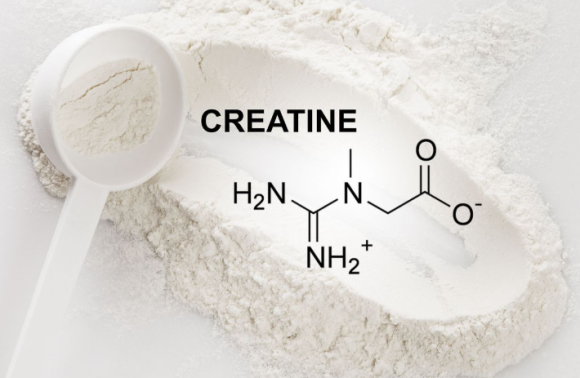
Creatine
Source - Food Facts Tistory
Creatine is produced in the liver, kidneys, and pancreas, and it helps regenerate the muscle energy source ATP¹.
When taken as a supplement, the concentration of creatine phosphate in muscles increases, improving strength, recovery, and muscle growth.
In other words, creatine is a naturally occurring energy metabolite, not a drug or hormone.
Q2. Then why did the claim that it “causes hair loss” come up?
It started with a study in 2009 involving rugby players in South Africa².
After taking creatine for three weeks, the participants’ blood DHT was reported to have increased by 56%.
Because DHT is a hormone associated with male pattern hair loss, the idea emerged that “creatine causes hair loss.”
However, this study did not actually confirm hair loss, and the increase in DHT was also a temporary change within the normal range.
Subsequent studies reported no changes in DHT or testosterone levels³⁴.
Q3. What is the actual relationship between creatine and hair loss based on the latest clinical results?
In a randomized placebo-controlled clinical trial published in Clinical and Experimental Dermatology in 2025⁵, a group taking creatine for 12 weeks was compared with a placebo group.
-
No change in hair density
-
No change in scalp inflammation or oiliness
-
No difference in hair loss progression
In other words, the conclusion was that creatine had no negative effect on hair or scalp health.
The researchers explicitly stated that “creatine intake did not affect physiological changes related to hair loss”⁵.
Q4. Then why do some people feel that their hair started falling out after taking it?
In most cases like this, the cause is not creatine itself but surrounding factors.
If exercise volume suddenly increases after taking creatine, telogen effluvium may appear due to weight loss, calorie deficiency, sleep
deficiency, and similar factors.
In other words, lifestyle changes or stress responses are more likely causes than the supplement itself.
If you are genetically predisposed to hair loss, the timing may have simply overlapped by chance.
Q5. Isn’t it something that affects hormones like steroids?
Not at all.
Steroids are synthetic hormones similar to testosterone and can increase DHT, which may promote hair loss, but creatine is an energy metabolite that is not directly related to hormone metabolism⁶.
The International Society of Sports Nutrition (ISNN) classifies creatine as a “supplement safe for long-term use”⁶.
Q6. If you’re worried about hair loss, what should you pay attention to?
Lifestyle management is far more important than creatine.
-
Maintain growth hormone secretion with sufficient sleep
-
Eat nutrients that make up hair, such as protein, zinc, and biotin
-
Manage stress and keep the scalp clean
If you consistently follow just these three things, you can significantly slow the progression of hair loss.
When all current scientific evidence is combined, there is no evidence that creatine causes hair loss.
It is simply a misunderstanding based on a single study from 2009; the latest clinical data clearly show that creatine does not affect hair density or scalp health.
Therefore, if you are worried about hair loss, the first priority should be to check genetic factors, sleep, nutrition, and stress management rather than stopping the supplement.
It’s time for hairhair, Kim Jin-oh.
Filsaengsinmo (必生新毛).
Written by: Kim Jin-oh, New Hair Plastic Surgery (Public Relations Director of the Korean Society of Plastic and Reconstructive Surgeons / Academic Director of the Korean Society of Laser Dermatology and Hair)
References
-
Cooper, R., Naclerio, F., Allgrove, J., Jimenez, A. (2012). Creatine supplementation with specific view to exercise/sports performance: an update. Journal of the International Society of Sports Nutrition, 9(33). 10.1186/1550-2783-9-33
-
van der Merwe, J., Brooks, N.E., Myburgh, K.H. (2009). Three weeks of creatine monohydrate supplementation affects dihydrotestosterone to testosterone ratio in college-aged rugby players. Clinical Journal of Sports Medicine, 19(5), 399-404. 10.1097/JSM.0b013e3181b8b52f
-
Vatani, D.S., Faraji, H., Soori, R., Mogharnasi, M. (2011). The effects of creatine supplementation on performance and hormonal response in amateur swimmers. Science & Sports, 26(5), 272-277. https://doi.org/10.1016/j.scispo.2011.07.003
-
Arazi, H., Rahmaninia, F., Hosseini, K., Asadi, A. (2015). Effects of short-term creatine supplementation and resistance exercises on resting hormonal and cardiovascular responses. Science & Sports, 30(2), 105-109. https://doi.org/10.1016/j.scispo.2014.03.006
-
Lak, S. A., Alipour, M., Ghaedi, H., & Askari, M. (2025). The effect of creatine supplementation on hair loss and serum androgenic hormones: A randomized, placebo-controlled clinical trial. Clinical and Experimental Dermatology. PubMed ID: 40265319
-
Kreider, R.B., Kalman, D.S., Antonio, J., et al. (2017). International Society of Sports Nutrition position stand: safety and efficacy of creatine supplementation in exercise, sport and medicine. Journal of the International Society of Sports Nutrition, 14. https://doi.org/10.1186%2Fs12970-017-0173-z
[In accordance with Article 56, Paragraph 1 of the Medical Service Act, this post is being written directly by a plastic surgery specialist to provide information. Hair transplant surgery and treatment may involve side effects, and you should make a careful decision through consultation with a specialist.]