Many people receiving chemotherapy fear hair loss as one of the side effects most of all.
But did you know that there is such a thing as persistent chemotherapy-induced alopecia, in which hair does not grow back even after treatment ends?
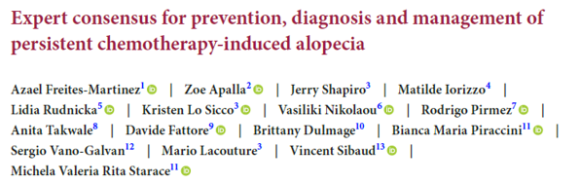
Recently, an international expert consensus statement presented specific standards and treatment strategies to prevent and manage this problem.
Chemotherapy-Induced Hair Loss: What If It Continues Even After Treatment Ends?
Summary Table of Management and Prevention Methods
| Item | Main Content |
|---|
| Definition | Non-scarring alopecia lasting more than 6 months after chemotherapy ends¹ |
| Cause | Damage from follicular self-renewal harvesting (taxanes, adriamycin, etc.)¹ |
| Diagnosis | Differentiation through medical history, photos, and scalp microscopy¹ |
| Treatment | Early use of minoxidil, spironolactone, and bimatoprost in combination¹ |
| Contraindications | Use of androgen inhibitors is prohibited in breast cancer patients¹ |
| Prevention | Strong recommendation for scalp cooling¹ |
Q1. Why doesn’t hair grow back even after chemotherapy?
Persistent chemotherapy-induced alopecia does not simply mean that hair grows back late; it refers to a state in which hair follicle cells have been damaged or depleted.
Chemotherapy suppresses cell division in the hair follicles or destroys the cells, reducing the ability of hair to regenerate.
In particular, chemotherapy agents such as taxanes, adriamycin, busulfan, and thiotepa have been reported to have a strong effect of this kind¹.
The hair follicles themselves remain, but their ability to produce hair becomes weakened, causing hair loss to persist for a long period.
Q2. How is it different from ordinary hair loss?
Persistent chemotherapy-induced alopecia is often easily confused with androgenetic alopecia (male pattern hair loss, female pattern hair loss).
| Category | Persistent Chemotherapy-Induced Alopecia | Androgenetic Alopecia |
|---|
| Onset | After chemotherapy | Genetic, hormone-related influence |
| Pattern | Overall, diffuse hair loss | M-shaped (men), crown/vertex (women) |
| Cause | Damage to hair follicle cells | DHT |
| Treatment approach | Focus on minoxidil and scalp cooling | May use androgen inhibitors in combination |
This distinction is key in determining treatment.
Therefore, it is important to differentiate it through pre- and post-treatment photos, medical history, and, if needed, scalp microscopy¹.
Q3. Is there a way to prevent it?
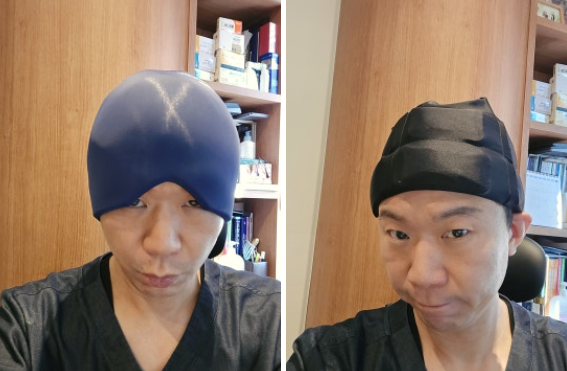
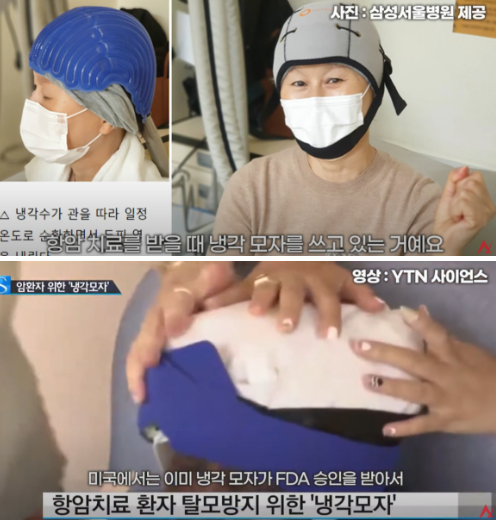
Scalp cooling was recommended as the most effective preventive method¹.
Cooling the scalp below a certain temperature reduces blood flow, so chemotherapy drugs penetrate the hair follicles less.
As a result, the incidence of hair loss decreases.
Several clinical studies have also confirmed that the incidence of persistent alopecia was significantly lower in patient groups that underwent scalp cooling.
Recently, the number of patients using scalp cooling devices has been steadily increasing at cancer centers in Korea and abroad, and it is becoming established as a standard supportive therapy.
Q4. How should treatment begin?
The consensus statement emphasized that early intervention is key¹.
If hair recovery is delayed after chemotherapy ends, the following treatments should be considered as quickly as possible.
| Stage | Treatment option | Main effect |
|---|
| First-line | Topical minoxidil 2–5% or low-dose oral minoxidil (0.5–5 mg/day) | Stimulates hair follicles, promotes hair growth |
| Second-line | Spironolactone | Adjunctive effect in female patients |
| Site-specific | Bimatoprost - eyelashes, eyebrows | Promotes localized hair regeneration |
In actual clinical practice, many cases have been reported in which low-dose oral minoxidil therapy showed faster hair growth and recovery of density than before.
Use of finasteride, dutasteride, and bicalutamide is contraindicated in hormone receptor-positive patients such as those with breast cancer¹.
This is a safety standard intended to minimize the risk of recurrence.
Q5. What if hair loss has already started?
Complete recovery takes time, but if treatment is started early, partial or moderate-to-significant improvement can be expected¹.
In particular, significant hair recovery has been reported in patient groups who used minoxidil between 3 and 6 months after chemotherapy ended.
In terms of lifestyle, the following management measures can also help.
-
Strengthen the hair growth environment by consuming protein, iron, and biotin
-
Minimize heat damage (avoid high-heat blow-drying, perms, and dyeing)
-
Prevent inflammation by moisturizing the scalp and using a gentle shampoo
This overall care contributes to faster recovery of the hair follicles.
Q6. What does this international consensus statement mean?
This consensus statement is important because it is the first international standard guideline for managing persistent chemotherapy-induced alopecia, a condition that previously had no clear criteria¹.
Now, both doctors and patients can discuss prevention and treatment using the same standards, and above all, it offers patients realistic hope that their hair can grow back.
This is because hair loss is not just a cosmetic issue, but an important part of recovering quality of life and self-esteem after overcoming cancer.
Now it’s time for Hairhair, Kim Jino.
필생신모(必生新毛).
Written by: Kim Jino of New Hair Plastic Surgery (Public Relations Director, Korean Society of Plastic Surgery Physicians / Academic Director, Korean Society of Laser Dermatology and Hair Restoration)
References
- Freites-Martinez, A., Apalla, Z., Shapiro, J., Iorizzo, M., Rudnicka, L., Lo Sicco, K., ... & Starace, M. V. R. (2025). Expert consensus for prevention, diagnosis and management of persistent chemotherapy-induced alopecia. Journal of the European Academy of Dermatology and Venereology, 00, 1–8. https://doi.org/10.1111/jdv.70021
[In accordance with Article 56, Paragraph 1 of the Medical Service Act, this post is written directly by a board-certified plastic surgeon for informational purposes. Hair transplant surgery and treatment may have side effects, and you should make a careful decision after consulting with a specialist.]