Isotretinoin, taken for acne treatment.
It is often called the last-line acne medication because of its strong effectiveness, but one of its side effects is
hair loss.
Recent studies have examined the relationship between this drug and hair changes in more detail.
Below is a summary based on questions patients often ask.
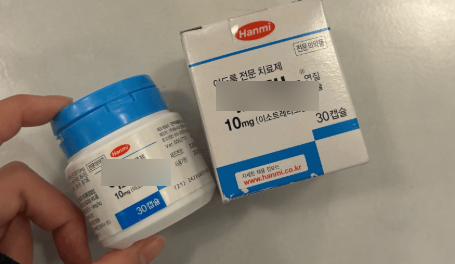
Isotretinoin
Source - My Doctor
What If Hair Loss Develops While Taking an Acne Medication?
Summary Table of Causes and Management
| Category | Main Points |
|---|
| Common type of hair loss | Telogen effluvium |
| Rare types | Androgenetic alopecia, alopecia areata, acne-associated granulomatous folliculitis |
| Incidence | 3.2–5.7%, increases with higher doses¹ |
| Mechanism | Suppression of the growth phase, reduced anchoring of telogen hairs, changes in immune response |
| Prognosis | Mostly temporary; recovery is possible even without stopping the drug⁵ |
| Management strategy | Maintain a lower dose, nutritional support, vitamin D supplementation, stress reduction |
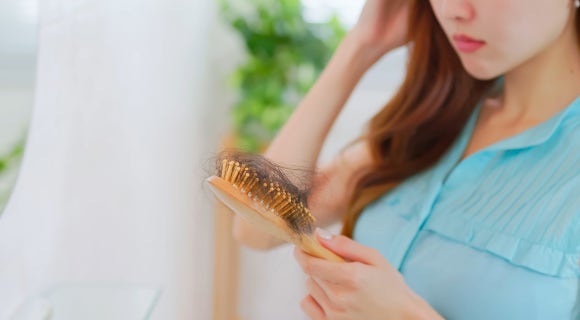
Q1. If you take isotretinoin, an acne medication, will hair loss occur?
Yes. Several clinical studies have reported hair loss in about 3–6% of isotretinoin users¹.
It usually appears as telogen effluvium, a condition in which hair shifts from the growth phase to the resting phase more quickly and falls out.
A tendency for hair loss to occur more often at higher doses has also been reported.
However, not everyone who takes the medication experiences hair loss, and it varies depending on individual body constitution, dose, and treatment duration.
Q2. What type of hair loss is most common?
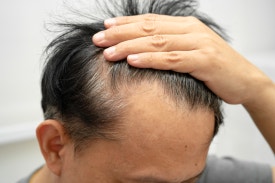
The most common type is telogen effluvium.
It is characterized by hair starting to fall out rapidly before completing its normal growth cycle.
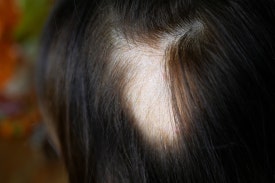
However, in rare cases, atypical forms such as androgenetic alopecia, alopecia areata, and acne-associated granulomatous folliculitis have also been reported².
In particular, some patients developed alopecia areata during acne treatment, and most recovered after stopping the drug and receiving treatment³.
Q3. Why does hair loss happen? What is the mechanism?
It has not yet been fully clarified, but the properties of retinoid medications appear to play a role.
Isotretinoin suppresses entry into the hair growth phase and weakens the anchoring of telogen hairs, making them easier to shed⁴.
In addition, excess vitamin A may alter immune responses and potentially trigger alopecia areata.
Not only changes in the hair cycle but also immunological factors may be involved.
Q4. Is isotretinoin-related hair loss permanent?
In most cases, it is temporary.
One study reported that telogen effluvium caused by isotretinoin recovers naturally even without stopping the medication⁵.
In actual clinical practice, there were many cases in which hair recovered within a few months while treatment continued.
However, recovery speed varies depending on the individual’s overall condition, nutritional status, and stress level.
Q5. What should you do if hair loss occurs while taking it? How should it be managed?
There is no need to completely stop isotretinoin.
However, combining it with the following management strategies may help recovery.
| Management Method | Explanation |
|---|
| Low-dose maintenance therapy | Even if the dose is reduced, treatment effect can be maintained while side effects are eased |
| Nutritional support | If iron or vitamin D is lacking, follicle recovery may be slower |
| Avoid excess vitamin A | Since isotretinoin itself is a vitamin A derivative, additional supplementation should be avoided |
| Stress control | Anxiety and depression can worsen hair loss progression, so psychological stability is important |
| Minimize scalp irritation | It is best to reduce frequent dyeing, heat exposure, and ultraviolet exposure |
Q6. If hair loss develops, do you have to stop the medication?
No.
Temporary hair loss often improves without stopping treatment.
However, if hair is shedding rapidly or bald patches appear in a round shape, the possibility of another condition (such as thyroid disease or nutritional deficiency) should also be considered, so consultation with a medical professional is necessary.
Clinically, a three-part approach of dose adjustment + nutritional assessment + stress management can be enough to expect stable recovery.
Now it’s time for hair hair, this was Kim Jino.
필생신모(必生新毛).
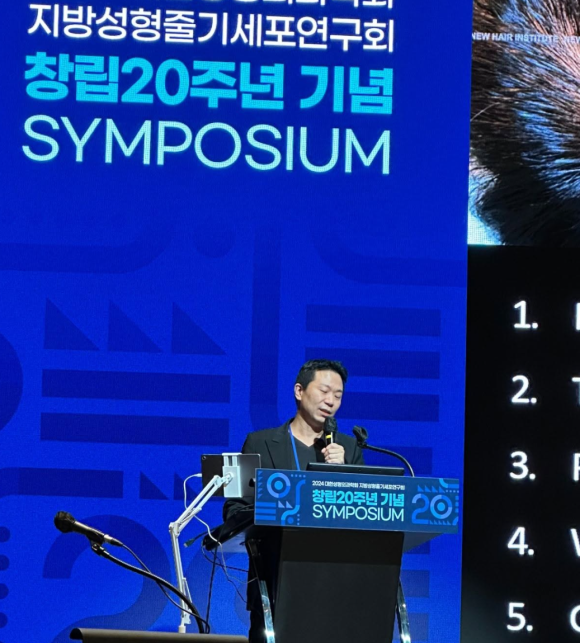
Written by: Kim Jino of New Hair Plastic Surgery Clinic (Public Relations Director, Korean Society of Plastic and Reconstructive Surgeons / Academic Director, Korean Hair Research Society)
References
-
Lytvyn Y et al., Comparing the frequency of isotretinoin-induced hair loss, JAAD International (2022)
-
Tran PT et al., Characteristics of patients with hair loss after isotretinoin treatment, International Journal of Trichology (2022)
-
Gupta M et al., Alopecia areata and isotretinoin; coincidence or causal relation, Dermatologic Therapy (2020)
-
Kmieć ML et al., Evaluation of hair growth in patients with acne treated with isotretinoin, Advances in Dermatology and Allergology (2013)
-
Abdelmaksoud A et al., Isotretinoin-induced hair disorders in the era of COVID-19 and related vaccines, Journal of Cosmetic Dermatology (2022)
[This post is written directly by a board-certified plastic surgeon for informational purposes in accordance with Article 56, Paragraph 1 of the Medical Service Act. Hair transplant surgery and treatment may have side effects, and you should make a careful decision after consulting with a specialist.]