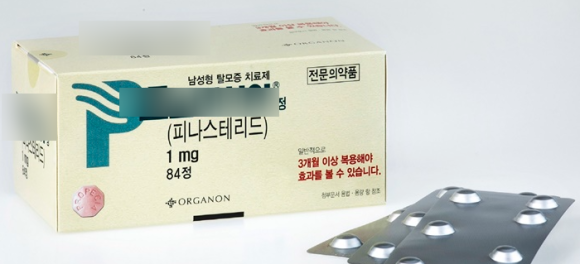
Finasteride
Source - Korea Medical Association Newspaper
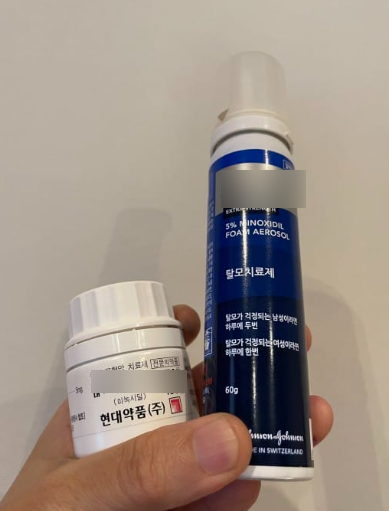
Minoxidil
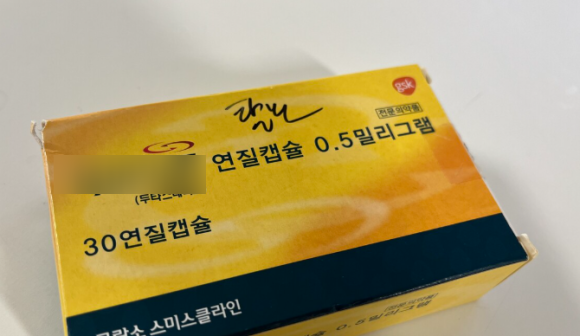
Dutasteride
Source - Radiance Report
This is the question people most often ask when they start hair loss treatment.
Finasteride and minoxidil are representative medications that have been officially approved as treatments for male pattern hair loss in many countries,
and dutasteride is approved for hair loss treatment only in some countries, including Korea and Japan.
These three medications are widely used clinically as a standard treatment combination and play an important role in suppressing hair loss progression and
maintenance.
However, not every patient sees immediate change.
The medication definitely works, but hair loss is not a short-term race; it is a long-term battle.
Let’s go through the points one by one using the summary below.
Why does hair still fall out even when taking hair loss medication?
Conclusion
Hair falling out even while taking hair loss medication is often not because the medicine is ineffective,
but because the timing and scope of its action are misunderstood.
Medication is a catalyst that restores the follicle’s potential.
Only when lifestyle habits, nutrition, stress management, and combination therapy are all addressed together does it lead to the result of recovering hair density.
Q1. I took the medicine, but my hair is falling out even more?
It is highly likely to be an initial shedding response.
When you first take minoxidil or a DHT inhibitor, the follicles are readjusting to a new growth cycle,
and the older hairs may fall out first.
This is part of the process of new hair settling in and is temporary¹.
It usually stabilizes within 1 to 2 months, and new hair growth can be seen after 3 to 6 months.
Q2. If I keep taking it consistently but there is no noticeable change,
does that mean it is not working?
The core role of hair loss medication is maintenance and suppression.
Finasteride and dutasteride reduce the action of male hormones to prevent further shedding, but they cannot revive follicles that have already completely atrophied².
Their effect is significant in areas where follicles are still alive, but the response is limited in areas where they have already died.
So, the fact that your hair is not falling out as much is also a sign that the medication is working.
Q3. Can lifestyle habits affect the effectiveness of hair loss medication?
Of course. Hair is also an indicator of overall physical health.
Lack of sleep, smoking, heavy drinking, stress, and an unbalanced diet worsen the growth environment of follicle cells and reduce the medication’s effectiveness³.
Deficiencies in nutrients such as vitamin D, zinc, and iron can also accelerate hair loss.
In the end, hair loss medication works properly when your basic physical condition is in place.
Q4. Could another disease make the medicine less effective?
Yes, it could.
If you have thyroid disease, anemia, autoimmune disease, or scalp inflammation, the effect of the medication may be limited⁴.
In such cases, it is difficult to improve by taking hair loss medication alone, and you need to identify the cause accurately through blood tests or scalp diagnosis.
In particular, women often have accompanying hormonal imbalance or iron deficiency.
Q5. How long do I need to take the medicine to see results?
In most clinical studies, finasteride, dutasteride, and minoxidil show noticeable improvement after at least 3 to 6 months⁵.
Because the hair growth cycle moves in roughly 100-day intervals, it is too early to judge after only a short period of use.
Consistency is the biggest factor determining whether the medication works.
Q6. If medication alone has limits, what other options are there?
Medication is the foundation of hair loss management, but a combined approach
is needed for follicles that have already shrunk.
For example, PRP, low-level laser therapy, cooling therapy, and hair transplantation can complement what medication alone cannot provide⁶.
These combination treatments help increase follicle activity and improve overall hair density and thickness.
Why does hair still fall out even when taking hair loss medication?
Key summary table
| Category | Main Cause | Explanation | How to Respond |
|---|
| Initial shedding | Shedding | Process of entering a new growth cycle | Observe for 1 to 2 months; do not stop |
| Follicle damage | Follicle atrophy, death | Cannot be restored with medication | Start treatment early |
| Lifestyle habits | Sleep, nutrition, stress | Factors that reduce effectiveness | Improve sleep and diet in parallel |
| Coexisting diseases | Thyroid disease, anemia, inflammation, etc. | May worsen hair loss | Blood tests and diagnosis needed |
| Time factor | Delayed growth cycle | Effect appears after 3 to 6 months | Maintain consistent use |
| Medication limits | Complete restoration not possible | Adjunctive treatment needed | Consider combining injections, laser, and transplantation |
Now it is time for hair hair, Kim Jin-oh.
Pilsaengsinhmo (必生新毛).
Written by: Kim Jin-oh of New Hair Plastic Surgery (Public Relations Director, Korean Society of Plastic and Reconstructive Surgeons / Academic Director, Korean Society of Laser Dermatology and Hair)
References
-
Messenger, A.G. and Rundegren, J. (2004) ‘Minoxidil: Mechanisms of action on hair growth’, British Journal of Dermatology, 150(2), pp. 186–194. doi:10.1111/j.1365-2133.2004.05785.x.
-
Kaufman, K.D., Olsen, E.A., Whiting, D. et al. (1998) ‘Finasteride in the treatment of men with androgenetic alopecia’, Journal of the American Academy of Dermatology, 39(4), pp. 578–589. doi:10.1016/S0190-9622(98)70002-7.
-
Almohanna, H.M., Ahmed, A.A., Tsatalis, J.P. and Tosti, A. (2019) ‘The role of vitamins and minerals in hair loss: A review’, Dermatology and Therapy, 9(1), pp. 51–70. doi:10.1007/s13555-018-0278-6.
-
Shrivastava, S.B. (2009) ‘Diffuse hair loss in an adult female: Approach to diagnosis and management’, Indian Journal of Dermatology, Venereology and Leprology, 75(1), pp. 20–27. doi:10.4103/0378-6323.45215.
-
Rossi, A., Cantisani, C., Melis, L. et al. (2012) ‘Minoxidil use in dermatology, side effects and recent patents’, Recent Patents on Inflammation & Allergy Drug Discovery, 6(2), pp. 130–136. doi:10.2174/187221312800166902.
-
Gupta, A.K. and Carviel, J.L. (2020) ‘Adjunctive therapies in the management of androgenetic alopecia: An evidence-based review’, Journal of Dermatological Treatment, 31(7), pp. 635–645. doi:10.1080/09546634.2019.1577568.
[This post is written directly by a board-certified plastic surgeon for informational purposes in accordance with Article 56, Paragraph 1 of the Medical Service Act. Hair loss surgery and treatment may have side effects, and you should make a careful decision after consulting with a specialist.]