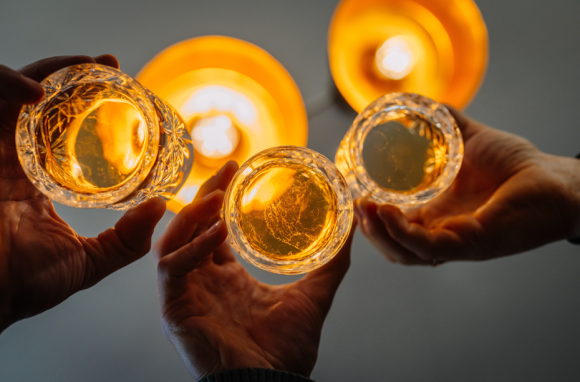
A drink to ease the fatigue of the day—but what effect does that one drink have on your hair?
According to a recent study published in the international journal Nutrition & Health,
overconsumption of alcohol and sugary drinks was found to reduce hair growth and thickness,
while diets rich in vitamin D and iron were found to lower the risk of hair loss¹.
Hair is not merely a matter of appearance; it is tissue that reflects the body’s metabolic state.
The health of the liver and blood is directly reflected in the hair as well.
Based on the questions that come up often in actual clinical practice, let’s look at the scientific evidence and clinical experience together.
Alcohol and hair loss: can even one beer affect your hair?
Summary
Alcohol interferes with the absorption of vitamin D and iron and promotes inflammatory responses,
reducing hair follicle function¹.
Excessive consumption of beer and sugary drinks increases insulin resistance and reduces
scalp blood flow⁴.
The more sufficient vitamin D and iron are, the higher the hair growth rate and the lower the
risk of hair loss¹⁵.
If complete abstinence is difficult, it is important to replenish fluids and antioxidant nutrients and
maintain nutritional balance.
Q1. Does drinking alcohol really cause hair loss?
The problem is not direct toxicity, but chronic nutritional imbalance and inflammatory responses.
Alcohol impairs the absorption of vitamin D, iron, zinc, and selenium in the body and increases reactive oxygen species¹.
Reactive oxygen species weaken the DNA repair function of hair follicle cells, reducing both the speed and thickness of hair growth.
In clinical practice, patients with frequent drinking habits often show excessive sebum and inflammatory scalp conditions, and hair follicle density is also observed to be lower.
Q2. Is one beer okay?
The saying “one drink is fine” is only partly true.
Beer contains not only alcohol but also a high amount of sugar.
Sugar increases insulin resistance, which reduces microcirculation in the scalp and interferes with the supply of oxygen and nutrients to hair follicle
cells⁴.
Therefore, even one or two beers a day can become a habit that promotes hair loss if repeated daily.
On the other hand, occasional and moderate drinking does not have a major effect.
However, after frequent drinking, hydration and antioxidant supplementation are essential.
Q3. Why are vitamin D and iron so important?
The vitamin D receptor (VDR) regulates the signals that initiate the hair growth phase.
When this receptor function declines, hair follicles cannot leave the resting phase, and hair loss progresses¹.
Iron acts as a cofactor in DNA synthesis and cellular proliferation enzyme reactions and is a key nutrient that maintains the activity of hair follicle cells⁵.
When deficient, hair becomes thin, breaks easily, and its pigment concentration also decreases.
Adequate vitamin D and iron are the minimum conditions for restoring the regenerative capacity of hair follicles.
Q4. Do you need to completely quit alcohol to prevent hair loss?
Rather than absolute abstinence, the key is maintaining a balanced metabolic state.
After drinking, replenishing antioxidant components such as vitamin C and polyphenols and ensuring sufficient iron and
vitamin D intake can minimize damage.
Reducing sugary drinks and processed foods also helps improve insulin resistance.
Hair follicles are a resilient tissue, so when inflammation decreases through consistent lifestyle correction, the amount of hair in the growth phase tends to increase again.
Q5. What differences are noticeable in actual clinical practice?
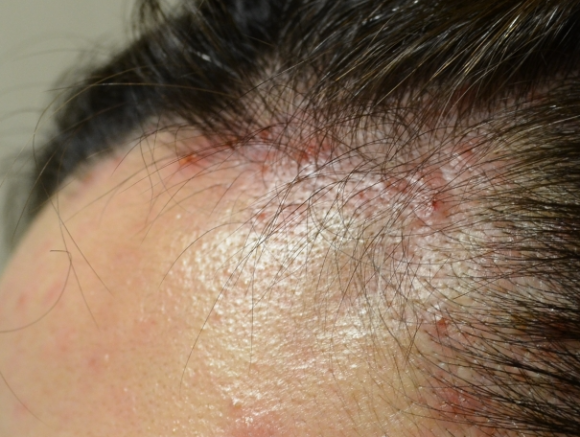
Scalp inflammation
Source - Herald Media
Among hair loss patients, those with a habit of heavy drinking often have heat, itching, and erythema on the scalp.
Blood tests may also show vitamin D deficiency, iron deficiency, and elevated liver enzyme levels.
In such cases, rather than simply taking hair loss medication, combining control of drinking habits, nutritional balance, and antioxidant therapy leads to a much faster improvement in hair growth response.
Key takeaways for hair health
| Category | Negative factors | Positive factors | Notes |
|---|
| Nutrient absorption | Alcohol, sugary drinks¹⁴ | Iron⁵, vitamin D¹ | Maintains the hair follicle growth phase |
| Metabolic effects | Increased insulin resistance⁴ | Intake of antioxidant substances | Improves blood flow |
| Inflammatory response | Reactive oxygen species, excess sebum¹ | Hydration, antioxidant vitamins | Regulating scalp temperature is essential |
| Lifestyle habits | Frequent drinking | Occasional, moderate drinking | Balance matters more than complete abstinence |
Alcohol and hair loss: can even one beer affect your hair?
Conclusion
Alcohol is not a poison that directly causes hair loss, but it is clearly a major factor that interferes with
the recovery environment of hair follicles.
Continuous drinking triggers a chain reaction of impaired liver function → nutritional deficiency → inflammatory scalp → follicle atrophy.
Therefore, reducing alcohol is not just scalp care; it can be seen as the starting point of whole-body health management to protect the survival capacity of hair follicles.
Choosing to postpone today’s drink is the most scientific way to protect tomorrow’s hair health.
It is time for hair hair, Kim Jin-oh.
Pilsaengsinmo (必生新毛).
Written by: Kim Jin-oh of New Hair Plastic Surgery (Public Relations Director of the Korean Society of Plastic and Reconstructive Surgeons / Academic Director of the Korean Society for Laser Dermatology and Hair)
References
-
Gomes, N., Silva, N., & Teixeira, B. (2025). Assessing the relationship between dietary factors and hair health: A systematic review. Nutrition & Health, 1–12. “Higher serum vitamin D levels and iron supplementation were found to positively impact alopecia, while higher consumption of alcoholic and sugary drinks was associated with an increased risk of hair loss.”
-
Akin Belli, A., Etgu, F., Ozbas Gok, S., et al. (2016). Risk factors for premature hair graying in young Turkish adults. Pediatric Dermatology, 33(4), 438–442. “The consumption of alcoholic beverages was associated with premature depigmentation of the hair.”
-
Yi, Y., et al. (2020). Alcoholic beverages consumption and hair loss in women: A cross-sectional study. “The consumption of alcoholic beverages was associated with greater hair loss.”
-
Shi, X. J., et al. (2023). Sweet beverages consumption and hair loss risk in young males. “Excessive consumption of sweet beverages was positively related to hair loss.”
-
Trost, L. B., et al. (2006). Iron deficiency and hair loss: A review. Journal of the American Academy of Dermatology, 54(5), 824–844. “Iron deficiency has been linked to hair loss due to its role as a cofactor for enzymes involved in DNA synthesis and cellular proliferation in hair follicles.”
[This post is written directly by a board-certified plastic surgeon for informational purposes in accordance with Article 56, Paragraph 1 of the Medical Service Act. Hair transplant surgery and treatment may have side effects, and they should be carefully decided upon through consultation with a specialist.]