In botulinum toxin hair loss management,
why do injection depth, formulation selection, and treatment interval matter?
Botulinum toxin has long been widely used for wrinkle reduction and muscle tension relief, but
recently research has also continued into hair loss management through improved scalp blood flow and inflammation control.
A mechanism has been reported in which scalp tension is reduced and microcirculation is improved to optimize the growth environment of hair follicles¹, and in some clinical studies,
positive results were seen in patients with androgenetic alopecia².
However, when used for hair loss management, the treatment area is wider than in general aesthetic procedures,
and the repetition interval is shorter, so attention to resistance (antibody formation) is necessary.
Botulinum Toxin Hair Loss Treatment: How Can Resistance Be Prevented?
Summary
Intradermal injections show a slightly higher immune response than intramuscular injections,
but not to a clinically significant level of resistance⁴
The risk of resistance is higher with high doses, short intervals, and formulations with many accessory proteins³
Prevention strategy: use the minimum effective dose, maintain intervals of at least 3 months, choose a
high-purity formulation, and switch formulations if needed
Mechanism of action: improved scalp blood flow, inflammation suppression, reduced sebum secretion,
and regulation of the hair follicle growth cycle¹²
Intradermal injection vs. intramuscular injection
A research team at Siriraj Hospital in Thailand analyzed differences in antibody responses when botulinum toxin type A (BoNT/A) was injected intradermally and intramuscularly⁴.
In a study of 120 subjects who received injections of several commercial formulations and were followed for six months for changes in blood antibody levels, the intradermal injection group showed relatively higher antibody levels.
This was analyzed as being due to the abundance of immune cells in the skin layer.
However, the researchers concluded that “intradermal administration of botulinum toxin induces a greater immune response than intramuscular administration, but did not reach a clinically meaningful level of resistance”⁴.
This means that although the immune response may become slightly more active with intradermal injection, it does not affect treatment efficacy.
| Category | Injection depth | Immune response | Impact on resistance | Notes |
|---|
| Intradermal injection | Dermis | Somewhat higher | No clinical resistance | Mainly used for hair loss management |
| Intramuscular injection | Muscle layer | Lower | Stable | Used for wrinkle treatment and muscle tension relief |
Mechanism by which botulinum toxin improves hair loss
Botulinum toxin relaxes the scalp muscles, improves capillary blood flow, and suppresses sebaceous gland
activity to reduce inflammatory responses.
It has also been reported to inhibit inflammatory cytokines, reduce inflammation around hair follicles, and extend the hair growth phase¹.
These actions may play a supportive role in improving the hair growth environment through pathways different from existing hair loss treatments.
Why resistance develops and risk factors
Botulinum toxin resistance is uncommon, but
increase the risk of occurrence³.
In hair loss management, because the treatment area can be wide and the cumulative dose can become large, it is important to block these factors in advance.
When resistance develops, treatment effectiveness may decrease or disappear, and because antibodies can persist for a long time,
a switch to another formulation or a temporary pause may be necessary.
What are the strategies to prevent resistance?
Based on research findings³⁴⁵, the following are safe treatment strategies.
| Prevention strategy | Description |
|---|
| Use the minimum effective dose | Unnecessary overdosing increases the risk of immune response |
| Maintain a treatment interval of 90 days or more | An interval that takes the antibody reduction cycle into account⁴ |
| Choose a high-purity formulation with fewer accessory proteins | Lower immunogenicity and reduced risk of resistance³ |
| Alternate formulations | Prevents long-term resistance |
| Combined immunomodulatory therapy | In cases of resistance, combined use with a JAK inhibitor has been reported to restore response⁵ |
Latest research: the possibility of resistance recovery
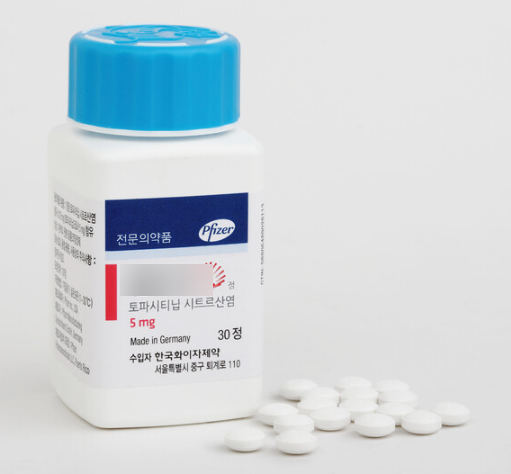
tofacitinib
Source - Pharma News
Recently, a case was reported in which responsiveness to botulinum toxin was restored by combining a JAK inhibitor (tofacitinib)⁵.
This approach shows a new possibility for alleviating resistance by regulating the immune response, and it may develop into a direction for future personalized treatment.
Botulinum Toxin Hair Loss Treatment: How Can Resistance Be Prevented?
Conclusion
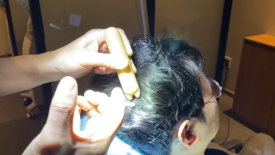
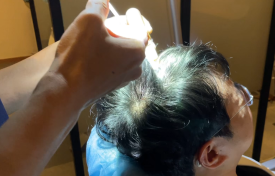
Botulinum toxin is drawing attention in hair loss management for its unique mechanism of improving blood flow and reducing inflammation.
However, because repeated treatments are necessary, it is essential to follow the principles for preventing resistance: minimum dose, appropriate intervals, and high-purity formulations.
If these standards are observed, safe and sustainable improvement of the scalp environment is possible.
Now it’s time for hairhair, Kim Jino.
필생신모(必生新毛).

Written by: Kim Jino, New Hair Plastic Surgery Clinic (Public Relations Director, Korean Association of Plastic Surgeons / Academic Director, Korean Laser, Dermatology, Hair Society)
References
-
Hussein, R.S., Dayel, S.B. & Abahussein, O. (2023) ‘Botulinum Toxin A for Hair Loss Treatment: A Systematic Review of Efficacy, Safety, and Future Directions’, JPRAS Open, 38(4). doi:10.1016/j.jpra.2023.09.006.
-
Singh, S., Sharma, N., & Inamadar, A. (2017) ‘A Pilot Study to Evaluate Effectiveness of Botulinum Toxin in Androgenetic Alopecia’, Journal of Cutaneous and Aesthetic Surgery, 10(2), pp. 91–95. doi:10.4103/JCAS.JCAS_14_17.
-
Perez, S.M., Sharma, K., Kumar, A. et al. (2025) ‘Botulinum Toxin in the Treatment of Hair and Scalp Disorders’, Toxins, 17(4), p.163. doi:10.3390/toxins17040163.
-
Srinoulprasert, Y., Sirisuthivoranunt, S., Sripatumtong, C., Tansit, T., Yan, C., Apinuntham, C., Techapichetvanich, T., Eimpunth, S., Manuskiatti, W. & Wanitphakdeedecha, R. (2025) ‘A Pilot Study of Differences in Antibody Responses of Intradermal and Intramuscular Injections of Botulinum Toxin Type A’, Dermatology and Therapy (Heidelb). doi:10.1007/s13555-025-01530-y.
-
Abou Tayeh, S., Elghawy, O., Fattouh, N. et al. (2025) ‘Reversal of Partial Botulinum Toxin A Resistance Following JAK Inhibition with Tofacitinib: A Case Series’, Journal of Drugs in Dermatology, 24(3), pp. 265–268.
[This post is written directly by a board-certified plastic surgeon for informational purposes in accordance with Article 56, Paragraph 1 of the Medical Service Act. Hair loss surgery and treatment may have side effects, and you should make a careful decision after consulting with a specialist.]