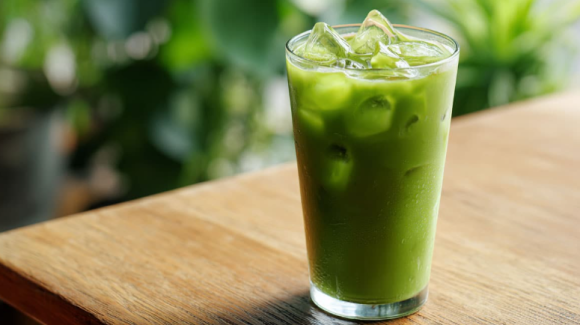
Matcha
Source - Food Recipe
Recently, there has been talk that “drinking matcha causes hair loss.”
The claim that matcha, known as a healthy drink, could be a cause of hair loss is confusing to many people.
However, if we look at actual medical research and clinical experience together, this phenomenon is not something that can simply be concluded as
‘matcha = hair loss.’
The key factors are tannins, iron absorption, and the physiological effects of caffeine.
Does Matcha Really Cause Hair Loss? Why Tannins Block Iron Absorption
Summary
| Category | Summary |
|---|
| Issue | Claims that tannins and caffeine in matcha cause hair loss |
| Main mechanism | Tannins → inhibit iron absorption → reduce hair follicle growth / Caffeine → increase cortisol → possible telogen hair loss |
| High-risk groups | People with iron deficiency or anemia, vegetarian-based diets, women with heavy menstrual flow |
| Safe intake guide | 1–2 cups per day, keep a 1–2 hour gap before and after meals |
| Supplementary tips | Improve iron absorption by consuming vitamin C; reduced impact when taken with meat |
| Positive effects | EGCG (green tea catechin) → antioxidant effect, protects hair follicle cells |
Q1. If you drink matcha, will your hair really fall out?
It is hard to call it a direct “cause,” but it may have an effect on people with iron deficiency.
The tannins abundant in matcha bind to iron and inhibit its absorption¹.
In particular, for vegetarians or women who mainly consume plant-based iron,
this effect may lower serum ferritin².
Because iron is essential for cell division and oxygen supply in hair follicles, deficiency can
promote the transition from the growth phase to the resting phase, which may cause hair to fall out faster³⁴.
Q2. How much does tannin block iron absorption?
According to studies, polyphenols in tea can reduce iron absorption by up to 80%¹.
The table below simplifies the inhibition rate when consumed with meals.
| Type of beverage | Iron absorption inhibition rate | Notes |
|---|
| Black tea | 60–80% | Strongest effect |
| Green tea / matcha | 40–70% | High tannin content |
| Coffee | 40–60% | Combined effect of polyphenols and caffeine |
| Water / vitamin C drinks | 0–10% | Has an absorption-promoting effect |
Q3. Can caffeine also affect hair loss?
When consumed in excess, it can temporarily raise the stress hormone cortisol and worsen telogen
hair loss.
Matcha can contain up to 80 mg of caffeine per 1 g, which is
higher than regular green tea⁸.
However, in moderate amounts (1–2 cups or less per day), it can have positive effects such as improving scalp blood flow and aiding alertness.
Q4. Then should you avoid matcha completely?
That is not necessary.
The issue is not the drink itself, but the drinking habit and the individual’s iron status.
If you have anemia, are a woman with heavy menstrual bleeding, or have a gastrointestinal absorption disorder,
it is important not to drink matcha at the same time as meals and to keep a gap⁵⁶.
For healthy people, antioxidants such as EGCG (Epigallocatechin gallate) can reduce inflammation in hair follicle cells and help increase cell survival⁹¹⁰.
Q5. Is the EGCG in matcha actually good for hair?
That is correct.
EGCG is the representative catechin in green tea and promotes the proliferation of dermal papilla cells in the skin’s dermis
and inhibits apoptosis, contributing to the extension of the hair growth phase⁹.
It has also been shown to reduce oxidative stress and inflammation, so an appropriate amount of matcha can
actually help scalp health¹⁰.
Q6. In the end, what is the safest way to drink it to help prevent hair loss?
Considering iron absorption, it is best to keep to 1–2 cups per day and maintain a 1–2 hour gap before and after meals.
Avoid drinking it with plant-based foods rich in iron, such as spinach, beans, and tofu,
and pairing it with fruits rich in vitamin C can help support absorption.
Also, if you have hair loss symptoms, it is safer to check your nutritional status through blood tests for
ferritin, iron, vitamin D, and zinc³⁴.
It’s time for hair hair, this was Kim Jin-oh.
Filsaengsinmo (必生新毛).
Written by: Kim Jin-oh of New Hair Plastic Surgery Clinic (Public Relations Director, Korean Society of Plastic and Reconstructive Surgeons / Academic Director, Korean Society of Laser Dermatology and Hair)
References
-
Fan F.S. et al. (2016) Iron deficiency anemia due to excessive green tea drinking. Clinical Case Reports, 4(11), 1053. Quoted from: “Excessive consumption of green tea may reduce intestinal iron absorption and lead to iron deficiency anemia.”
-
Nanri H. et al. (2023) Association between green tea and coffee consumption and body iron storage in Japanese men and women. Frontiers in Nutrition, 10, 1249702. Quoted from: “High green tea consumption was associated with lower serum ferritin concentrations in men and postmenopausal women.”
-
Moeinvaziri M. et al. (2009) Iron status in diffuse telogen hair loss among women. Journal of the American Academy of Dermatology, 60(6), 1071–1076. Quoted from: “Low serum ferritin levels are significantly associated with chronic diffuse telogen hair loss.”
-
Trost L.B., Bergfeld W.F. & Calogeras E. (2006) The diagnosis and treatment of iron deficiency and its potential relationship to hair loss. American Family Physician, 74(5), 843–848. Quoted from: “Iron deficiency, even without anemia, may contribute to hair loss through reduced oxygen delivery to the follicle matrix.”
-
Health.com Editorial Team (2025) Can matcha mess with your iron levels? Health.com. Quoted from: “To avoid interference with iron absorption, it’s best to drink matcha between meals, not with them.”
6.Weil A. (2023) Green tea and anemia? DrWeil.com. Quoted from: “Tea’s impact on iron absorption is minimal when consumed apart from iron-rich meals or with animal-based iron sources.”
-
Brown K. (2025) Can drinking too much matcha lead to iron deficiency? Verywell Health. Quoted from: “Combining vitamin C-rich foods with iron can improve absorption, even in the presence of tannins.”
-
Applegate L. et al. (2020) The impact of tannin consumption on iron bioavailability and status. Nutrients, 12(9), 2605. Quoted from: “Tannins can form insoluble complexes with iron, reducing its bioavailability particularly in plant-based diets.”
-
Teng X. et al. (2018) Applications of Tea (Camellia sinensis) and Its Active Constituents in Hair Care: A Review. Molecules, 23(4), 870. Quoted from: “EGCG promotes the proliferation and prevents apoptosis of dermal papilla cells, contributing to hair growth.”
-
Oh J.Y. et al. (2023) Hair growth promoting effects of natural products and herbal extracts: a comprehensive review. Phytotherapy Research, 37(6), 2430–2447. Quoted from: “Several herbal and natural compounds stimulate dermal papilla cell proliferation and prolong the anagen phase of the hair cycle.”
[This post is written directly by a board-certified plastic surgeon for informational purposes in accordance with Article 56, Paragraph 1 of the Medical Services Act. Hair transplant surgery and treatment may have side effects, and you should make a careful decision through consultation with a specialist.]