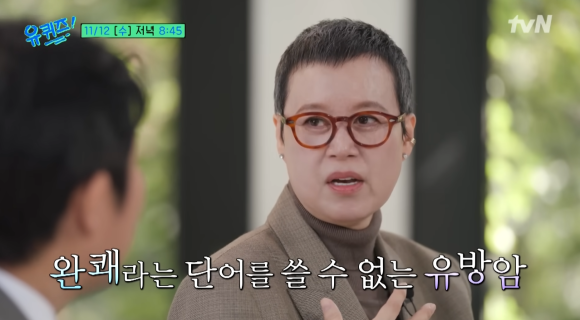
Source - Yoo Quiz on the Tube
Many people undergoing breast cancer treatment talk about one common difficulty.
It is the change in their hair.
Hair loss is only a physiological change in the body, but for patients it is also a delicate issue that affects their sense of identity and their willingness to return to everyday life.
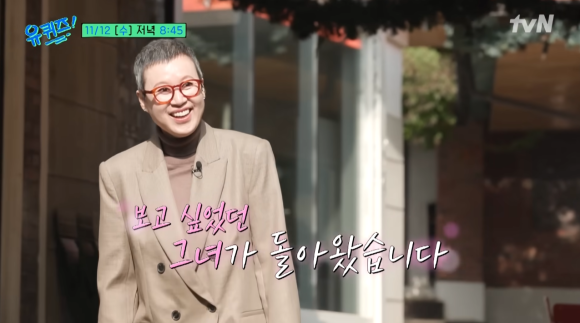
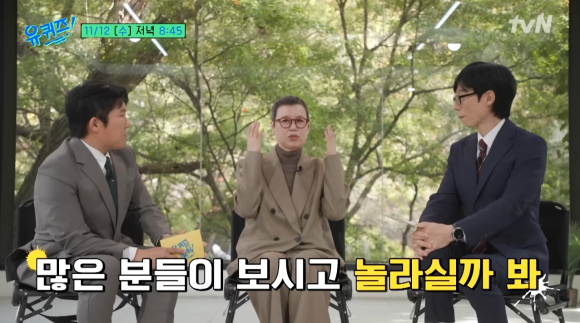
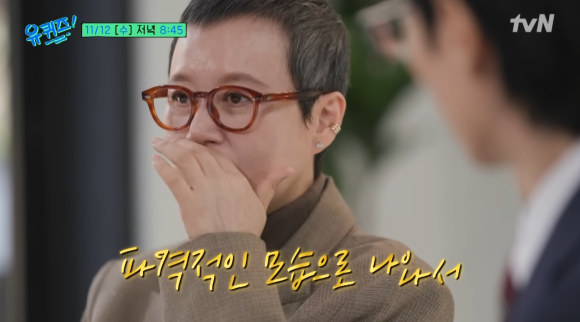
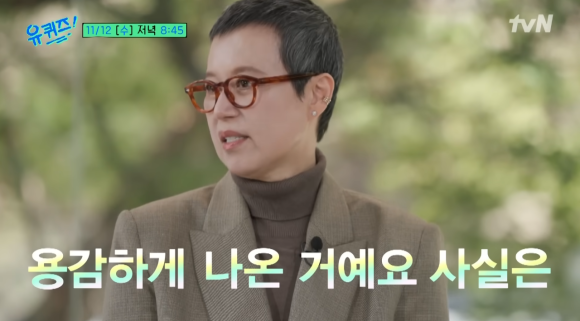
Recently, broadcaster Park Mi-sun appeared with short hair and naturally shared her treatment process, leaving many patients with courage and empathy.
Seeing that, many people think, “How will my hair change during treatment?” and “Is there a way to manage it?”
This article summarizes how hair loss occurs during breast cancer treatment and how it can be managed, based on the latest research and clinical experience, in response to those questions.
What changes and recovery can we see in Park Mi-sun’s case of hair loss during breast cancer treatment? Summary
Chemotherapy suppresses the rapid cell division of hair follicles, so acute hair loss commonly occurs within 2 to 4 weeks.
Scalp cooling has research findings showing that it reduces the risk of chemotherapy-induced hair loss by about 43%¹.
Endocrine therapy (hormone therapy), which is also common in breast cancer patients, can cause a slowly progressing patterned type of hair loss².
Topical minoxidil has been reported to improve hair volume in about 80% of patients².
Because changes in hair loss are also connected to patients’ emotions and willingness to continue treatment, guidance before treatment, early intervention, and emotional support are very important.
Hair regrowth after chemotherapy usually recovers within 3 to 6 months, and management strategies are needed at each stage before, during, and after treatment.
Q1. Why does hair suddenly fall out during chemotherapy?
Chemotherapy drugs attack rapidly growing cells and affect not only cancer cells but also the growth cells of hair follicles (matrix cells).
Because of this, acute hair loss commonly appears 2 to 4 weeks after treatment begins.
A recently published meta-analysis found that scalp cooling reduced the risk of chemotherapy-induced hair loss by about 43%¹.
This works by reducing blood flow to the scalp and lowering the amount of chemotherapy drug that reaches the hair follicles.
Q2. How effective is scalp cooling in practice?
The following results are commonly confirmed across multiple clinical studies.
- An effect of reducing hair loss by nearly half¹³
- Many actual patients reported that they retained a significant amount of hair during treatment
- Many said they could tolerate it without pain except for about the first 10 minutes of use
However, it is not equally effective for every chemotherapy drug, so it is essential for the attending medical team to determine the type of chemotherapy and whether it is suitable before treatment.
Q3. Can hair loss continue or return even after chemotherapy ends?
Yes, it can.
A considerable number of breast cancer patients continue endocrine therapy (hormone therapy) for 5 to 10 years after chemotherapy.
During this treatment, as estrogen action is suppressed,
- female-pattern hair loss (diffuse hair loss)
- androgenetic alopecia-like patterns
- gradual reduction in hair density
may occur².
Unlike chemotherapy-related hair loss, this type of hair loss progresses slowly, so it is difficult to notice early changes.
Q4. Can hair loss caused by hormone therapy also be treated?
Studies report that when topical minoxidil was used, hair volume improved in about 80% of patients².
This does not just improve appearance; it also helps restore a sense of self-care, the feeling of caring for one’s body again⁴.
In clinical practice, the following approaches are used together.
- Scalp care focused on minimizing irritation
- Topical treatments
- Lifestyle adjustments
- Step-by-step follow-up
With this approach, gradual hair loss that occurs during endocrine therapy can be managed well enough.
Q5. What should you do if hair changes during treatment feel too emotionally overwhelming?
How can you prepare for that?
Because hair loss is the moment when patients first directly feel the reality of treatment, it has a strong emotional impact.
However, anxiety decreases a lot when the following three things are prepared in advance.
- Provide information about expected changes before treatment
If you know in advance when the changes will start, how quickly they will progress, and how recovery will occur, you can prepare psychologically.
- Intervene quickly when changes begin
Early use of options such as scalp cooling, hair protection, and topical treatment can greatly reduce the burden.
- Emotional support and restoration of self-care
Research also analyzes that intervention for hair loss itself contributes to improving quality of life⁴.
What changes and recovery can we see in Park Mi-sun’s case of hair loss during breast cancer treatment? Summary Table
| Item | Cause | Characteristics | Management Strategy | Evidence |
|---|
| Chemotherapy-induced hair loss | Cell suppression from chemotherapy drugs | Acute hair loss within 2 to 4 weeks | Scalp cooling, scalp protection | 43% reduction¹ |
| Endocrine therapy-induced hair loss | Hormonal suppression | Patterned, gradual thinning | Topical minoxidil, scalp care, lifestyle adjustments | 80% improvement² |
| Hair regrowth timing | After chemotherapy ends | Hair regrowth starts in 3 to 6 months | Minimizing irritation | Clinical evidence³⁴ |
| Psychological impact | Awareness of appearance changes | Changes in quality of life | Early guidance, intervention, emotional support | ²⁴ |
Now it’s time for hairhair, this was Kim Jin-oh.
필생신모 (必生新毛).
Written by: Kim Jin-oh of New Hair Plastic Surgery (Public Relations Director, Korean Association of Plastic Surgeons / Academic Director, Korean Society of Laser Dermatology and Hair)
References
- Molina, M.C., et al. (2024). Effectiveness of scalp cooling to prevent chemotherapy-induced alopecia: an updated systematic review and meta-analysis. Cancer Nursing, 47(4), pp.319–326.
The 8 included studies showed a 43% reduction in the risk of chemotherapy-induced alopecia (RR 0.57; 95% CI 0.50–0.64) after the use of scalp cooling.
- Freites-Martinez, A., Shapiro, J., Chan, D., et al. (2018). Endocrine therapy–induced alopecia in patients with breast cancer. JAMA Dermatology, 154(6), pp.670–675.
A pattern alopecia similar to androgenetic-type was confirmed by standardized clinical and trichoscopy images, and a significant negative emotional impact was reported by patients.
- Munzone, E., et al. (2019). Preventing chemotherapy-induced alopecia: a prospective randomised trial of DigniCap in early breast cancer patients. British Journal of Cancer, 121, pp.325–331.
Approximately 43% of patients using the scalp cooling system maintained hair loss below 50%.
- Nguyen, M. (2025). Approaches to management of endocrine therapy–induced alopecia in breast cancer patients. Supportive Care in Cancer, 33, p.199.
Endocrine therapy–associated alopecia is an under-reported adverse effect despite its significant impact on quality of life.
[This post is written directly by a plastic surgery specialist for informational purposes in accordance with Article 56, Paragraph 1 of the Medical Service Act. Hair transplant surgery and treatment may have side effects, so please make a careful decision after consulting with a specialist.]