Tying up your hair is so familiar that you usually do it without paying much attention.
However, when pressure is repeatedly applied to the same area, the scalp is exposed to very small but continuous irritation.
At first, it may feel mild, like pulling or warmth, but over time the follicles’ ability to recover declines and the hair gradually becomes weaker.
This is called traction alopecia, and several studies also emphasize that it can recover sufficiently if lifestyle habits are adjusted within an appropriate time¹².
Based on the questions patients often ask, I will organize the features, prevention, and management of traction alopecia.
Traction Alopecia: Why Can Clip and Hair Tie Habits Be Dangerous?
Summary
Repeated tension from clips and hair ties causes microinflammation and weakens the follicles¹.
In the early stage, reversible signs such as damaged hair, breakage, redness, and warmth may appear⁴.
If styling habits are adjusted, recovery within several months is likely¹.
If it continues for a long time, fibrotic (scarring) changes may occur and recovery may become difficult².
If additional irritation such as heat tools, dyeing, or hair extensions is present, the risk increases³.
Q1. Can frequently using hair ties or clips really cause hair loss?
Yes, it can.
The risk increases especially when the same spot and the same direction are repeatedly used.
A follicle is not simply a hole where hair grows, but a complex structure that regulates the growth cycle.
When tension continues in a constant direction, microinflammation repeatedly occurs in the tissue around the follicle, and this gradually weakens the follicle¹.
As this process accumulates, hair becomes more prone to breakage, thickness decreases, and more follicles eventually remain stuck in the resting phase².
In particular, a ponytail tied in the same place every day, the use of tight clips, and securing an updo concentrate tension, making the risk greater.
Q2. Are there signs I can check on my own?
Pulling, warmth, redness, and frequent breakage are typical early signs.
The characteristics of early traction alopecia are as follows⁴.
-
A subtle pulling sensation around the tied area
-
A strong feeling of relief or coolness when the hair is let down
-
Mild redness in a specific area
-
An increase in short broken hairs that snap easily when pulled
-
Partial reduction in density beginning to appear
This stage is still fully reversible.
If you adjust your lifestyle habits, the follicles often recover from the resting phase and return to a normal growth cycle¹.
Q3. If this continues for a long time, can it really become irreversible?
If the same tension is repeated for more than 6 months, it can progress to a fibrotic stage.
When tension-related irritation persists for a long period, fibrosis may develop around the follicles².
At this stage, the follicular structure is partially destroyed, natural regeneration is difficult, and recovery may be limited by medication and lifestyle correction alone.
Therefore, if you notice early signs such as the scalp feeling cool when the hair is let down, or pulling in the back of the neck or the temples, it is important to change your styling pattern as soon as possible.
Q4. Which styling habits especially worsen traction alopecia?
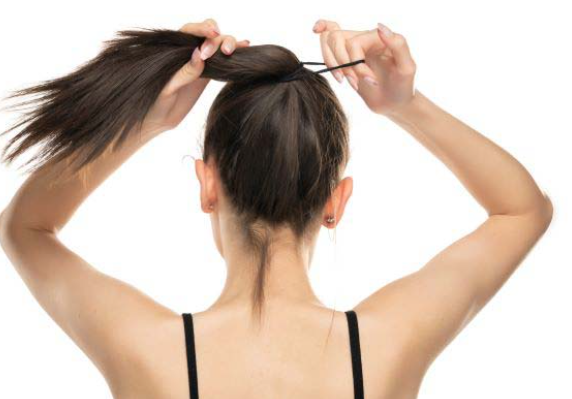
Source - Health Chosun
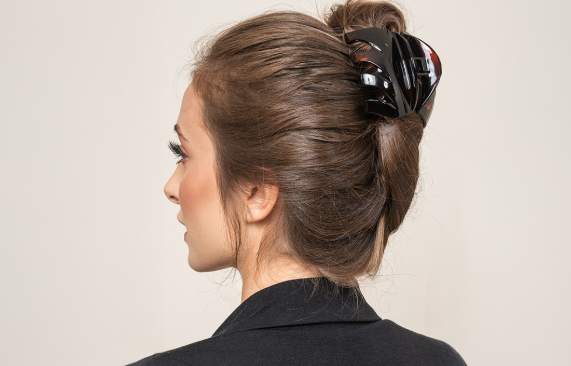
Source - Hidoc
The risk rises sharply when ‘strong tension + repetition + chemical or heat damage’ overlap.
Putting together research and clinical experience³:
-
High ponytails
-
Hair extensions
-
Securing hair with clips in the same place
-
Tight, thin hair ties
-
Tying hair after chemical damage such as perming or dyeing
-
Tying hair after using a straightener or curling iron
Already damaged hair has less ability to withstand tension, so it breaks more easily and places greater stress on the follicles.
Q5. What lifestyle habits should I change right away to prevent it?
The key is to reduce pulling force, change repeated pressure points, and allow rest time.
The prevention strategy is simple but very effective¹³
-
Make time to let your hair down during the day
-
Change the tying position each time
-
Choose hair ties made of soft material and a wider width
-
Use clips that distribute pressure
-
If possible at work, loosen the style in the middle of the day
-
Reduce the pattern of heat-tool use and minimize damage to the ends
Many people say, “I’m uncomfortable if I don’t tie my hair up,” but reducing pulling force is well within a realistic range of adjustment.
| Category | Features | Likelihood of recovery | Evidence |
|---|
| Early stage | Redness, pulling, increased breakage | Very high | Billero & Miteva¹, Kim et al.⁴ |
| Mid stage | Decreased density, increased short broken hairs in some areas | Improvement possible with adjustment | Akintilo et al.³ |
| Fibrotic stage | Scarring changes, follicular loss | Limited | Khumalo et al.² |
| Risk factors | Tying in the same place, hair extensions, strong tension, tying after heat or dyeing | Increased | Multiple studies¹²³ |
| Prevention | Pressure distribution, changing tying positions, allowing rest time | Very effective | Based on clinical experience and literature |
It’s time to let your hair hair breathe, this was Kim Jin-oh.
필생신모(必生新毛).
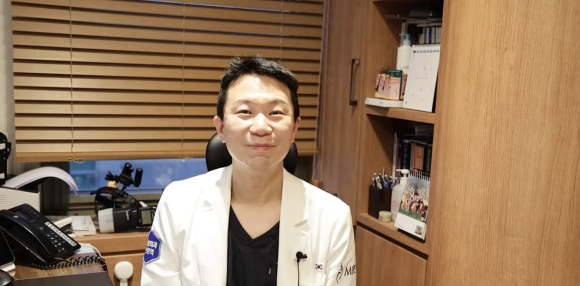
Written by: Kim Jin-oh of New Hair Plastic Surgery (Public Relations Director, Korean Association of Plastic Surgeons / Academic Director, Korean Laser Dermatology and Hair Society)
References
- Billero V, Miteva M. Traction alopecia: the root of the problem. International Journal of Trichology. 2018.
Traction alopecia is a form of hair loss caused by prolonged or repetitive tension on the hair shaft, ultimately affecting the hair follicle.
- Khumalo NP, Jessop S, Gumedze F, Ehrlich R. Determining the prevalence of traction alopecia in African girls in South Africa. Journal of the American Academy of Dermatology. 2007.
Repeated traction on the hair, especially in consistent patterns, can lead to permanent follicular damage if not addressed early.
- Akintilo L, et al. Management of Traction Alopecia: Our Experience and a Brief Review of Current Literature Recommendations. Journal of Dermatological Treatment. 2021.
Chemical processing and heat application weaken the hair shaft, increasing susceptibility to traction-related breakage and follicular injury.
- Kim H-S, et al. Braids or Pony-Tail-Associated Traction Alopecia in Korean Women. Annals of Dermatology. 2019;31(1):117-119.
Early dermoscopic evaluation often shows broken hairs, decreased density, and perifollicular erythema, indicating reversible traction-induced stress on follicles.
[This post is written directly by a board-certified plastic surgeon for informational purposes in accordance with Article 56, Paragraph 1 of the Medical Service Act. Hair-loss surgery and treatment may have side effects, and you should make a careful decision through consultation with a specialist.]