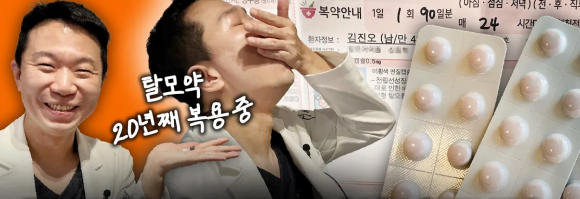
For people who are thinking about hair loss medication for the first time, the parts they fear most are the changes in the body and the changes in the mind.
On the internet, terms like sexual dysfunction and depression spread quickly, and people often end up encountering only extreme cases.
But if you calmly look at the actual data, the incidence of these reactions is not high, and in most cases they are reversible.
What is even more important is the fact that hair loss itself is already a factor that strongly causes psychological stress.
It is not the medication that is the problem; it is also common for anxiety to be amplified when someone is already mentally worn down by hair loss.
I will organize the research evidence and clinical experience around the questions patients actually ask in the clinic.
Hair loss medications, changes you may notice after taking them... what factors affect them?
Summary
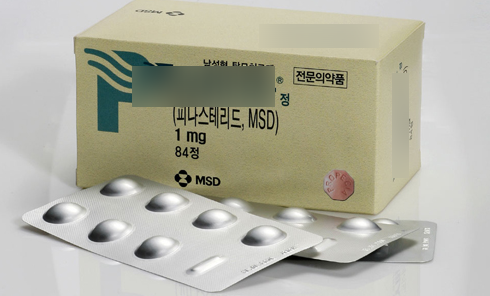
Finasteride
Source - Yakup News
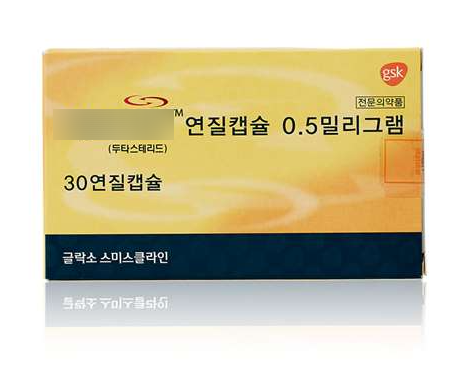
Dutasteride
Source - Daedamo
Patients with hair loss tend to already have increased self-esteem and social stress due to hair loss¹.
Reports that hair loss medications can affect sexual function do exist,
but the overall rate is low and in most cases recovery is possible²⁴.
Some studies have also found no change in sexual function³.
The link between depression and anxiety varies across studies,
and it must be considered whether hair loss itself was already creating psychological burden⁵⁷.
There are reports of persistent symptoms after stopping the medication (PFS), but the number of patients is small and causality has not been confirmed⁹¹⁰.
Conclusion: More important than the risks and benefits of the medication is a balanced judgment that also takes into account the individual’s psychological state, the degree of hair loss progression, and anxiety tendencies.
Q1. If I start hair loss medication, will my sexual function really decline?
It is true that some studies reported decreased libido or erectile discomfort².
However, there are also studies showing that the actual rate is as low as 0.6%⁴.
In addition, another meta-analysis found no meaningful difference between the medication group and the placebo group³.
In the clinic, it is also very rare for someone to stop long-term use because of sexual function problems.
In real-world experience, people who hear about side effects first tend to feel more discomfort (the nocebo effect).
Q2. Is it true that it can make you depressed or anxious?
Some large-scale studies have shown a slight increase in depression-related diagnoses shortly after starting the medication⁵⁶.
However, these results have limitations such as being centered on older adults, insufficient control of underlying conditions, and a lack of reflection of individual psychological traits.
Conversely, in studies that analyzed only patients with hair loss separately, there are reports that there was no difference in depression risk between the medication group and the non-medication group⁷.
In clinical practice, hair loss itself often already causes a major psychological burden.
If depression appears, it is necessary to look at whether it is due to the medication or to stress from hair loss.
Q3. Is there a syndrome where side effects continue even after stopping the medication?
There are some reports that sexual dysfunction, anxiety, and fatigue remain even after stopping the medication⁹.
However, these studies include a small number of patients and cases mixed with preexisting anxiety tendencies and psychological vulnerability.
There are also studies in which certain hormonal changes were observed¹⁰, but it cannot be concluded that these are the actual cause of the symptoms.
At present, it is difficult to define a clear causal relationship, and the proportion compared with all users is also very low.
In the end, a comprehensive approach that also considers each person’s psychological state, health level, and degree of hair loss progression is important.
Q4. I tend to be sensitive—could I become even more anxious?
People who are naturally more anxious tend to become more tense when they hear information that medication is risky.
In such cases, during the initial period of taking the medication, if you are fully informed about the expected changes and what should be checked, and you adjust the treatment strategy while monitoring the course, many people adapt stably.
Q5. In the end, how should I decide whether to start hair loss medication?
The most important thing is to weigh the benefits and concerns together and make a balanced judgment.
It helps to consider the following three points together.
-
How much is your current quality of life affected by hair loss?
-
How likely is it that the medication’s potential side effects will actually cause me significant discomfort?
-
Were there any underlying psychological factors such as anxiety or depression to begin with?
If you organize these three factors, in most cases you can make a rational decision.
| Category | Research evidence | Real-world tendency | Reference |
|---|
| Sexual function changes | Some reports of increase², reports of no change³ | Low incidence, mostly reversible⁴ | Possible influence of the nocebo effect |
| Psychological changes (depression, anxiety) | Reports of association⁵⁶ / reports of no difference⁷ | Hair loss stress may be the bigger cause | Individual disposition matters |
| Persistent symptoms after stopping the medication | Some small-number reports⁹¹⁰ | Causality unclear, very rare | Insufficient number of cases |
| Clinical observation | Long-term discontinuation due to side effects is rare | Most people adapt stably with explanation and adjustment | Individualized strategy needed |
Now it is time for hairhair, this was Kim Jin-oh.
May new hair be born (必生新毛).

Written by: Kim Jin-oh, New Hair Plastic Surgery (Public Relations Director, Korean Society of Plastic and Reconstructive Surgeons / Academic Director, Korean Laser Dermatology and Hair Society)
References
- Díaz-Gil, G., Saceda-Corralo, D., Moreno-Arrones, O.M., Rodrigues-Barata, A., and Vañó-Galván, S. (2016) ‘Adverse effects of 5-alpha reductase inhibitor therapy in androgenetic alopecia: a systematic review’, Actas Dermo-Sifiliográficas, 107(1), pp. 21–29.
cited:"Patients with male androgenetic alopecia show signs of psychosocial changes due to an altered body image related to hair loss."
- Lee, S.W., Juhasz, M., Mobasher, P., Ekelem, C., and Mesinkovska, N.A. (2019) ‘Adverse sexual effects of treatment with finasteride or dutasteride for male androgenetic alopecia: a systematic review and meta-analysis’, Acta Dermato-Venereologica, 99(12), pp. 1180–1186.
cited:"The overall use of 5-ARIs for male AGA increased the risk of adverse sexual effects, especially erectile dysfunction and decreased libido."
- Belknap, S.M., Aslam, I., and Mao, J. (2015) ‘Adverse event reporting in clinical trials of finasteride for androgenic alopecia: a meta-analysis’, JAMA Dermatology, 151(6), pp. 600–606.
cited:"No significant difference between finasteride and placebo for the outcome global sexual disturbance."
- Choi, G.S., Song, J.Y., Choi, J.S., Cho, S.H., and Whang, K.W. (2016) ‘Safety and tolerability of the dual 5-alpha reductase inhibitor dutasteride in the treatment of androgenetic alopecia’, Annals of Dermatology, 28(4), pp. 444–450.
cited:"Dutasteride 0.5 mg is to be well-tolerated… sexual side effects occurred in 0.6% of patients."
- Garcia-Argibay, M., Sörensen, H.T., and Hernández-Díaz, S. (2022) ‘Association of 5α-reductase inhibitors with dementia, depression, and suicide’, JAMA Network Open, 5(12), e2248135.
cited:"Both finasteride and dutasteride were similarly associated with depression… neither drug was associated with suicide."
- Nguyen, M.H., Lee, Y., and Gupta, R. (2025) ‘Depression risk of 5-alpha reductase inhibitors: A systematic review and meta-analysis with a focus on comparator groups’, medRxiv Preprint, pp. 1–18.
cited:"5-ARI use was associated with a 31% increased risk of depression… high heterogeneity."
- Neubauer, Z., Ong, M.M., and Lipner, S.R. (2025) ‘No increased risk of mood disorders in male androgenetic alopecia patients treated with dutasteride and finasteride: a retrospective cohort database study’, Journal of the American Academy of Dermatology, 93(1), pp. 197–199.
cited:"5ARIs for AGA treatment were not associated with increased MD risk."
- Diviccaro, S., Giatti, S., Borgo, F., and Melcangi, R.C. (2019) ‘Post-finasteride syndrome: an emerging clinical problem’, Journal of Endocrinological Investigation, 42(12), pp. 1365–1371.
cited:"Post-finasteride syndrome is characterized by persistent sexual side effects and neuropsychiatric symptoms."
- Melcangi, R.C., Santi, D., Spezzano, R., Giatti, S., and Diviccaro, S. (2013) ‘Neuroactive steroid levels are modified in cerebrospinal fluid and plasma of post-finasteride patients’, Journal of Sexual Medicine, 10(10), pp. 2598–2603.
cited:"Neuroactive steroid levels are modified in cerebrospinal fluid and plasma of post-finasteride patients."
[In accordance with Article 56, Paragraph 1 of the Medical Service Act, this post is being written directly by a board-certified plastic surgeon for the purpose of providing information. Hair loss surgery and treatment may have side effects, and you should make a careful decision through consultation with a specialist.]